 Back
Viral Diseases: Common Cold, Influenza, and HIV/AIDS
Study Guide - Smart Notes
 Tailored notes based on your materials, expanded with key definitions, examples, and context.
Viral Disease Examples
Overview
Viral diseases are caused by pathogenic viruses that infect humans and other organisms. This section focuses on three major viral diseases: the common cold, influenza, and HIV/AIDS, highlighting their characteristics, transmission, and treatment strategies.
The Common Cold
Characteristics and Symptoms
The common cold is a mild viral infection of the upper respiratory tract, caused by over 200 different viruses, most commonly rhinoviruses. - Symptoms: Sneezing, nasal secretion, congestion; can lead to laryngitis and otitis media. - Fever: Not typically present. - Treatment: Antibiotics are ineffective; relief is provided by cough suppressants and antihistamines. - Vaccine: Not feasible due to the large number of causative viruses and their rapid mutation. 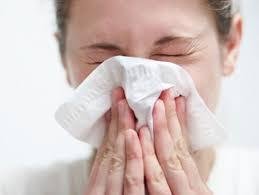
Influenza (Flu)
Structure and Types
Influenza is a contagious respiratory illness caused by Influenzavirus. The virus contains eight RNA segments and an outer lipid bilayer. - Symptoms: Chills, fever, headache, muscle aches; no intestinal symptoms. - Types: Avian, swine, and mammalian strains; swine act as "mixing vessels" for new strains. 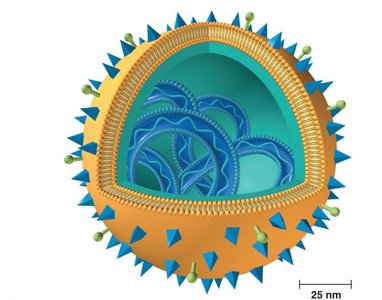
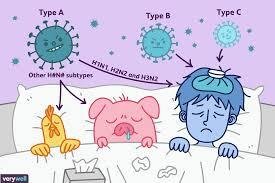
Classification of Human Influenza Viruses
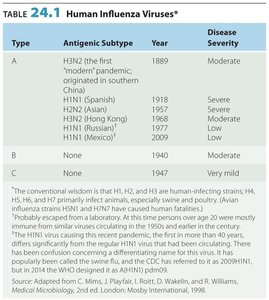
Influenza viruses are classified by antigenic subtype and disease severity:
Type | Antigenic Subtype | Year | Disease Severity |
|---|---|---|---|
A | H3N2 (first pandemic) | 1889 | Moderate |
A | H1N1 (Spanish) | 1918 | Severe |
A | H2N2 (Asian) | 1957 | Severe |
A | H3N2 (Hong Kong) | 1968 | Moderate |
A | H1N1 (Russian) | 1977 | Low |
A | H1N1 (Mexico) | 2009 | Low |
B | None | 1940 | Moderate |
C | None | 1947 | Very mild |
Antigenic Drift and Shift
Influenza viruses undergo genetic changes that affect their infectivity and epidemic potential. - Antigenic Drift: Accumulation of small mutations, causing minor changes and local epidemics. - Antigenic Shift: Major genetic reassortment, often involving animal hosts (e.g., swine, avian), leading to pandemics. 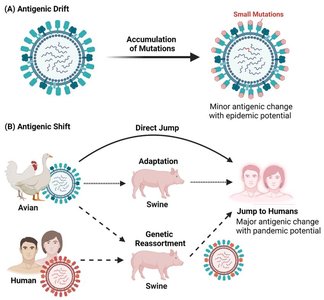
Replication and Treatment
- Hemagglutinin (HA) spikes: Mediate attachment to host cells. - Neuraminidase (NA) spikes: Facilitate release of new virions. - Antiviral drugs: Zanamivir (Relenza) and oseltamivir (Tamiflu) inhibit neuraminidase, blocking viral release. 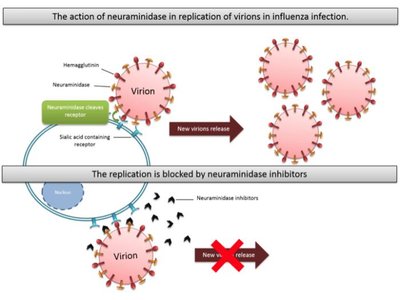
Influenza Vaccine Composition
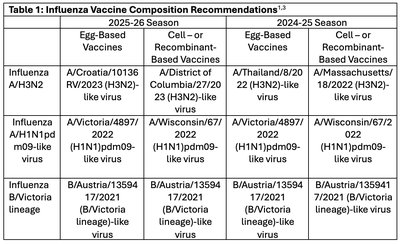
The composition of influenza vaccines is updated annually to match circulating strains.
2025-26 Season | 2024-25 Season | |||
|---|---|---|---|---|
Egg-Based Vaccines | Cell- or Recombinant-Based Vaccines | Egg-Based Vaccines | Cell- or Recombinant-Based Vaccines | |
Influenza A/H3N2 | A/Croatia/10136 RV/2023 (H3N2)-like virus | A/District of Columbia/27/2023 (H3N2)-like virus | A/Thailand/8/2022 (H3N2)-like virus | A/Massachusetts/18/2022 (H3N2)-like virus |
Influenza A/H1N1pd m09 | A/Victoria/4897/2022 (H1N1)pdm09-like virus | A/Wisconsin/6/2021 (H1N1)pdm09-like virus | A/Victoria/4897/2022 (H1N1)pdm09-like virus | A/Wisconsin/6/2021 (H1N1)pdm09-like virus |
Influenza B/Victoria lineage | B/Austria/13594/2021 (B/Victoria lineage)-like virus | B/Austria/13594/2021 (B/Victoria lineage)-like virus | B/Austria/13594/2021 (B/Victoria lineage)-like virus | B/Austria/13594/2021 (B/Victoria lineage)-like virus |
HIV and AIDS
History and Origin
HIV (Human Immunodeficiency Virus) causes AIDS (Acquired Immunodeficiency Syndrome). The virus originated from SIV (Simian Immunodeficiency Virus) crossing from chimpanzees to humans in Africa between 1884 and 1924. - Spread: Urbanization, sexual promiscuity, modern transportation, and unsafe sexual practices contributed to global spread. 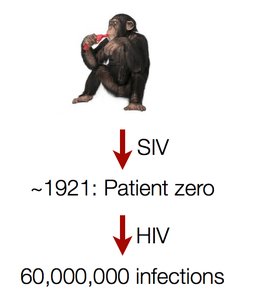
Subtypes of HIV
- HIV-1: Related to viruses infecting chimpanzees and gorillas; accounts for 99% of cases worldwide. - HIV-2: Related to viruses infecting monkeys and sooty mangabeys; less pathogenic and mostly found in Africa.
Structure of HIV
HIV is a retrovirus of the genus Lentivirus. - Genome: Two identical RNA strands. - Enzymes: Reverse transcriptase. - Envelope: Phospholipid envelope with gp120 glycoprotein spikes. 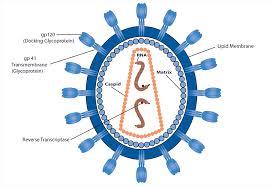
Infectiveness and Pathogenicity
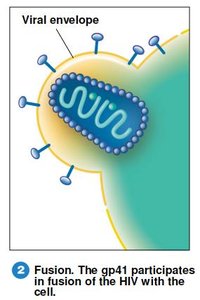
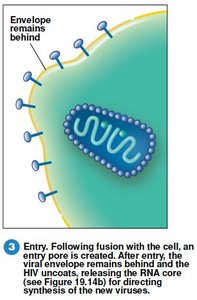
HIV infects CD4+ T cells, macrophages, and dendritic cells. - Attachment: gp120 binds to CD4+ receptor and CCR5 or CXCR4 coreceptors. - Fusion: gp41 mediates fusion with the cell membrane. - Entry: Viral RNA is released into the cell. 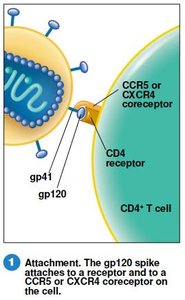
Latent and Active Infection
- Latent infection: Viral DNA integrates into host chromosomal DNA as a provirus, remaining hidden. - Active infection: Provirus is activated, producing new viruses. - Memory T cells: Serve as a reservoir for HIV. - Mutation: HIV undergoes rapid antigenic changes and high mutation rates. 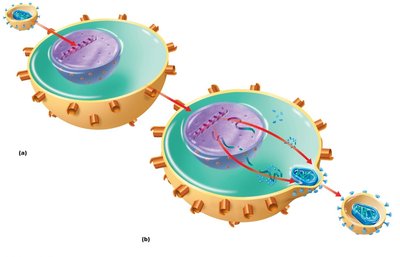
Stages of HIV Infection
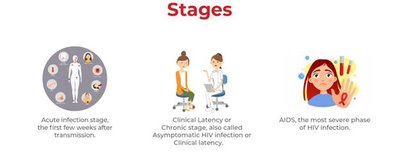
HIV infection progresses through three phases: - Phase 1: Asymptomatic or lymphadenopathy. - Phase 2: CD4+ T cells decline; persistent infections, fever, oral leukoplakia. - Phase 3: AIDS develops; CD4+ count below 200 cells/μl; indicator conditions. 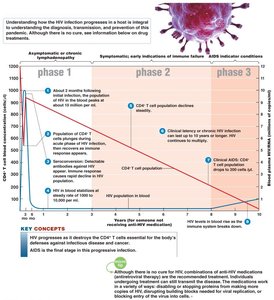
Diagnostic Methods
HIV is diagnosed using blood, urine, or saliva samples. - Antibody tests: Detect antibodies to HIV; seroconversion may take up to 3 months. - Antigen/antibody tests: Detect both antigens and antibodies. - Nucleic acid tests (NATs): Detect viral RNA. - Plasma viral load (PVL): Determined by PCR. 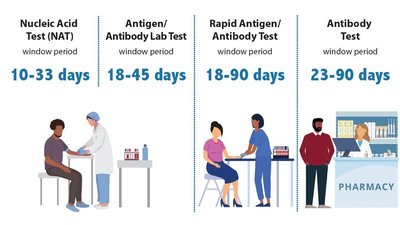
Preventing and Treating AIDS
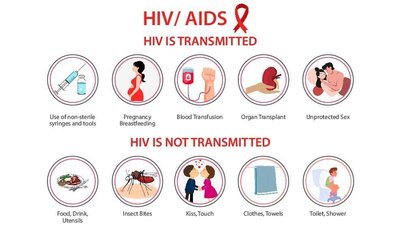
- Prevention: Use of condoms, sterile needles, and pre-exposure treatments. - Treatment: Highly active antiretroviral therapy (HAART) combines multiple drugs targeting different stages of the HIV life cycle. 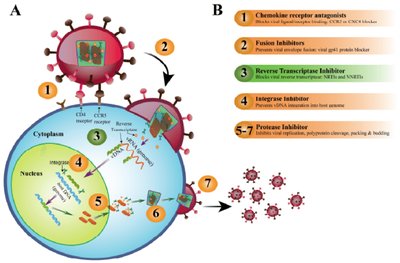
Drug Classes for HIV Treatment
- Fusion/cell entry inhibitors: Target gp41 region. - Reverse transcriptase inhibitors: NRTIs and NNRTIs. - Integrase inhibitors: Inhibit HIV integrase. - Protease inhibitors: Inhibit proteases, preventing virus maturation. - Tetherins: Prevent virus release and spread.
Challenges in HIV Vaccine Development
- No model of natural immunity to mimic. - Lack of research animals and understanding of retrovirus mechanisms. - High mutation rate leads to resistant strains. - Ideal vaccine: Should induce immunity before latent reservoirs are established, stimulate CTLs, and be affordable.
Summary Table: Comparison of Viral Diseases
Disease | Pathogen | Symptoms | Transmission | Treatment |
|---|---|---|---|---|
Common Cold | Rhinoviruses, others | Sneezing, congestion | Airborne droplets | Symptomatic relief |
Influenza | Influenzavirus | Fever, chills, aches | Airborne droplets | Antivirals, vaccines |
HIV/AIDS | HIV-1, HIV-2 | Immunodeficiency | Blood, sexual contact | HAART, prevention |
Additional info: Expanded explanations and tables were added for academic completeness and clarity.
