 Back
BackViruses, Cell Division, Mass Extinctions, and Bioethics
Study Guide - Smart Notes
 Tailored notes based on your materials, expanded with key definitions, examples, and context.
Viruses: Structure, Life Cycle, and Medical Intervention
Influenza Virus: Structure and Activation
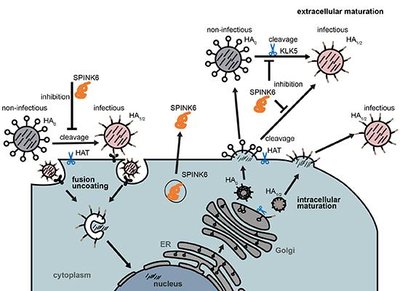
The influenza virus is an enveloped RNA virus that infects the respiratory tract of mammals and birds. Its infectivity depends on the cleavage of the hemagglutinin (HA) protein, which is required for viral entry into host cells.
Hemagglutinin (HA): A surface glycoprotein that must be cleaved by host proteases to activate the virus for membrane fusion.
Proteolytic Cleavage: Host serine proteases (e.g., HAT, KLK5) cleave HA, converting non-infectious viral particles into infectious ones.
SPINK6: A host protein that inhibits serine proteases, thereby restricting influenza virus activation and limiting infection.
Medical Intervention: Targeting protease activity or enhancing SPINK6 function could be potential strategies for antiviral therapy.
Example: Inhibitors of HA-cleaving proteases are being explored as antiviral drugs.
Coronavirus Entry and Replication
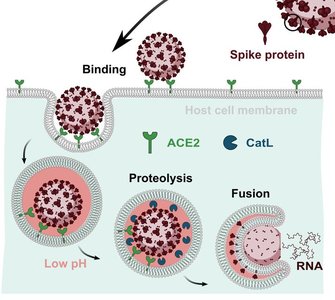
Coronaviruses, such as SARS-CoV-2, enter host cells through a series of coordinated steps involving receptor binding, proteolytic activation, and membrane fusion.
Spike Protein: Mediates attachment to the host cell receptor ACE2.
Proteolysis: Host proteases (e.g., Cathepsin L) cleave the spike protein, enabling fusion of viral and cellular membranes.
Fusion and Uncoating: Viral RNA is released into the cytoplasm, initiating replication.
Example: Drugs that block ACE2 binding or protease activity can inhibit viral entry.
Cell Division: Mitosis and Meiosis
Mitosis: Mechanism and Significance
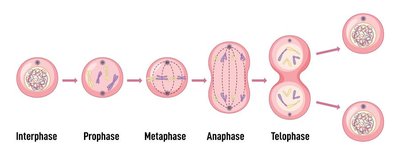
Mitosis is the process by which a eukaryotic cell divides to produce two genetically identical daughter cells. It is essential for growth, tissue repair, and asexual reproduction.
Phases of Mitosis:
Interphase: Cell grows and DNA is replicated.
Prophase: Chromosomes condense, spindle apparatus forms.
Metaphase: Chromosomes align at the metaphase plate.
Anaphase: Sister chromatids separate to opposite poles.
Telophase: Nuclear envelopes reform, cytokinesis divides the cytoplasm.
Duration: Metaphase is typically the longest phase (~20 minutes in some cells).
Example: Skin cells undergo mitosis to replace damaged tissue.
Meiosis: Mechanism and Evolutionary Importance
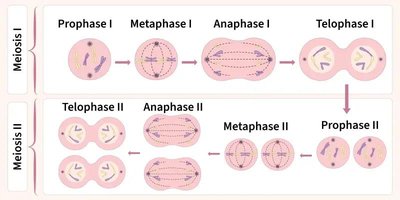
Meiosis is a specialized form of cell division that reduces the chromosome number by half, producing four genetically unique gametes. It is fundamental to sexual reproduction and genetic diversity.
Phases of Meiosis:
Meiosis I: Homologous chromosomes separate (Prophase I, Metaphase I, Anaphase I, Telophase I).
Meiosis II: Sister chromatids separate (Prophase II, Metaphase II, Anaphase II, Telophase II).
Prophase I: The longest phase (~13 days in some organisms), where crossing over and genetic recombination occur.
Error-Prone: Errors in meiosis can lead to aneuploidy (e.g., Down syndrome).
Example: Formation of sperm and egg cells in animals.
Mass Extinctions and Evolutionary History
Major Mass Extinctions
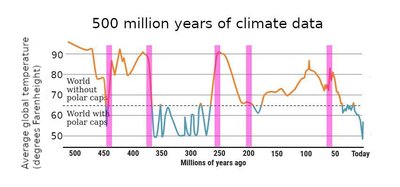
Earth's history is marked by five major mass extinction events, each resulting in the loss of a significant proportion of species. These events have shaped the evolution and diversity of life.
Timing: Mass extinctions are indicated by sharp declines in biodiversity and are often associated with dramatic climate changes.
Examples: The Permian-Triassic extinction (~252 million years ago) and the Cretaceous-Paleogene extinction (~66 million years ago).
Impact: Mass extinctions create opportunities for adaptive radiation and the emergence of new lineages.
Bioethics: Payment for Research Participation
Ethical Considerations in Clinical Research Compensation
Determining fair compensation for research participants involves balancing ethical concerns, such as avoiding undue inducement and ensuring voluntary informed consent.
Problems with High Payment:
May induce participation against self-interest.
Could be financially unsustainable for research sponsors.
May attract participants who misrepresent their health status.
Raises questions about the monetary value of human life.
Problems with Low Payment:
May result in insufficient participant recruitment.
Could be perceived as exploitative or unfair.
May reduce diversity in study populations.
Regulatory Guidance: Payments should not be coercive and must be approved by Institutional Review Boards (IRBs).
Example: The FDA provides guidelines to ensure compensation does not unduly influence participation.
Additional info: Ethical guidelines emphasize transparency, fairness, and the protection of vulnerable populations in research.
