 Back
Viruses: Structure, Replication, and Impact
Study Guide - Smart Notes
 Tailored notes based on your materials, expanded with key definitions, examples, and context.
Viruses
What Are Viruses?
Viruses are infectious agents that exist at the boundary between living and non-living entities. They are not considered cells because they lack the fundamental structures and metabolic machinery found in cellular life.
Lack membranes and cytoplasm
Do not possess ribosomes or machinery for protein synthesis
Cannot produce ATP or carry out metabolic reactions
Essentially, viruses are genetic material (DNA or RNA) enclosed in a protein shell
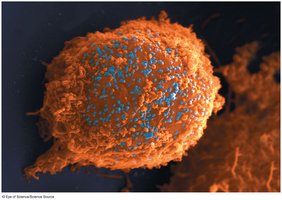
Historical Impact of Viruses
Viruses have caused some of the deadliest epidemics in human history, profoundly affecting populations and societies.
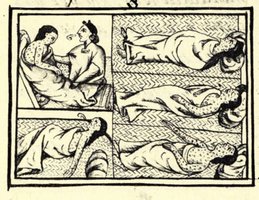
Smallpox: Responsible for millions of deaths across continents and centuries
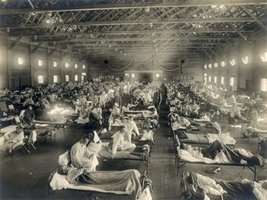
Spanish Flu (1918-1920): Caused 40-50 million deaths worldwide, affecting primarily young adults
Viral Structure
Basic Components of Viruses
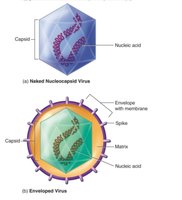
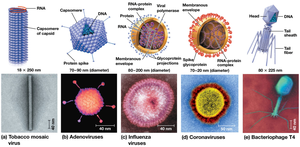
Viruses are composed of nucleic acids and a protective protein coat, with some possessing additional structures.
Nucleic acids: DNA or RNA, single- or double-stranded, linear or circular
Capsid: Protein shell made of capsomeres, protects the viral genome
Envelope (in some viruses): Lipid membrane derived from the host cell, contains viral and host proteins
Viral Diversity
Viruses exhibit a wide range of shapes and sizes, with structural adaptations for infecting specific hosts.
Examples include helical, icosahedral, and complex (bacteriophage) forms
Some viruses can crystallize outside of host cells
Viral Genomes
Types of Viral Genomes
Viral genomes are highly variable and can be classified based on their nucleic acid type.
May consist of double- or single-stranded DNA or RNA
Can be linear or circular
Small genomes: Only encode essential viral genes
Capsids and Envelopes
Capsid: Built from protein subunits (capsomeres), can have various shapes
Envelope: Helps viruses evade the immune system and enter host cells
Viral Replication
Obligate Intracellular Parasites
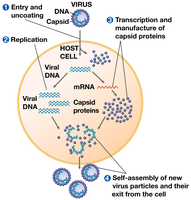
Viruses can only replicate inside host cells, using the host's machinery to produce new viral particles.
Each virus has a host range: the specific species or cell types it can infect
Viral infections are often tissue-specific in multicellular organisms
General Features of Viral Replicative Cycles
The viral life cycle involves several key steps:
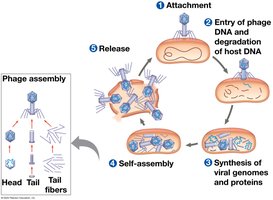
Attachment: Virus binds to host cell surface
Entry: Viral genome enters the host cell (by injection, endocytosis, or membrane fusion)
Replication and Synthesis: Host cell machinery is hijacked to replicate viral genome and synthesize viral proteins
Assembly: New viral particles self-assemble
Release: New viruses exit the cell, often destroying it
Phage Replication: Lytic and Lysogenic Cycles
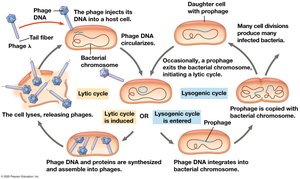
Bacteriophages (viruses that infect bacteria) can follow two main replication strategies:
Lytic cycle: Virus replicates rapidly and lyses (destroys) the host cell
Lysogenic cycle: Viral DNA integrates into the host genome and is replicated along with it; can later enter the lytic cycle
Bacterial Defenses Against Viruses
Surface Protein Variation
Bacteria can evolve surface proteins that prevent phage attachment, reducing susceptibility to infection.
Restriction-Modification Systems
Bacteria use restriction enzymes to cut foreign DNA, while methylating their own DNA to protect it from cleavage.
Restriction enzymes: Recognize and cut specific DNA sequences
Methylation: Protects host DNA from its own restriction enzymes


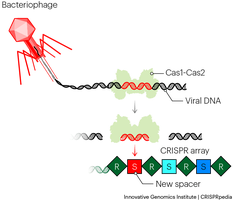
CRISPR-Cas System
The CRISPR-Cas system provides adaptive immunity in bacteria by storing fragments of viral DNA and targeting them during future infections.
CRISPR: Clustered Regularly Interspaced Short Palindromic Repeats
Cas proteins: Enzymes that cut foreign DNA
Acts as a genetic memory of past infections
Animal Viruses
Classification of Animal Viruses
Animal viruses are classified based on their genome type (DNA or RNA, single- or double-stranded) and the presence or absence of an envelope.
Enveloped viruses use glycoproteins to bind to host cell receptors (e.g., SARS-CoV-2 spike protein binds ACE2)
RNA Viruses and Retroviruses
Some RNA viruses can directly serve as mRNA for protein synthesis (e.g., influenza, SARS-CoV-2)
Retroviruses (e.g., HIV) use reverse transcriptase to convert RNA into DNA, which integrates into the host genome as a provirus
Viral Diseases and Prevention
Effects of Viral Infections
Viruses can cause disease by killing host cells, releasing toxins, or triggering immune responses.
Symptoms often result from the body's immune response to infection
Vaccines and Antiviral Drugs
Vaccines are the primary tool for preventing viral diseases. They stimulate the immune system without causing disease.
Vaccines contain inactivated viruses or viral proteins
Antibiotics are ineffective against viruses; antiviral drugs can treat but not cure viral infections
Common Vaccine Misconceptions
You cannot get the flu from the flu vaccine (it contains inactivated virus or viral proteins)
Feeling unwell after vaccination is due to the immune response, not infection
Annual flu shots are needed due to rapid viral mutation
Modern childhood vaccines do not contain thimerosal (ethyl mercury)
Viruses in Plants
Plant Viral Diseases
Plant viruses have similar structures and replication strategies as animal viruses, with most having RNA genomes and helical capsids. They can cause significant agricultural losses.
Prions: Infectious Proteins
What Are Prions?
Prions are infectious proteins that cause degenerative brain diseases in animals and humans. They act slowly and are nearly always fatal.
Prions propagate by inducing misfolding of normal proteins in the brain
Diseases include Creutzfeldt-Jakob disease (CJD) in humans
Additional info: This guide covers the essential aspects of viruses, their structure, replication, impact on health, and the defenses organisms use against them, as well as prions as non-viral infectious agents.
