 Back
Viruses: Structure, Replication, and Other Infectious Agents
Study Guide - Smart Notes
 Tailored notes based on your materials, expanded with key definitions, examples, and context.
Ch.17 - Viruses
Virus Structure
Viruses are acellular infectious agents that require a host cell for replication. They are much smaller than cells and consist primarily of genetic material encased in a protein shell.
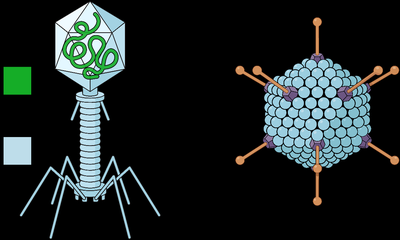
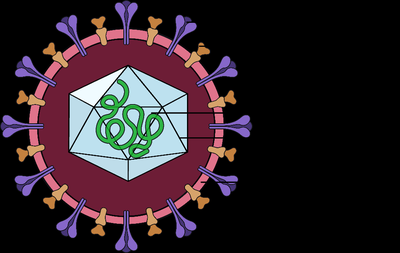
Capsid: The protein coat that surrounds and protects the viral genome. Capsids can have various shapes, such as helical, icosahedral, or complex forms.
Capsomere: The protein subunit that makes up the capsid.
Genetic Material: Viruses may contain double-stranded DNA (dsDNA), single-stranded DNA (ssDNA), double-stranded RNA (dsRNA), or single-stranded RNA (ssRNA).
Bacteriophages: Viruses that infect bacteria, often possessing complex capsids with additional structures for injecting their genome into host cells.
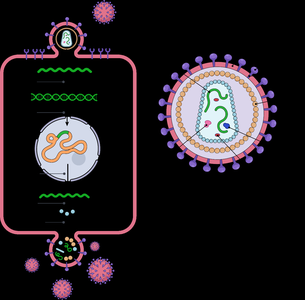
Viral Envelope: A lipid membrane derived from the host cell, present in many animal viruses, which surrounds the capsid and aids in host cell recognition and entry.
Host Range: The spectrum of host species and cell types that a virus can infect, determined by specific interactions between viral surface proteins and host cell receptors.
Virus Replication
Viral replication involves the entry of the viral genome into a host cell, hijacking the host's machinery to produce new viral particles.
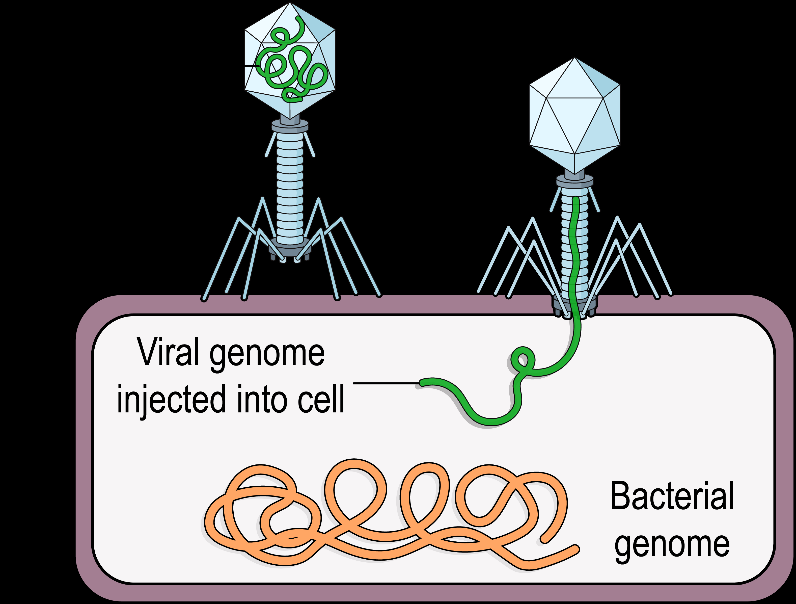
Attachment and Entry: Viruses attach to host cells via specific protein-receptor interactions. Entry mechanisms include direct injection of the genome (as in bacteriophages), endocytosis, or membrane fusion (common in enveloped viruses).
Replication: Once inside, the viral genome directs the host cell to synthesize viral nucleic acids and proteins using the host's nucleotides, enzymes, ribosomes, tRNA, amino acids, and ATP.
Assembly: Newly synthesized viral components spontaneously assemble into new virions.
Lytic and Lysogenic Cycles
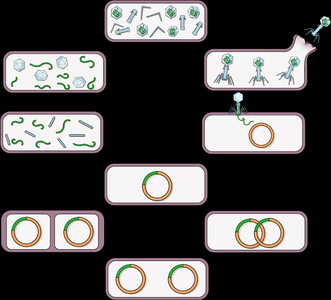
Bacteriophages can replicate via two main cycles: the lytic cycle and the lysogenic cycle.
Lytic Cycle: The phage injects its DNA, degrades the host DNA, synthesizes viral components, and lyses (destroys) the host cell to release new phages. Virulent phages replicate only by this cycle.
Lysogenic Cycle: The phage DNA integrates into the host genome, becoming a prophage. The viral genome is replicated along with the host's DNA without killing the host. Temperate phages can switch between lytic and lysogenic cycles.
Restriction Enzymes: Bacterial enzymes that can degrade foreign viral DNA as a defense mechanism.
Animal Virus Replication
Animal viruses often possess envelopes and RNA genomes. Their replication involves specific entry mechanisms and unique strategies for genome replication.
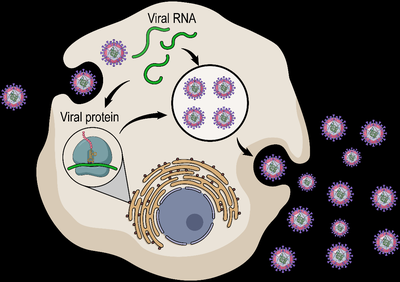
Entry: Animal viruses typically enter host cells via receptor-mediated endocytosis or membrane fusion.
Genome Replication: Viral RNA serves as a template for synthesis of new RNA and proteins, often using viral RNA polymerase.
Retroviruses: A special class of RNA viruses that use reverse transcriptase to synthesize DNA from their RNA genome, which then integrates into the host genome as a provirus.
Types of Viral Genomes
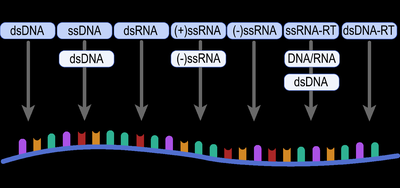
Viruses are classified based on the nature of their genetic material and replication strategy.
Double-stranded DNA (dsDNA) Viruses: Replicate in the nucleus, often during the S phase of the cell cycle. Examples include bacteriophages and smallpox virus.
Double-stranded RNA (dsRNA) Viruses: Replicate in the cytosol using viral enzymes. Infect a wide range of organisms.
Positive Sense RNA (+ssRNA) Viruses: Genome acts directly as mRNA and is immediately translated into proteins upon entry.
Negative Sense RNA (-ssRNA) Viruses: Genome is complementary to mRNA; viral RNA polymerase must transcribe it into a readable form.
Retroviruses (+ssRNA): Use reverse transcriptase to convert RNA into DNA, which integrates into the host genome.

Other Infectious Agents: Viroids and Prions
Besides viruses, other acellular infectious agents include viroids and prions.
Viroids: Small, circular, single-stranded RNA molecules that infect plants. They do not encode proteins but replicate using host enzymes, often causing stunted growth and other symptoms.
Prions: Infectious proteins that cause neurodegenerative diseases in animals. Prions propagate by inducing misfolding in normal proteins, leading to disease.

Type of Infectious Agent | Genetic Material | Host Range | Replication Mechanism |
|---|---|---|---|
Virus | DNA or RNA | Bacteria, plants, animals, fungi | Uses host cell machinery |
Viroid | ssRNA (circular) | Plants | Host RNA polymerase |
Prion | None (protein only) | Animals | Induces misfolding of host proteins |
