 Back
Viruses: Structure, Replication, and Vaccines(final exam)
Study Guide - Smart Notes
 Tailored notes based on your materials, expanded with key definitions, examples, and context.
Viruses: Structure and Classification
Basic Characteristics of Viruses
Viruses are infectious particles composed primarily of genetic material encased in a protein shell. They are not considered living organisms because they lack cellular structure and metabolic processes, relying entirely on host cells for replication.
Viral Genome: Can be double- or single-stranded DNA (DNA virus) or RNA (RNA virus).
Capsid: The protein shell that encloses the viral genome; its structure varies among viruses.
Envelope: Some viruses possess a membranous envelope derived from the host cell, containing viral glycoproteins.
Types of Viral Structures
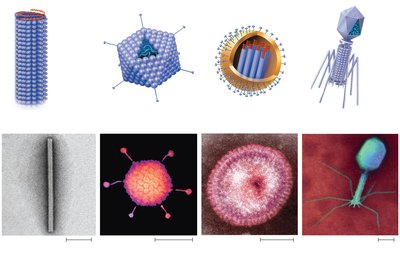
Viruses exhibit diverse structural forms, which are important for their classification and infection mechanisms.
Tobacco mosaic virus: Rod-shaped, RNA genome.
Adenoviruses: Icosahedral capsid, DNA genome.
Influenza viruses: Spherical, enveloped, RNA genome.
Bacteriophage T4: Complex structure with head and tail, DNA genome.
Example: Bacteriophages infect bacteria and are used in molecular biology research.
Viral Replication Cycles
Phage Replication: Lytic Cycle
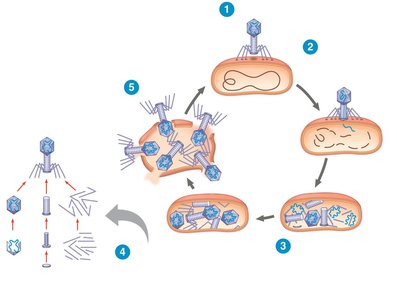
The lytic cycle is a viral replication mechanism that results in the destruction of the host cell. It is characteristic of virulent phages.
Attachment: Phage binds to the bacterial cell.
Entry: Phage DNA enters the host, degrading host DNA.
Synthesis: Viral genomes and proteins are synthesized using host machinery.
Assembly: New phage particles self-assemble.
Release: Host cell lyses, releasing progeny phages.
Phage Replication: Lysogenic Cycle
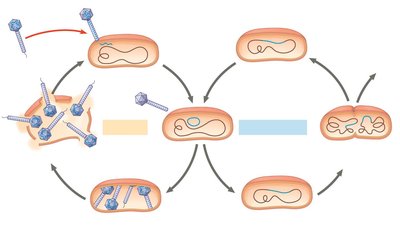
The lysogenic cycle allows the viral genome to be incorporated into the host cell's chromosome, replicating without killing the host. Temperate phages can alternate between lytic and lysogenic cycles.
Integration: Viral DNA integrates into the host genome, becoming a prophage.
Replication: Host cell divides, copying the prophage DNA.
Induction: Prophage may exit the chromosome and enter the lytic cycle under certain conditions.
RNA Viruses and Retroviruses
RNA as Viral Genetic Material
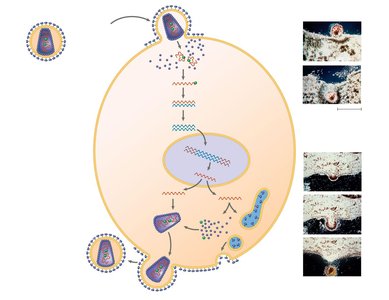
Animal viruses often possess RNA genomes. Retroviruses, such as HIV, use reverse transcriptase to convert their RNA genome into DNA, which integrates into the host genome.
Reverse Transcriptase: Enzyme that synthesizes DNA from an RNA template.
Provirus: Integrated viral DNA in the host genome.
HIV: Human immunodeficiency virus, a retrovirus causing AIDS.
Viruses: Alive or Not?
Are Viruses Alive?
Viruses do not meet all criteria for life. They lack cellular structure, metabolism, and independent reproduction, but they evolve and interact with living systems.
Key Point: Viruses are considered non-living infectious agents.
Treatment and Prevention of Viral Infections
Antibiotics, Antivirals, and Vaccines
Viruses cannot be treated with antibiotics, which target bacteria. Antiviral drugs can inhibit viral replication but rarely cure infections. Vaccines are the primary tool for preventing viral diseases.
Antibiotics: Ineffective against viruses.
Antiviral Drugs: Target specific viral processes.
Vaccines: Harmless derivatives of pathogens that stimulate immune defense.

How Vaccines Work
Vaccines expose the immune system to a safe form of a pathogen, prompting the production of antibodies and memory cells. This prepares the body to fight real infections.
Immunity: The immune system remembers the pathogen and responds rapidly upon exposure.
Types of Vaccines: Inactivated, live-attenuated, subunit, and mRNA vaccines.
Vaccine Development and Effectiveness
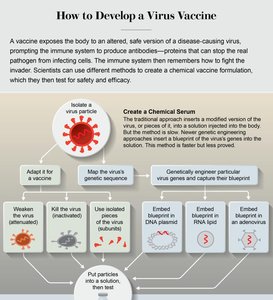
Vaccine Development Process
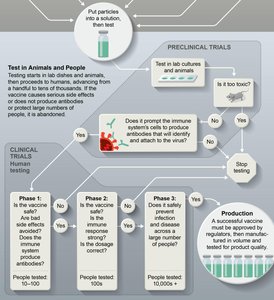
Developing a vaccine involves isolating the virus, modifying it, and testing for safety and efficacy in preclinical and clinical trials.
Preclinical Trials: Testing in lab cultures and animals.
Clinical Trials: Human testing in phases to assess safety and effectiveness.
Production: Large-scale manufacturing after approval.
Vaccine-Preventable Diseases
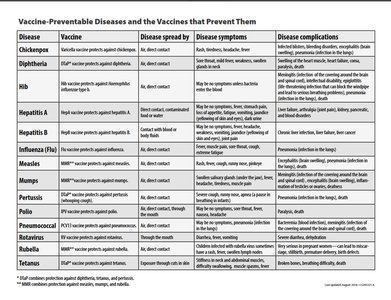
Vaccines have dramatically reduced the incidence of many infectious diseases. The table below summarizes key diseases, their vaccines, and complications.
Disease | Vaccine | Disease Spread By | Disease Symptoms | Disease Complications |
|---|---|---|---|---|
Chickenpox | Varicella vaccine | Airborne, direct contact | Rash, fever | Pneumonia, brain infection |
Diphtheria | DTP vaccine | Airborne, direct contact | Sore throat, fever | Heart, nerve damage |
Measles | MMR vaccine | Airborne, direct contact | Rash, fever | Pneumonia, brain infection |
Polio | IPV/OPV vaccine | Fecal-oral | Fever, paralysis | Permanent paralysis |
Tetanus | DTP vaccine | Exposure through wounds | Muscle stiffness | Breathing difficulty, death |
Additional info: | Table includes other diseases such as Hib, Hepatitis, Influenza, Mumps, Pertussis, Pneumococcal, Rubella. |
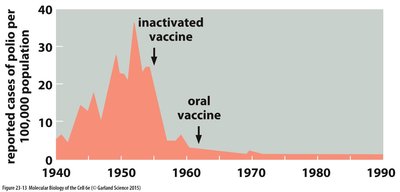
Impact of Vaccines: Polio Example
Vaccination has led to a dramatic decline in polio cases worldwide, demonstrating the effectiveness of immunization programs.
Vaccine Safety and Controversies
Vaccine Fears and Misinformation
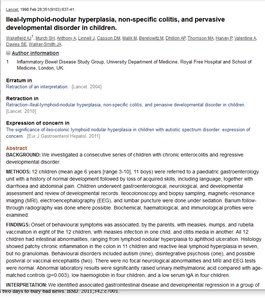
Concerns about vaccine safety have arisen due to misinformation and fraudulent studies. The infamous 1998 study linking MMR vaccine to autism was retracted and discredited.
Fraudulent Research: The study was based on a small sample and unethical practices.
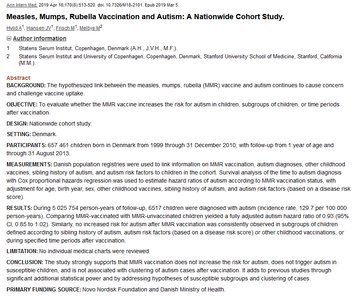
Scientific Consensus: Large-scale studies have found no link between vaccines and autism.
Common Vaccine Concerns
Other concerns include natural immunity, allergic reactions, toxins, and rare adverse events. Scientific evidence supports the safety and efficacy of vaccines at recommended doses.
Natural Immunity: Riskier than vaccine-acquired immunity.
Allergic Reactions: Extremely rare.
Toxins: Levels in vaccines are far below harmful thresholds.
Live Vaccines: Rarely cause disease; polio vaccine example.
Guillain-Barre Syndrome: Risk is lower after vaccination than after infection.
Modern Vaccines: mRNA Technology
mRNA Vaccines
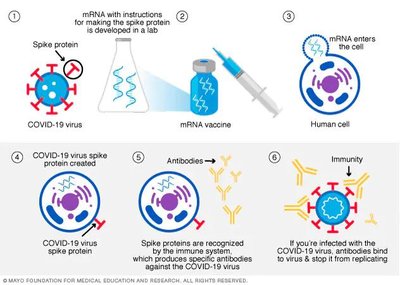
mRNA vaccines, such as those developed for COVID-19, use messenger RNA to instruct cells to produce viral proteins, triggering an immune response.
Mechanism: mRNA is delivered into cells, which produce viral spike proteins.
Immune Response: Antibodies are generated against the viral protein.
Advantages: Rapid development, no risk of infection from the vaccine.
Herd Immunity
Concept and Importance
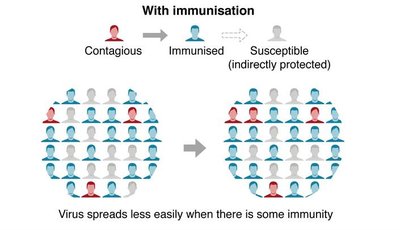
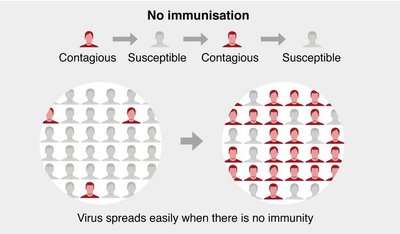
Herd immunity occurs when a sufficient proportion of a population is immune to a disease, reducing its spread and protecting vulnerable individuals.
Protection: Immune-compromised, elderly, and infants benefit from herd immunity.
Threshold: Depends on disease transmissibility; higher for highly contagious diseases.
Medical and Societal Policy
Vaccine Mandates and Ethics
Public health policy debates include whether governments should mandate vaccines and how to balance immediate benefits with potential long-term risks. Ethical considerations may be informed by societal values and scientific evidence.
Mandates: Can protect public health but may raise concerns about individual rights.
Fast-Track Approval: May be justified during pandemics, but requires careful risk assessment.
Additional info: Ethical frameworks, such as biblical ethics, may guide individual and societal decisions regarding vaccination.
