 Back
Water and Biomolecules: Structure, Bonds, and Biological Importance
Study Guide - Smart Notes
 Tailored notes based on your materials, expanded with key definitions, examples, and context.
Water: Structure, Polarity, and Hydrogen Bonding
Atomic Structure and Covalent Bonds
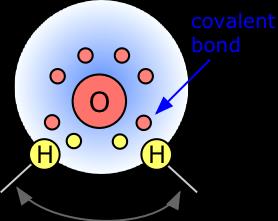
Atoms form molecules by sharing electrons through covalent bonds. The number of bonds an atom forms depends on its valence electrons. For example, hydrogen forms one bond, oxygen forms two, nitrogen forms three, and carbon forms four. Covalent bonds can be nonpolar (equal sharing of electrons) or polar (unequal sharing of electrons).
Nonpolar Covalent Bonds: Electrons are shared equally between atoms of similar electronegativity (e.g., H2 molecule).
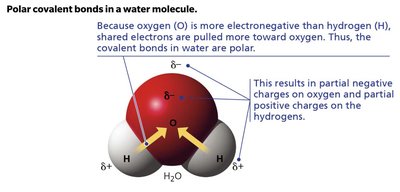
Polar Covalent Bonds: Electrons are shared unequally, resulting in partial charges (e.g., O-H bond in water).
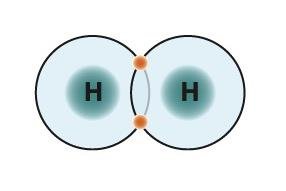
Electronegativity and Bond Polarity
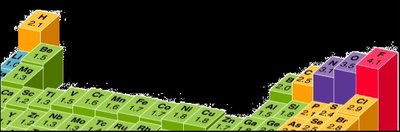
Electronegativity is the ability of an atom to attract shared electrons. The difference in electronegativity between two atoms determines the bond type:
0–0.5: Nonpolar covalent
0.5–1.7: Polar covalent
>1.7: Ionic

Structure of Water (H2O)
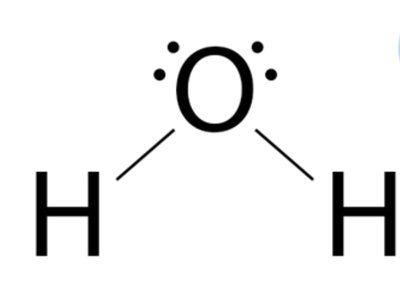
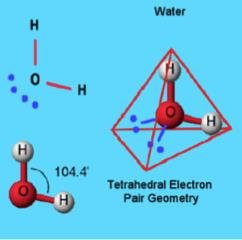
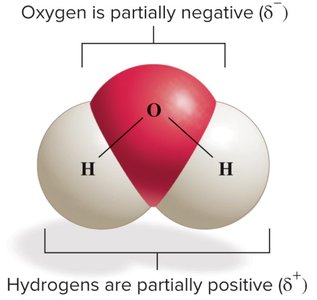
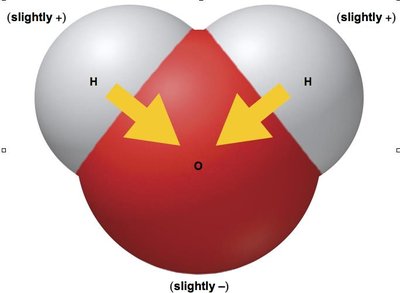
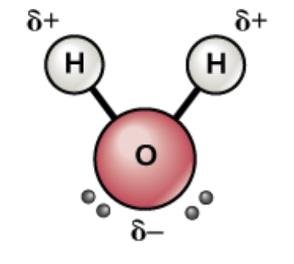
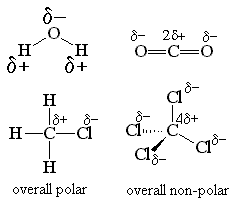
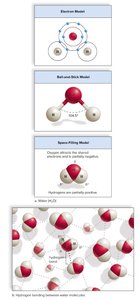
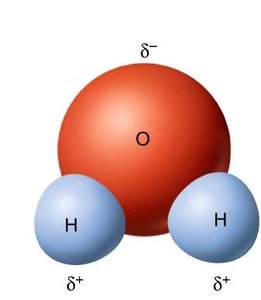
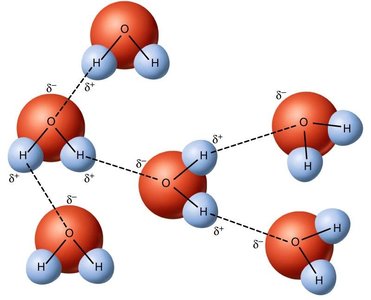
Water is a polar molecule due to its bent shape and the high electronegativity of oxygen. The oxygen atom attracts electrons more strongly than hydrogen, resulting in a partial negative charge on oxygen and partial positive charges on hydrogens.
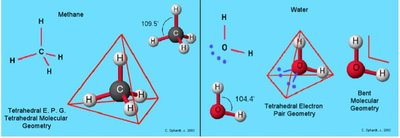
Bent molecular geometry (104.5° bond angle)
Polar covalent bonds between O and H
Asymmetrical electron distribution creates polarity
Polarity and Molecular Shape
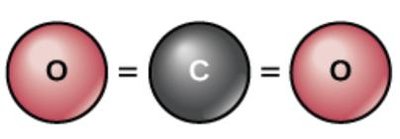
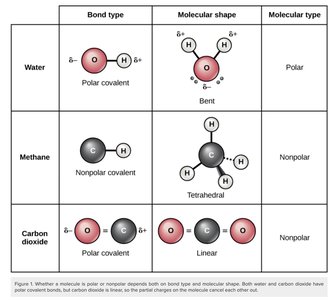
The polarity of a molecule depends on both the type of bonds and the molecular shape. Water is polar because of its bent shape, while carbon dioxide (CO2) is nonpolar due to its linear shape, even though it has polar bonds.
Water: Polar covalent bonds, bent shape, overall polar
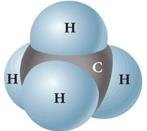
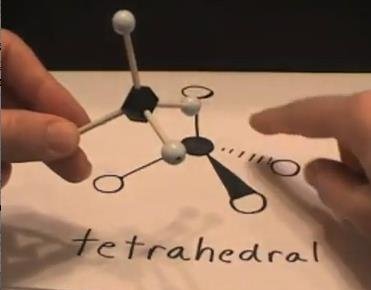
Methane (CH4): Nonpolar covalent bonds, tetrahedral shape, overall nonpolar
CO2: Polar covalent bonds, linear shape, overall nonpolar
Hydrogen Bonding
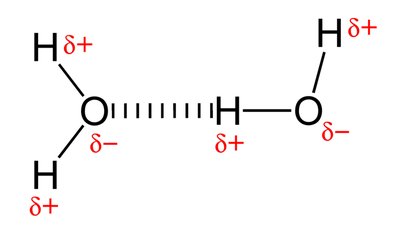
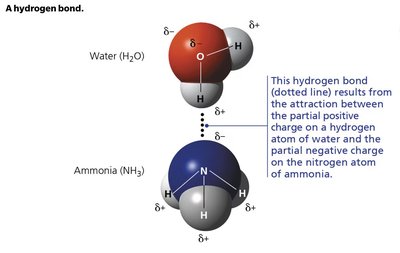
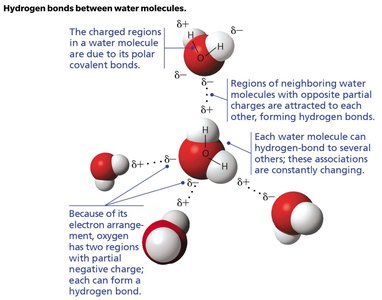
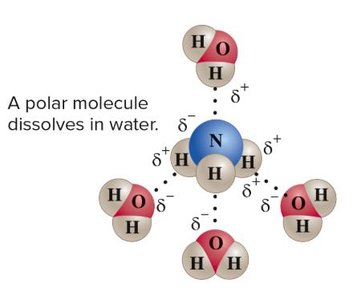
Hydrogen bonds are weak, noncovalent interactions between a partially positive hydrogen atom (bonded to N or O) and a partially negative atom (N or O) in another molecule. Although individually weak, the cumulative effect of many hydrogen bonds is significant in biological systems.
Hydrogen bonds are responsible for water's unique properties, DNA base pairing, and protein folding.
Hydrogen bonds are shown as dotted or dashed lines in diagrams.
Emergent Properties of Water
Cohesion and Adhesion
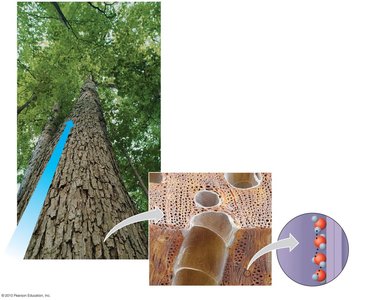
Cohesion is the attraction between water molecules due to hydrogen bonding, leading to high surface tension. Adhesion is the attraction between water molecules and other polar substances, important for processes like water transport in plants.
Cohesion: Responsible for surface tension and water droplet formation.
Adhesion: Enables capillary action in plant vessels.
High Specific Heat and Heat of Vaporization
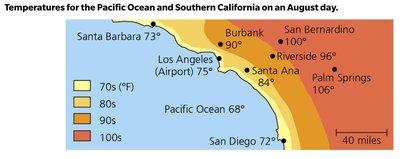
Water resists temperature changes due to its high specific heat, which is the energy required to raise the temperature of 1 gram of water by 1°C. Its high heat of vaporization allows water to absorb large amounts of heat before evaporating, moderating Earth's climate and organisms' body temperatures.
Specific heat: Stabilizes temperatures in organisms and environments.
Heat of vaporization: Allows for evaporative cooling (e.g., sweating).
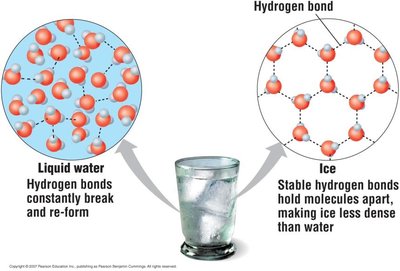
Ice Floats
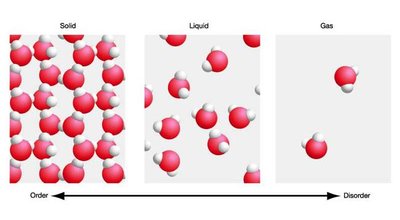
Unlike most substances, solid water (ice) is less dense than liquid water due to the stable hydrogen bonds that form a crystalline structure. This property allows ice to float, insulating aquatic life in winter.
Stable hydrogen bonds in ice keep molecules further apart than in liquid water.
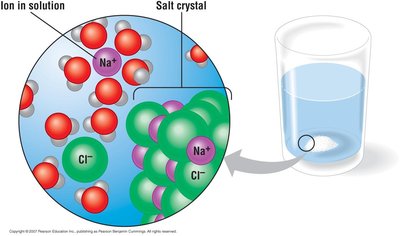
Water as a Solvent
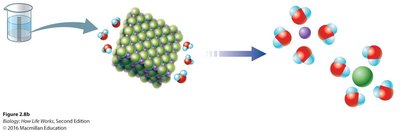
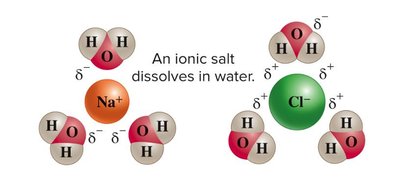
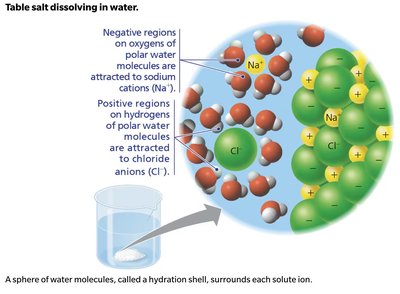
Water is an excellent solvent for polar and ionic substances due to its polarity. It forms hydration shells around ions and polar molecules, allowing them to dissolve.
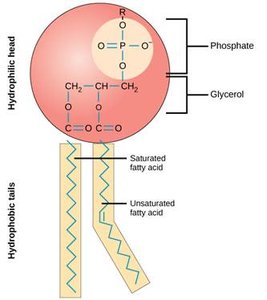
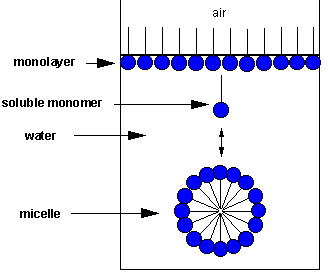
Hydrophilic substances: Polar or charged, dissolve in water (e.g., salts, sugars).
Hydrophobic substances: Nonpolar, do not dissolve in water (e.g., oils, lipids).
pH, Acids, Bases, and Buffers
Water Ionization and the pH Scale
Water can ionize into hydrogen ions (H+) and hydroxide ions (OH–). The pH scale measures the concentration of H+ ions in a solution and is logarithmic: each unit change represents a tenfold change in [H+].
pH = –log10[H+]
Neutral water: [H+] = 1 × 10⁻⁷ M, pH = 7
Acids: Increase [H+], lower pH
Bases: Decrease [H+], raise pH
Buffers are substances that minimize changes in pH by accepting or donating H+ ions.
Biological Macromolecules: Structure and Synthesis
Macromolecules and Monomers
Cells are composed of four major classes of macromolecules: carbohydrates, proteins, nucleic acids, and lipids. These are polymers made from repeating monomer units.
Carbohydrates: Monomer = monosaccharide
Proteins: Monomer = amino acid
Nucleic acids: Monomer = nucleotide
Lipids: Not true polymers, but built from fatty acids and glycerol
Polymers are synthesized by dehydration synthesis (removal of water) and broken down by hydrolysis (addition of water).
Functional Groups
Functional groups are specific groups of atoms within molecules that are responsible for the characteristic chemical reactions of those molecules. Examples include hydroxyl, carbonyl, carboxyl, amino, phosphate, and sulfhydryl groups.
Proteins: Structure and Function
Levels of Protein Structure
Primary structure: Sequence of amino acids linked by peptide bonds
Secondary structure: Alpha helices and beta sheets formed by hydrogen bonding
Tertiary structure: 3D folding due to side chain interactions (hydrophobic, ionic, hydrogen bonds)
Quaternary structure: Association of multiple polypeptide subunits
Protein function depends on its shape, which can be altered (denatured) by changes in temperature or pH.
Nucleic Acids: DNA and RNA
Structure and Function
Nucleic acids are polymers of nucleotides. DNA stores genetic information; RNA is involved in protein synthesis. Nucleotides consist of a sugar, phosphate group, and nitrogenous base. DNA is double-stranded and forms a double helix; RNA is usually single-stranded.
Base pairing: A–T (2 H-bonds), G–C (3 H-bonds) in DNA
Antiparallel strands: 5' to 3' directionality
Central Dogma of Molecular Biology
Information Flow
The central dogma describes the flow of genetic information: DNA is transcribed into RNA, which is translated into protein. This process is fundamental to all living organisms.
Transcription: DNA → RNA
Translation: RNA → Protein
Summary Table: Types of Bonds and Their Biological Importance
Bond Type | Strength | Example | Biological Role |
|---|---|---|---|
Covalent (nonpolar) | Strong | H2, CH4 | Stable backbone of biomolecules |
Covalent (polar) | Strong | H2O, NH3 | Creates polarity, enables H-bonding |
Hydrogen bond | Weak (individually) | Between water molecules, DNA bases | Stabilizes structures, emergent properties |
Ionic bond | Moderate | NaCl | Salt bridges, solubility in water |
