 Back
Water and Carbon: Chemistry and Biological Importance
Study Guide - Smart Notes
 Tailored notes based on your materials, expanded with key definitions, examples, and context.
Basic Chemistry of Water
Structure and Polarity of Water
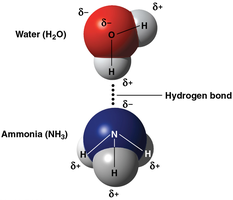
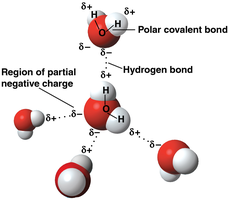
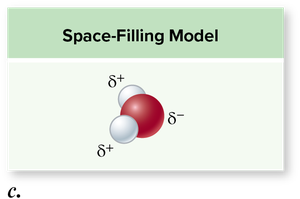
Water (H2O) is a polar molecule, meaning it has an uneven distribution of charge due to the difference in electronegativity between oxygen and hydrogen atoms. This polarity allows water molecules to form hydrogen bonds with each other and with other polar molecules.
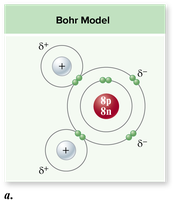
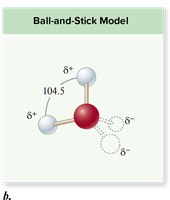
Polar Covalent Bonds: The electrons in water are shared unequally, resulting in a partial negative charge (δ–) near the oxygen and partial positive charges (δ+) near the hydrogens.
Hydrogen Bonds: These are weak attractions between the hydrogen atom of one water molecule and the electronegative atom (usually oxygen or nitrogen) of another molecule.
Models of Water: Water can be represented by different models (Bohr, ball-and-stick, space-filling) to illustrate its structure and polarity.
Four Vital Properties of Water for Living Systems
1. Cohesive Behavior
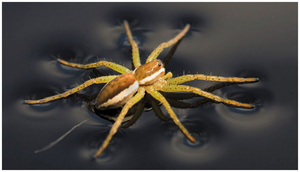
Cohesion refers to the attraction between water molecules due to hydrogen bonding. This property is responsible for water's high surface tension, which allows certain organisms to move across its surface.
Surface Tension: The measure of how difficult it is to stretch or break the surface of a liquid.
Biological Example: Some insects can walk on water due to surface tension.
1. Cohesion vs. Adhesion
Cohesion helps transport water and nutrients against gravity in plants, while adhesion is the attraction between water and other substances, such as plant cell walls, aiding in water movement.
2. Ability to Moderate Temperature
Water can absorb or release large amounts of heat with only a slight change in its own temperature, due to its high specific heat capacity.
Specific Heat: The amount of heat required to change the temperature of 1 g of a substance by 1°C. For water, this is 1 cal/(g·°C).
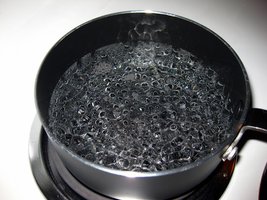
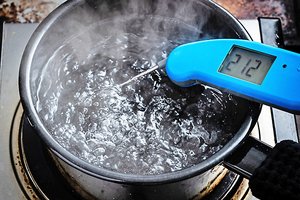
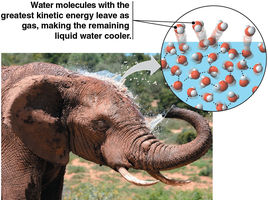
Heat of Vaporization: The heat a liquid must absorb for 1 g to be converted to gas. Evaporative cooling helps organisms and environments maintain stable temperatures.
3. Expansion Upon Freezing
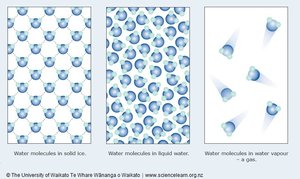
Water is less dense as a solid than as a liquid, which is why ice floats. This is due to the hydrogen bonds forming a crystalline lattice that spaces molecules further apart in ice than in liquid water.
Biological Importance: If ice sank, aquatic life would be threatened as bodies of water would freeze solid from the bottom up.

4. Versatility as a Solvent
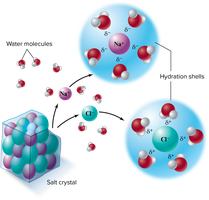
Water is known as the "universal solvent" because its polarity allows it to dissolve a wide variety of substances, especially ionic and polar compounds.
Solution: A homogeneous mixture of two or more substances.
Solvent: The dissolving agent (water in aqueous solutions).
Solute: The substance that is dissolved.
Hydration Shell: The sphere of water molecules surrounding each ion when an ionic compound dissolves in water.
Acids, Bases, and Buffers
Acids and Bases
An acid increases the H+ concentration of a solution, while a base decreases it. The pH scale measures the acidity or basicity of a solution.
Acidic Solutions: pH < 7
Basic Solutions: pH > 7
Neutral Solution: pH = 7
pH Equation:
Water Dissociation Constant: at 25°C
Buffers
Buffers are substances that minimize changes in the concentrations of H+ and OH– in a solution. They typically consist of a weak acid and its corresponding base, which combine reversibly with H+ ions to maintain a stable pH.
Basic Chemistry of Carbon
Carbon: The Backbone of Biological Molecules
Carbon atoms form the foundation of organic molecules due to their ability to form four covalent bonds, resulting in a diversity of stable structures.
Organic Chemistry: The study of carbon-containing compounds.
Valence: Carbon has four valence electrons, allowing for a variety of bonding patterns, including single, double, and triple bonds.
Tetrahedral Shape: When bonded to four other atoms, carbon forms a tetrahedral geometry.
Origins of Life and Organic Molecules
Experiments such as Stanley Miller's demonstrated that organic molecules could be synthesized abiotically, supporting theories about the chemical origins of life on Earth.
Carbon Skeleton Variation and Molecular Diversity
The diversity of organic molecules arises from variations in carbon skeletons and the presence of functional groups. Hydrocarbons, composed only of carbon and hydrogen, form the backbone of many biological macromolecules.
Hydrocarbons: Organic molecules consisting entirely of carbon and hydrogen; they can release large amounts of energy during reactions.
Isomers
Isomers are compounds with the same molecular formula but different structures and properties.
Structural Isomers: Differ in the covalent arrangements of their atoms.
Cis-Trans (Geometric) Isomers: Have the same covalent bonds but differ in spatial arrangements.
Enantiomers: Mirror images of each other, important in biological systems due to their different effects.
Functional Groups
Functional groups are specific groups of atoms within molecules that are responsible for the characteristic chemical reactions of those molecules. The number and arrangement of functional groups determine the unique properties of each organic molecule.
Example Table: Common Functional Groups in Biology
Functional Group | Structure | Properties | Example |
|---|---|---|---|
Hydroxyl | –OH | Polar, forms hydrogen bonds | Alcohols (e.g., ethanol) |
Carbonyl | –C=O | Polar, found in sugars | Aldehydes, ketones |
Carboxyl | –COOH | Acidic, donates H+ | Amino acids, fatty acids |
Amino | –NH2 | Basic, accepts H+ | Amino acids |
Sulfhydryl | –SH | Forms disulfide bonds | Proteins |
Phosphate | –PO4 | Contributes negative charge | ATP, nucleic acids |
Methyl | –CH3 | Nonpolar, affects gene expression | DNA, proteins |
Additional info: Functional groups are critical for the structure and function of biomolecules, influencing solubility, reactivity, and interactions within cells.
