 Back
Water and Carbon: Foundations of Life’s Chemistry
Study Guide - Smart Notes
 Tailored notes based on your materials, expanded with key definitions, examples, and context.
Chapter 3: Water – The Fitness of the Environment
Concept 3.1: The Polarity of Water Molecules Results in Hydrogen Bonding
Water is essential for all living organisms, making up 70–95% of most cells. Its abundance is a key factor in Earth's habitability. The water molecule is polar, meaning it has regions of partial positive and negative charge, allowing it to form hydrogen bonds with other water molecules.
Polarity: Water’s oxygen atom is more electronegative than hydrogen, creating a dipole.
Hydrogen Bonding: The polarity enables water molecules to attract each other, forming hydrogen bonds.

Concept 3.2: Four Emergent Properties of Water Contribute to Earth’s Fitness for Life
Water’s unique properties arise from its ability to form hydrogen bonds, making it vital for life on Earth. The four key properties are:
Cohesive behavior
Ability to moderate temperature
Expansion upon freezing
Versatility as a solvent
Cohesion and Adhesion
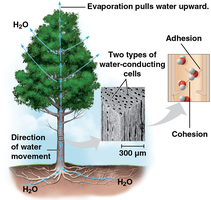
Cohesion refers to the attraction between water molecules due to hydrogen bonding, which helps transport water against gravity in plants and results in high surface tension. Adhesion is the attraction between water and other substances, such as plant cell walls.
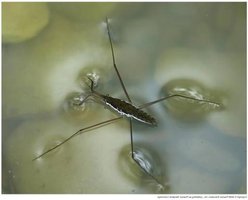
Surface Tension: The difficulty of breaking the surface of a liquid due to cohesive forces.
Example: Water striders can walk on water due to high surface tension.
Moderation of Temperature
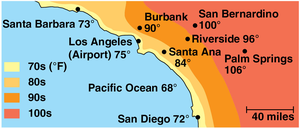
Water moderates temperature by absorbing heat from warmer air and releasing it to cooler air. It can absorb or release large amounts of heat with only slight changes in its own temperature due to its high specific heat.
Kinetic Energy: Energy of motion; heat is the total kinetic energy due to molecular motion.
Specific Heat: The amount of heat required to change 1 g of a substance by 1°C. For water, it is 1 cal/g/°C.
Biological Importance: Water’s high specific heat stabilizes ocean and organism temperatures.
Evaporative Cooling
Evaporation is the transformation from liquid to gas. As water evaporates, the surface cools, a process called evaporative cooling. This helps regulate temperatures in organisms and environments.
Heat of Vaporization: The heat required for 1 g of liquid to become gas.
Example: Sweating cools the body as water evaporates from the skin.
Insulation of Bodies of Water by Floating Ice
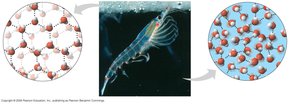
Ice is less dense than liquid water because hydrogen bonds in ice are more ordered, causing it to float. This insulates bodies of water, protecting aquatic life in winter.
Density Maximum: Water is most dense at 4°C.
Biological Importance: If ice sank, lakes and oceans would freeze solid, threatening life.
Versatility as a Solvent
Water is known as the "universal solvent" because its polarity allows it to dissolve many substances, forming aqueous solutions. When ionic compounds dissolve, each ion is surrounded by a hydration shell of water molecules.
Solution: Homogeneous mixture of solute (dissolved substance) and solvent (dissolving agent).
Aqueous Solution: Water is the solvent.
Hydration Shell: Sphere of water molecules around each dissolved ion.
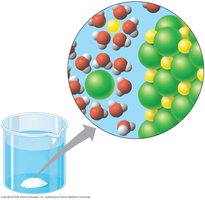
Hydrophilic and Hydrophobic Substances
Hydrophilic substances have an affinity for water (e.g., salts, sugars), while hydrophobic substances do not (e.g., oils). A colloid is a stable suspension of fine particles in a liquid.
Biochemical Reactions: Most occur in aqueous solutions and depend on solute concentration.
Concept 3.3: Acidic and Basic Conditions Affect Living Organisms
Water can dissociate into hydrogen ions (H+) and hydroxide ions (OH–). The balance of these ions is crucial for cellular processes.
Dissociation:
Hydronium Ion (H3O+): Water molecule with an extra proton.
Hydroxide Ion (OH–): Water molecule that lost a proton.
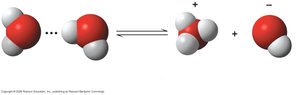
Effects of Changes in pH
The pH scale measures the concentration of H+ ions in a solution:
pH Equation:
Acids: Increase H+ concentration (pH < 7).
Bases: Decrease H+ concentration (pH > 7).
Neutral: [H+] = [OH–] (pH = 7).
Biological Fluids: Usually have pH 6–8.
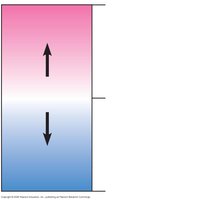
Buffers
Buffers are substances that minimize changes in pH by reversibly binding H+ ions. Most buffers consist of a weak acid and its corresponding base.
Importance: Maintain stable pH in cells and biological fluids.
Acidification: A Threat to Our Oceans
Human activities, such as burning fossil fuels, increase atmospheric CO2, which dissolves in oceans and forms carbonic acid, lowering pH (ocean acidification). This reduces carbonate ions needed by marine organisms for calcification, threatening coral reefs and marine ecosystems.
Environmental Impact: Ocean acidification can cause ecosystem-wide changes.
Chapter 4: Carbon and the Molecular Diversity of Life
Overview: Carbon – The Backbone of Life
Although cells are mostly water, the rest is primarily carbon-based compounds. Carbon forms the backbone of proteins, DNA, carbohydrates, and other molecules essential for life.
Concept 4.1: Organic Chemistry is the Study of Carbon Compounds
Organic chemistry focuses on compounds containing carbon, usually bonded to hydrogen, oxygen, nitrogen, sulfur, or phosphorus. The versatility of carbon allows for a vast diversity of organic molecules.
Stanley Miller’s Experiment: Demonstrated abiotic synthesis of organic compounds, supporting theories about the origin of life.
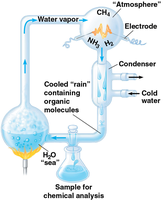
Concept 4.2: Carbon Atoms Can Form Diverse Molecules by Bonding to Four Other Atoms
Carbon has four valence electrons, allowing it to form four covalent bonds. This tetravalence enables the formation of large, complex molecules with various shapes (tetrahedral, planar, etc.).
Electron Configuration: Determines the number and type of bonds carbon forms.
HONC Rule: Hydrogen (1 bond), Oxygen (2), Nitrogen (3), Carbon (4).
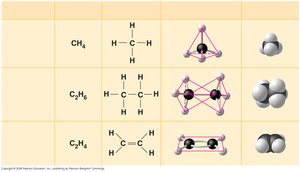
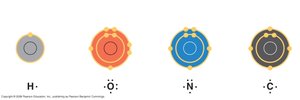
Carbon Skeleton Variation
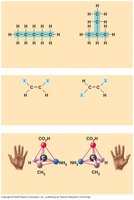
Carbon chains form the skeletons of most organic molecules, which can vary in length, branching, double bond position, and ring structure. This variation contributes to molecular diversity.

Hydrocarbons
Hydrocarbons are organic molecules consisting only of carbon and hydrogen. They are nonpolar and can store large amounts of energy (e.g., fats).
Isomers
Isomers are compounds with the same molecular formula but different structures:
Structural Isomers: Different covalent arrangements.
Geometric Isomers: Same covalent arrangements, different spatial arrangements (cis/trans).
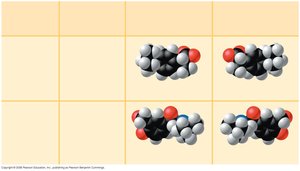
Enantiomers: Mirror images of each other; important in pharmaceuticals as different enantiomers can have different biological effects.
Concept 4.3: A Small Number of Chemical Groups Are Key to the Functioning of Biological Molecules
The properties of organic molecules depend on their carbon skeletons and the functional groups attached. Functional groups are specific groups of atoms that participate in chemical reactions.
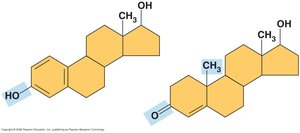
Seven Key Functional Groups: Hydroxyl, Carbonyl, Carboxyl, Amino, Sulfhydryl, Phosphate, Methyl
Example: Estradiol and testosterone differ only in functional groups, yet have distinct biological effects.
ATP: An Important Source of Energy for Cellular Processes
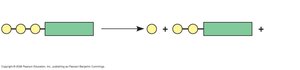
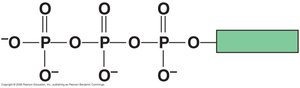
Adenosine triphosphate (ATP) is the primary energy-transferring molecule in cells. It consists of adenosine attached to three phosphate groups. Hydrolysis of ATP releases energy for cellular work.
ATP Structure: Adenosine + three phosphate groups
Energy Release:
Summary Table: Four Emergent Properties of Water
Property | Description | Biological Importance |
|---|---|---|
Cohesion/Adhesion | Hydrogen bonds hold water molecules together and to other surfaces | Transport in plants, surface tension |
Temperature Moderation | High specific heat and heat of vaporization | Stabilizes climate and organism temperature |
Expansion upon Freezing | Ice is less dense than liquid water | Insulates aquatic habitats |
Versatility as a Solvent | Polarity allows dissolution of many substances | Facilitates biochemical reactions |
Summary Table: Major Functional Groups in Biological Molecules
Functional Group | Structure | Properties | Example |
|---|---|---|---|
Hydroxyl | –OH | Polar, forms hydrogen bonds | Alcohols |
Carbonyl | –C=O | Polar | Aldehydes, ketones |
Carboxyl | –COOH | Acidic, donates H+ | Acetic acid |
Amino | –NH2 | Basic, accepts H+ | Glycine |
Sulfhydryl | –SH | Forms disulfide bonds | Cysteine |
Phosphate | –OPO32– | Contributes negative charge, energy transfer | ATP |
Methyl | –CH3 | Affects gene expression | 5-Methyl cytidine |
