 Back
Water and Carbon: The Chemical Basis of Life – Study Notes
Study Guide - Smart Notes
 Tailored notes based on your materials, expanded with key definitions, examples, and context.
Water and Carbon: The Chemical Basis of Life
Atoms, Ions, and Molecules: The Building Blocks of Living Things
Living organisms are composed primarily of a few key elements, and their chemical properties are fundamental to biological processes. Understanding the structure and behavior of atoms, ions, and molecules is essential for grasping the chemical basis of life.
Element: A pure chemical substance consisting of only one type of atom.
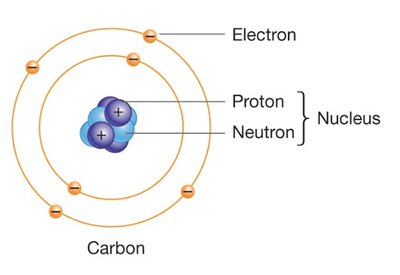
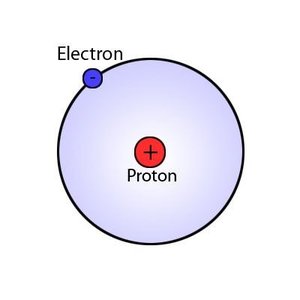
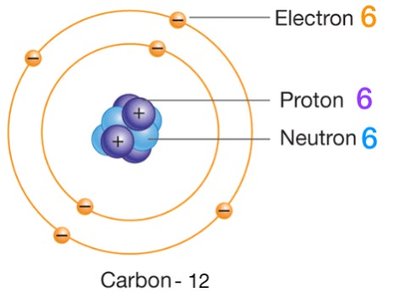
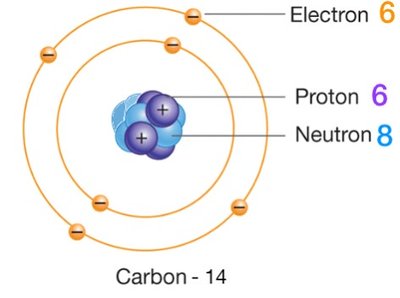
Atom: The smallest unit of an element, composed of a nucleus (protons and neutrons) and orbiting electrons.
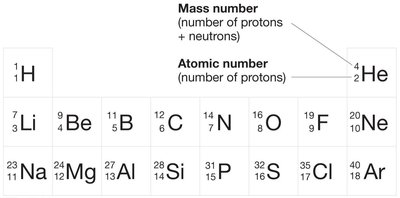
Atomic number: The number of protons in the nucleus of an atom.
Mass number: The sum of protons and neutrons in an atom.
Isotopes: Variants of an element with different numbers of neutrons; some are stable, others are radioactive.
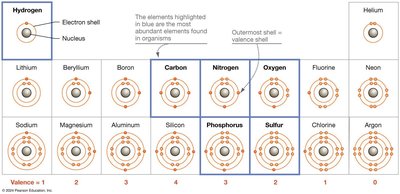
Unpaired electrons: Determine the number of bonds an atom can form.
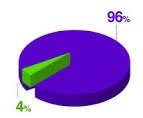
Major elements in organisms: Hydrogen, carbon, nitrogen, and oxygen make up 96% of matter in living things.
Chemical Bonds: Covalent and Ionic
Atoms form molecules and compounds through chemical bonds, which are essential for the structure and function of biological molecules.
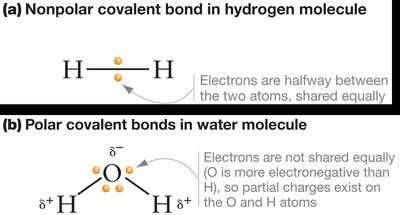
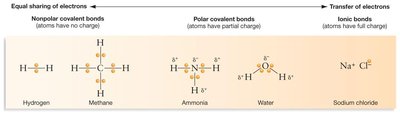
Covalent bond: Electrons are shared between atoms. If shared equally, the bond is nonpolar; if unequally, it is polar.
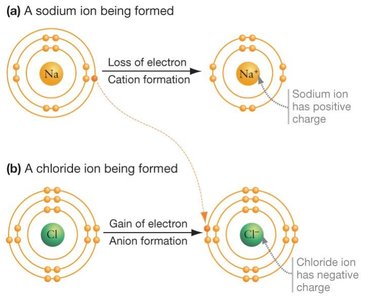
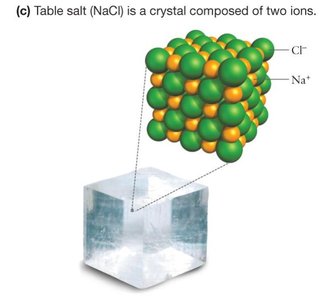
Ionic bond: Electrons are transferred from one atom to another, resulting in charged ions (cations and anions).
Molecule: Two or more atoms held together by covalent bonds (e.g., H2, H2O).
Compound: Substance made of atoms of different elements (e.g., H2O, NaCl).
Electronegativity: The tendency of an atom to attract electrons; O > N > C = H.
Simple Molecules and Their Structures
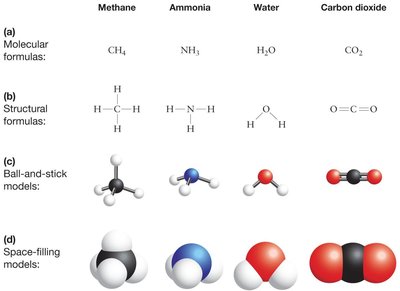
Simple molecules formed from C, H, N, and O serve as the building blocks for more complex biological molecules. Their structure determines their function and reactivity.
Molecular formula: Shows the types and numbers of atoms (e.g., CH4, NH3, H2O, CO2).
Structural formula: Shows how atoms are bonded.
Ball-and-stick model: Visualizes the spatial arrangement of atoms.
Space-filling model: Shows the relative sizes and proximity of atoms.
The Unique Properties of Water
Water as a Solvent
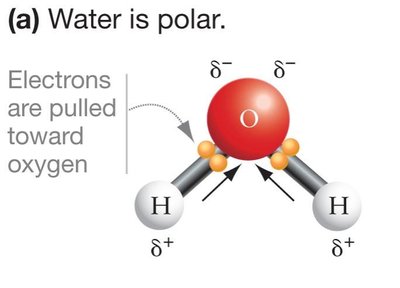
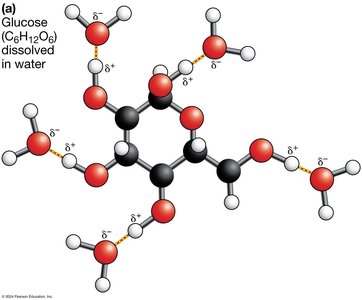
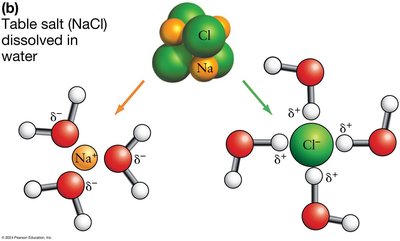
Water is the most abundant molecule in cells and is crucial for life due to its unique chemical properties. Its polarity and ability to form hydrogen bonds make it an excellent solvent.
Polarity: Water has a bent shape and partial charges, making it polar.
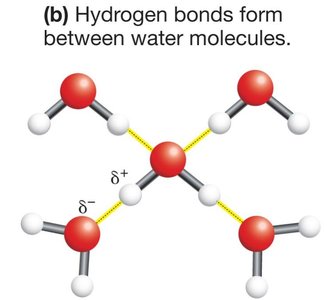
Hydrogen bonds: Weak electrical attractions between the partial positive charge on hydrogen and partial negative charge on oxygen.
Hydrophilic molecules: Charged or polar substances dissolve readily in water.
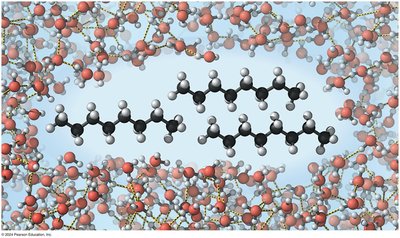
Hydrophobic molecules: Uncharged, nonpolar substances do not dissolve in water; they interact via hydrophobic interactions.
Cohesion, Adhesion, and Surface Tension
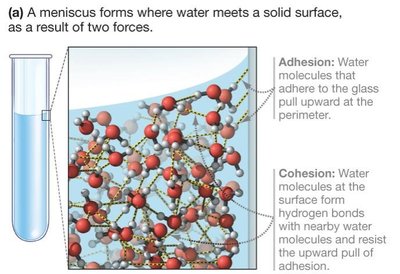
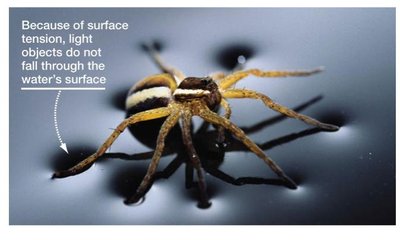
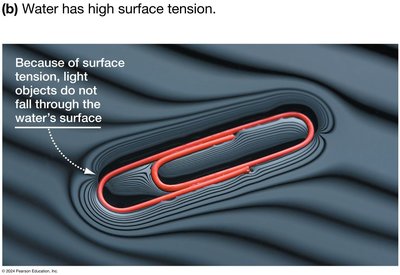
Water exhibits remarkable properties such as cohesion, adhesion, and surface tension, which are vital for biological processes like water transport in plants.
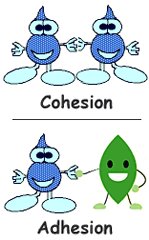
Cohesion: Water molecules stick to each other via hydrogen bonds.
Adhesion: Water molecules stick to other polar surfaces.
Surface tension: The result of cohesion; allows light objects to rest on water's surface.
Density and Structure of Ice
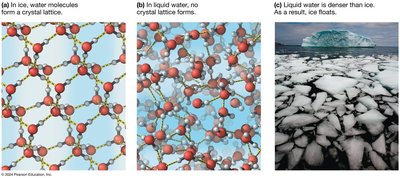
Unlike most substances, water is denser as a liquid than as a solid. This property is due to the open crystal structure formed by hydrogen bonds in ice, causing ice to float.
Crystal lattice: In ice, water molecules form a stable lattice, making it less dense than liquid water.
Biological significance: Floating ice insulates aquatic environments.
Water's Capacity for Absorbing Energy
Water has a high specific heat and heat of vaporization, allowing it to moderate temperature changes and support life.
Specific heat: Energy required to raise the temperature of 1 gram of water by 1°C. Water's value is 4.18 J/g°C.
Heat of vaporization: Energy required to convert 1 gram of water from liquid to gas.
Biological importance: Helps maintain stable temperatures in organisms and environments.
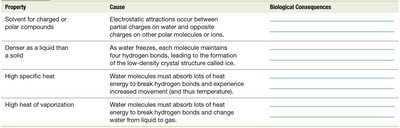
Property | Cause | Biological Consequences |
|---|---|---|
Solvent for charged or polar compounds | Electrostatic attractions between partial charges on water and opposite charges on other polar molecules or ions | Facilitates biochemical reactions and transport of substances |
Denser as a liquid than a solid | Hydrogen bonds form a low-density crystal lattice in ice | Ice floats, insulating aquatic life below |
High specific heat | Many hydrogen bonds must be broken for water molecules to move faster | Stabilizes temperature in organisms and environments |
High heat of vaporization | Water must absorb lots of heat energy to break hydrogen bonds and change from liquid to gas | Enables evaporative cooling (e.g., sweating) |
The Role of Water in Acid-Base Chemical Reactions
Dissociation and pH
Water molecules can dissociate into hydrogen ions (H+) and hydroxide ions (OH−), affecting the acidity or basicity of solutions. The pH scale measures the concentration of hydrogen ions in a solution.
Acids: Substances that donate protons (H+), increasing hydronium ion concentration.
Bases: Substances that accept protons, decreasing hydronium ion concentration.
pH: Defined as ; pure water has a pH of 7.
Buffers: Substances that minimize changes in pH, helping maintain homeostasis.
pH Value | Type | Biological Example |
|---|---|---|
< 7 | Acidic | Stomach acid |
7 | Neutral | Pure water, cytoplasm |
> 7 | Basic | Bicarbonate in blood |
Additional info: The notes above expand on the original content by providing definitions, examples, and biological context for each concept. All images included directly reinforce the explanations and are referenced in the adjacent paragraphs.
