 Back
Water and Carbon: The Chemical Basis of Life (General Biology Study Notes)
Study Guide - Smart Notes
 Tailored notes based on your materials, expanded with key definitions, examples, and context.
Chapter 2: Water and Carbon – The Chemical Basis of Life
Introduction
This chapter explores the fundamental chemical principles that underlie biological systems, focusing on the properties of water, the types of chemical bonds, and the importance of functional groups in biological molecules. Understanding these concepts is essential for grasping how cells are constructed and how they function.
Chemical Bonds and Molecular Interactions
Types of Chemical Bonds
Chemical bonds are the forces that hold atoms together in molecules. The nature of these bonds determines the properties and functions of biological molecules.
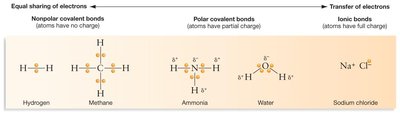
Nonpolar Covalent Bonds: Electrons are shared equally between atoms (e.g., H2, CH4).
Polar Covalent Bonds: Electrons are shared unequally, resulting in partial charges (e.g., H2O, NH3).
Ionic Bonds: Electrons are transferred from one atom to another, creating ions (e.g., NaCl).
Hydrogen Bonds: Weak attractions between a hydrogen atom (partially positive) and an electronegative atom (usually O or N).
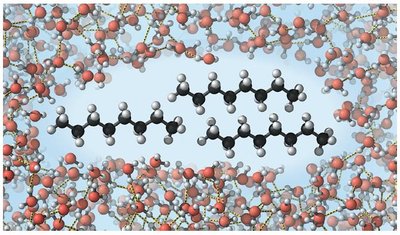
Hydrophobic Interactions: Nonpolar molecules cluster together in aqueous solutions to minimize contact with water.
Van der Waals Forces: Weak, transient attractions due to temporary partial charges.
Relative Strength of Bonds and Interactions
Covalent bonds are the strongest, followed by ionic bonds (in dry environments), hydrogen bonds, and van der Waals forces.
In aqueous environments, ionic bonds are weakened due to interaction with water molecules.
The Properties of Water
Structure and Polarity of Water
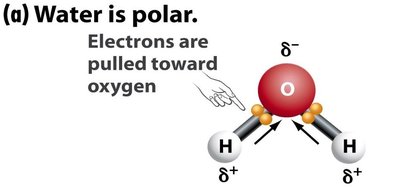
Water (H2O) is a small, bent molecule with polar covalent bonds. The oxygen atom is more electronegative than hydrogen, resulting in a partial negative charge on oxygen and partial positive charges on hydrogens.
Hydrogen Bonding in Water
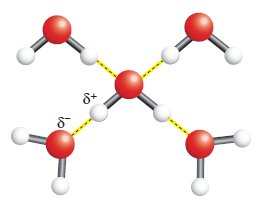
Hydrogen bonds form between the partially positive hydrogen of one water molecule and the partially negative oxygen of another. These bonds are responsible for many of water's unique properties.
Unique Properties of Water
Cohesion: Water molecules stick to each other due to hydrogen bonding, contributing to surface tension.
Adhesion: Water molecules stick to other polar or charged substances.
High Specific Heat: Water can absorb or release large amounts of heat with little temperature change.
High Heat of Vaporization: Large amounts of energy are required to convert water from liquid to gas.
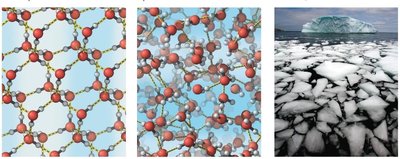
Density: Water is denser as a liquid than as a solid; ice floats because hydrogen bonds form a lattice that spaces molecules farther apart.
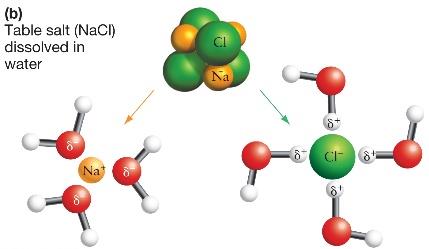
Excellent Solvent: Water dissolves many ionic and polar substances due to its polarity.
Water as a Solvent
Solvent: The substance in which solutes dissolve to form a solution.
Solute: The substance dissolved in the solvent.
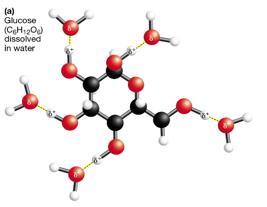
Water dissolves charged and polar molecules (hydrophilic), but not nonpolar molecules (hydrophobic).
Hydrophobic and Hydrophilic Interactions
Hydrophilic: Molecules that interact well with water (charged or polar).
Hydrophobic: Molecules that do not interact with water (nonpolar); they cluster together in aqueous solutions.
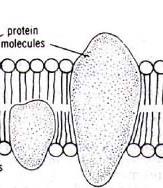
Hydrophobic interactions and van der Waals forces help stabilize biological structures like membranes.
Acids, Bases, and pH
Proton Concentration and the pH Scale
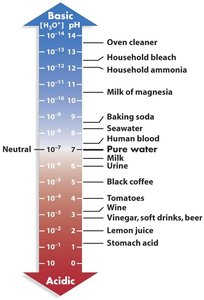
Acids increase the concentration of H+ ions in solution; bases decrease it.
The pH scale is logarithmic:
Each unit change in pH represents a tenfold change in [H+].
Physiological pH is typically between 6.5 and 8.0.
Buffers help maintain stable pH in biological systems by absorbing or releasing H+ ions.
Calculating pH and Proton Concentration
Given [H+], calculate pH using the formula above.
To compare acidity, note that a solution with pH 3 has 100 times more H+ than one with pH 5.
Functional Groups in Biological Molecules
Major Functional Groups
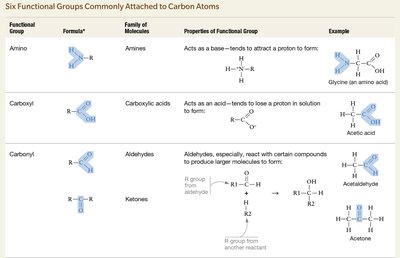
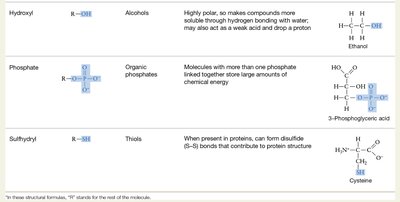
Functional groups are specific groups of atoms within molecules that have characteristic properties and chemical reactivity. They determine the behavior of organic molecules in biological systems.
Functional Group | Formula | Properties | Example |
|---|---|---|---|
Amino | –NH2 | Acts as a base; attracts protons | Glycine |
Carboxyl | –COOH | Acts as an acid; loses protons | Acetic acid |
Carbonyl | –C=O | Reactive; found in aldehydes and ketones | Acetone |
Hydroxyl | –OH | Highly polar; forms hydrogen bonds | Ethanol |
Phosphate | –PO4 | Stores chemical energy | 3-Phosphoglyceric acid |
Sulfhydryl | –SH | Forms disulfide bonds in proteins | Cysteine |
Hydrophobic vs. Hydrophilic Functional Groups
Hydrophilic groups: Hydroxyl, carboxyl, amino, phosphate (interact well with water).
Hydrophobic groups: Methyl, nonpolar hydrocarbon chains (do not interact with water).
Macromolecules: Assembly and Disassembly
Polymerization: Condensation (Dehydration Synthesis) and Hydrolysis
Monomers are the building blocks of polymers.
Condensation (Dehydration Synthesis): Monomers are joined by covalent bonds; water is released.
Hydrolysis: Polymers are broken down into monomers by the addition of water.


The Scale of Life: Size and Estimation
Biological Scale and Measurement
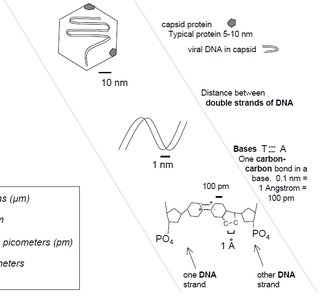
Biological structures range from nanometers (nm) to micrometers (µm) and beyond.
Understanding scale is essential for interpreting microscopic images and molecular models.
Examples: Human hair (~100 µm), typical cell (~10 µm), bacterium (~1 µm), virus (~100 nm), DNA double helix (~2 nm).
Practice: Estimating Molecular Size
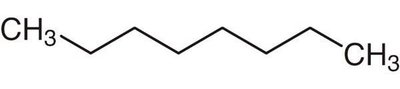
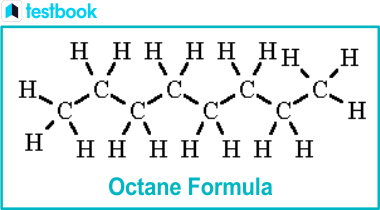
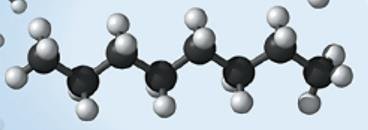
Octane molecule: Length ≈ 1.0–1.07 nm; Width ≈ 0.42 nm.
Practice estimating the size of molecules and cellular structures using provided scales.
Summary Table: Types of Bonds and Interactions
Type | Relative Strength | Example |
|---|---|---|
Covalent (nonpolar) | Strongest | H2, CH4 |
Covalent (polar) | Strong | H2O, NH3 |
Ionic | Moderate (weak in water) | NaCl |
Hydrogen bond | Weak | Between water molecules |
Hydrophobic interaction | Very weak | Membrane formation |
Van der Waals | Very weak | Gecko grip |
Key Equations
pH calculation:
Conclusion
Understanding the chemical basis of life, including the properties of water, types of bonds, and functional groups, is foundational for all further study in biology. These principles explain how biological molecules interact, assemble, and function within cells.
