 Back
Water and Carbon: The Chemical Basis of Life – Study Notes
Study Guide - Smart Notes
 Tailored notes based on your materials, expanded with key definitions, examples, and context.
Water and Carbon: The Chemical Basis of Life
Introduction to Chemical Evolution
Chemical evolution is the leading explanation for the origin of life on Earth. It describes the formation of increasingly complex carbon-containing substances, eventually leading to molecules capable of self-replication. This process marks the transition from chemical to biological evolution, where evolution by natural selection takes over, fulfilling the five characteristics of life.
Atoms, Ions, and Molecules: The Building Blocks of Life
Basic Atomic Structure
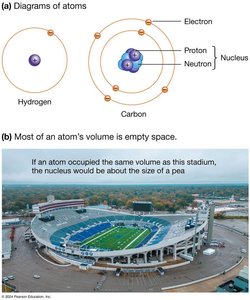
Atoms are the fundamental units of matter, composed of a nucleus containing protons (positive charge) and neutrons (neutral), surrounded by electrons (negative charge). Atoms are electrically neutral when the number of protons equals the number of electrons.
Element: A substance consisting entirely of one type of atom.
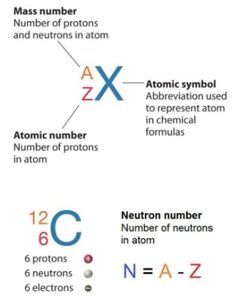
Atomic Number (Z): The number of protons in the nucleus, written as a subscript to the left of the atomic symbol.
Mass Number (A): The sum of protons and neutrons in an atom.
Dalton (Da): The unit of mass for protons and neutrons; electrons are negligible in mass.
Isotopes and Atomic Weight
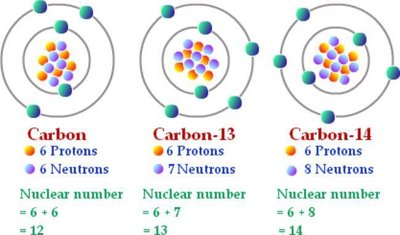
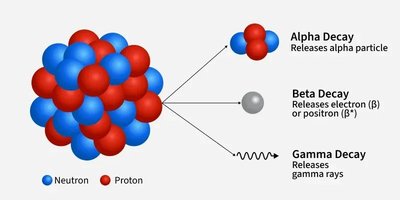
Isotopes are variants of elements with different numbers of neutrons, resulting in different mass numbers. The atomic weight of an element is the average mass of all naturally occurring isotopes, weighted by their abundance. Some isotopes are radioactive and decay over time, releasing particles and energy.
Example: Carbon-12, Carbon-13, and Carbon-14 are isotopes of carbon, each with 6 protons but varying numbers of neutrons.
Electron Arrangement and Chemical Behavior
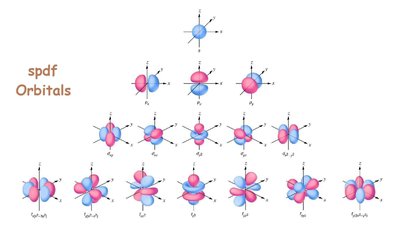
The arrangement of electrons around the nucleus determines how elements behave chemically. Electrons occupy specific regions called orbitals, which are grouped into electron shells. Each shell can hold a certain number of electrons, and electrons fill the innermost shells first.
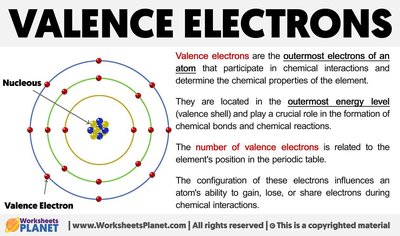
Valence Shell: The outermost electron shell.
Valence Electrons: Electrons in the valence shell; their number determines the atom's valence.
Chemical Bonds
Atoms are most stable when their valence shells are full. They achieve this by forming chemical bonds:
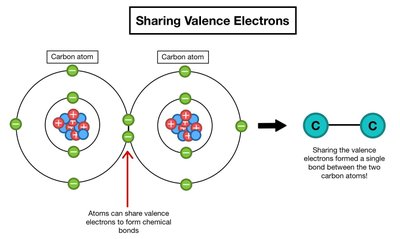
Covalent Bonds: Formed when unpaired valence electrons are shared between atoms, creating molecules.
Example: Two hydrogen atoms share electrons to form H2.
Types of Covalent Bonds: Nonpolar and Polar
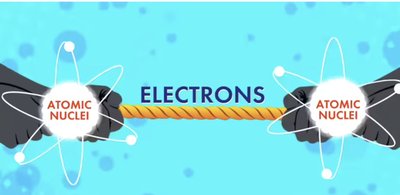
Electrons in covalent bonds are not always shared equally. The strength with which atoms pull electrons is called electronegativity. The difference in electronegativity determines bond type:
Nonpolar Covalent Bond: Electrons are shared equally; bond is symmetrical.
Polar Covalent Bond: Electrons are shared unequally; bond is asymmetrical, resulting in partial charges.
Ionic Bond: Electrons are completely transferred, forming ions (cations and anions).
Partial Charges and Water Molecule
Polar covalent bonds produce partial charges on atoms. In water (H2O), oxygen is more electronegative than hydrogen, resulting in a partial negative charge on oxygen and partial positive charges on hydrogen.
Delta (δ): Symbolizes partial charges.
Ionic Bonding and Electron-Sharing Continuum
Ionic bonds form when electrons are transferred, not shared. The degree of electron sharing forms a continuum from nonpolar covalent to polar covalent to ionic bonds.
Cation: Atom loses electron, becomes positively charged.
Anion: Atom gains electron, becomes negatively charged.
Representing Molecules
Molecules can be represented in several ways:
Molecular Formula: Indicates numbers and types of atoms (e.g., H2O, CH4).
Structural Formula: Shows which atoms are bonded and bond types.
Ball-and-Stick/Space-Filling Models: Show three-dimensional geometry.
Properties of Water and the Early Oceans
Water as a Solvent
Water is the basis of life, making up about 75% of cells. It is an excellent solvent, meaning it can dissolve many substances, facilitating chemical reactions.
Solute: Substance dissolved in a solvent.
Solution: Mixture of solute and solvent.
Unique Properties of Water
Water's unique properties arise from its structure:
Small size
Bent shape
Highly polar covalent bonds
Overall polarity
Hydrogen Bonding
Water molecules form hydrogen bonds due to partial charges. These weak interactions occur between the partial positive charge on hydrogen and partial negative charge on oxygen.
Hydrophilic: "Water-loving" molecules (ions and polar molecules) dissolve in water.
Hydrophobic: "Water-fearing" molecules (nonpolar compounds) do not dissolve; they cluster together via hydrophobic interactions and van der Waals forces.
The Role of Water in Acid–Base Chemical Reactions
Chemical Reactions and Water
Chemical reactions involve breaking and forming bonds. Water participates in acid–base reactions by dissociating into hydrogen ions (H+) and hydroxide ions (OH−), reaching chemical equilibrium.
Acids: Substances that donate protons, increasing hydronium ion concentration.
Bases: Substances that accept protons, decreasing proton concentration.
Concentration and pH
The concentration of protons in solution is measured in moles and expressed as molarity (M). The pH scale is a logarithmic measure of proton concentration:
Acidic: pH < 7
Basic: pH > 7
Neutral: pH ≈ 7 (inside living cells)
Buffers: Minimize changes in pH, maintaining homeostasis.
Formula: pH calculation
Life is Carbon Based
Carbon's Role in Life
Except for water, most molecules in organisms contain carbon. Carbon forms four covalent bonds, allowing for a limitless array of molecular shapes and combinations.
Organic Compounds: Molecules containing carbon bonded to other elements.
Functional Groups
Functional groups are specific groups of atoms within molecules that determine their chemical behavior:
Amino: Attract protons, act as bases.
Carboxyl: Drop protons, act as acids.
Carbonyl: Link molecules into more complex compounds.
Hydroxyl: Act as weak acids.
Phosphate: Carry two negative charges.
Sulfhydryl: Link via disulfide bonds.
Macromolecules and Polymerization
Small organic molecules can assemble into large macromolecules through polymerization:
Macromolecules: Large molecules made of smaller subunits (monomers).
Polymerization: Monomers join via condensation (dehydration) reactions, releasing water.
Hydrolysis: Reverse reaction; water breaks bonds, separating monomers.
Equilibrium favors free monomers over polymers, but high monomer concentration can drive polymerization. Macromolecules such as proteins, nucleic acids, and carbohydrates may have polymerized early in chemical evolution.
Summary Table: Key Atomic Properties
Property | Description | Example |
|---|---|---|
Atomic Number (Z) | Number of protons | Carbon: 6 |
Mass Number (A) | Protons + Neutrons | Carbon-12: 12 |
Isotope | Same element, different neutrons | Carbon-13, Carbon-14 |
Valence Electrons | Electrons in outer shell | Carbon: 4 |
Electronegativity | Atom's pull on electrons | Oxygen > Carbon |
Covalent Bond | Shared electrons | H2, CH4 |
Ionic Bond | Transferred electrons | NaCl |
