 Back
Water and Carbon: The Chemical Basis of Life – Study Notes for General Biology
Study Guide - Smart Notes
 Tailored notes based on your materials, expanded with key definitions, examples, and context.
Water and Carbon: The Chemical Basis of Life
Introduction
This chapter explores the fundamental chemical principles that underpin biological systems, focusing on the properties of water and carbon. Understanding these concepts is essential for grasping how cells are constructed and how they function.
Atoms, Bonds, and Molecules
Types of Chemical Bonds
Atoms interact to form molecules through various types of chemical bonds. The nature of these bonds determines the properties and behavior of molecules in biological systems.
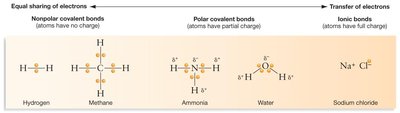
Nonpolar Covalent Bonds: Electrons are shared equally between atoms, resulting in no charge separation. Example: Hydrogen (H2), Methane (CH4).
Polar Covalent Bonds: Electrons are shared unequally, creating partial charges. Example: Water (H2O), Ammonia (NH3).
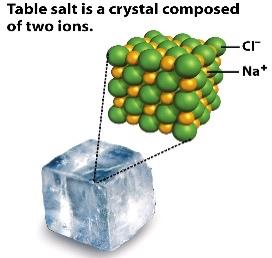
Ionic Bonds: Electrons are transferred from one atom to another, resulting in full charges. Example: Sodium chloride (NaCl).
Hydrogen Bonds: Weak attractions between a hydrogen atom (with partial positive charge) and an electronegative atom (like oxygen or nitrogen).
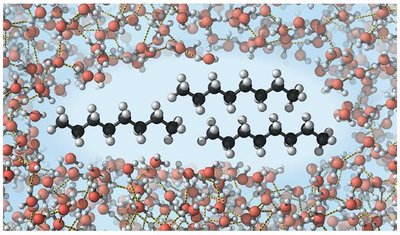
Hydrophobic Interactions: Nonpolar molecules cluster together in water due to exclusion from polar environments.
Van der Waals Forces: Weak, temporary attractions due to fluctuating partial charges.
Strength of Chemical Bonds
The strength of attraction between atoms varies by bond type:
Covalent bonds (especially nonpolar) are generally strongest.
Ionic bonds are strong in dry environments but weaken in water.
Hydrogen bonds and van der Waals forces are much weaker but crucial for molecular interactions.
Properties of Water
Structure and Polarity of Water
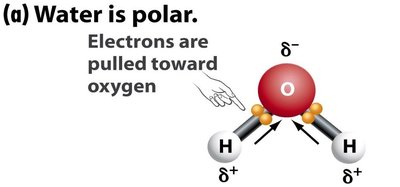
Water is a small molecule with a bent geometry, resulting in polarity. The oxygen atom attracts electrons more strongly than hydrogen, creating partial negative (δ-) and positive (δ+) charges.
Polarity: Water molecules have uneven electron distribution, making them polar.
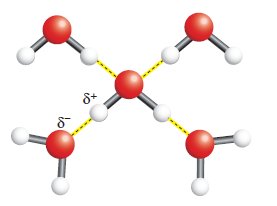
Hydrogen Bonding: Water molecules form hydrogen bonds with each other, contributing to unique properties.
Unique Properties of Water
Water exhibits several properties essential for life:
High Specific Heat: Water absorbs and retains heat, stabilizing temperatures.
Cohesion and Adhesion: Water molecules stick to each other (cohesion) and to other surfaces (adhesion).
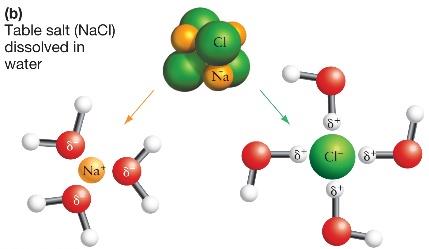
Effective Solvent: Water dissolves charged and polar substances, facilitating biochemical reactions.
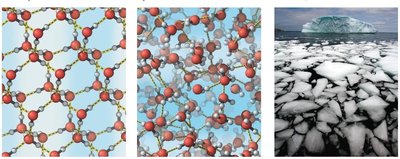
Density: Water is denser as a liquid than as a solid, allowing ice to float.
Water as a Solvent
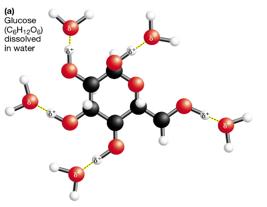
Water's polarity enables it to dissolve many substances:
Charged and polar molecules interact with water via hydrogen bonds and ionic interactions.
Nonpolar molecules do not dissolve in water and are classified as hydrophobic.
Acids, Bases, and pH
Proton Concentration and pH
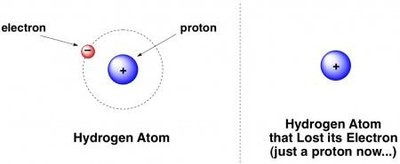
The concentration of hydrogen ions ([H+]) in solution determines its acidity or basicity, measured by pH:
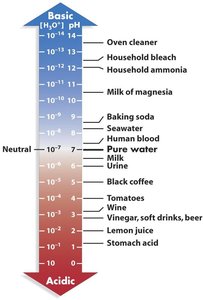
pH Scale: Logarithmic scale from 0 (acidic) to 14 (basic).
Formula:
Physiological pH: Most biological systems operate between pH 6.5 and 8.0.
Buffers: Substances that resist changes in pH, maintaining homeostasis.
Comparing Proton Concentrations
Differences in pH correspond to differences in [H+]:
Each unit change in pH represents a tenfold change in [H+].
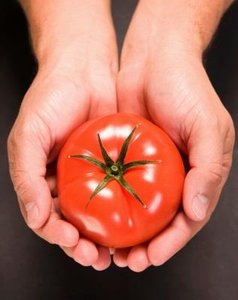
Example: Lemon juice (pH 2) has 100 times more H+ than a tomato (pH 4).
Functional Groups in Biological Molecules
Types and Properties of Functional Groups
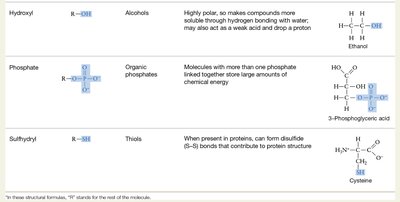
Functional groups are specific clusters of atoms within molecules that determine their chemical behavior. Recognizing these groups is essential for predicting molecular interactions.
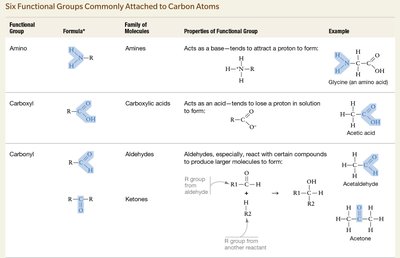
Amino: Acts as a base, attracts protons.
Carboxyl: Acts as an acid, loses protons.
Carbonyl: Found in aldehydes and ketones, reactive in forming larger molecules.
Hydroxyl: Highly polar, increases solubility in water.
Phosphate: Stores chemical energy, found in nucleic acids.
Sulfhydryl: Forms disulfide bonds in proteins.
Hydrophobic vs. Hydrophilic Functional Groups
Functional groups can be classified based on their interaction with water:
Hydrophilic: Polar groups (e.g., hydroxyl, amino, phosphate) interact well with water.
Hydrophobic: Nonpolar groups (e.g., methyl) do not interact with water.
Assembly and Disassembly of Macromolecules
Polymer Formation and Breakdown
Macromolecules are formed by linking monomers through condensation reactions and broken down by hydrolysis.
Condensation (Dehydration Synthesis): Monomers join, releasing water.
Hydrolysis: Water is added to break bonds between monomers.


Size and Scale in Biology
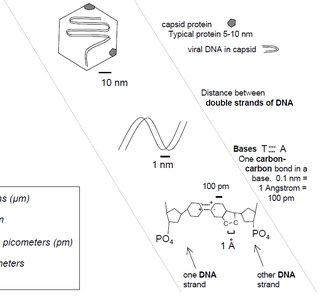
Bacterial Ruler: Estimating Size and Scale
Understanding the scale of biological structures is crucial for interpreting microscopic images and molecular diagrams.
Human hair: ~100 μm
Human cell: ~10 μm
Bacterium: ~1-2 μm
Bacterial virus: ~100 nm
DNA double strand: ~1 nm
Carbon-carbon bond: ~0.1 nm (1 Å)
Practice: Estimating Molecular Dimensions
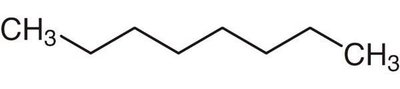
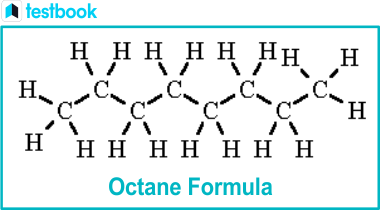
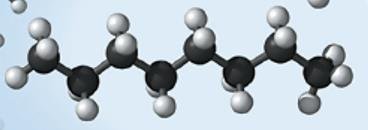
Example: Octane molecule length and width estimation.
Length: 1.0 – 1.07 nm = 10 – 10.7 Å = 1000 – 1070 pm
Width: 0.42 nm = 4.2 Å = 420 pm
Summary Table: Functional Groups
The following table summarizes the six functional groups commonly attached to carbon atoms, their formulas, properties, and examples:
Functional Group | Formula | Family of Molecules | Properties | Example |
|---|---|---|---|---|
Amino | R-NH2 | Amines | Acts as a base, attracts protons | Glycine |
Carboxyl | R-COOH | Carboxylic acids | Acts as an acid, loses protons | Acetic acid |
Carbonyl | R-COH / R-CO-R | Aldehydes, Ketones | Reactive, forms larger molecules | Acetaldehyde, Acetone |
Hydroxyl | R-OH | Alcohols | Highly polar, increases solubility | Ethanol |
Phosphate | R-PO4 | Organic phosphates | Stores chemical energy | 3-Phosphoglyceric acid |
Sulfhydryl | R-SH | Thiols | Forms disulfide bonds | Cysteine |
Conclusion
Mastery of the chemical basis of life—including water's properties, types of bonds, functional groups, and molecular scale—is foundational for understanding cell structure and function in biology.
