 Back
Water and Carbon: The Chemical Basis of Life – Study Notes
Study Guide - Smart Notes
 Tailored notes based on your materials, expanded with key definitions, examples, and context.
Chapter 2: Water and Carbon – The Chemical Basis of Life
2.1 The Structure of Atoms, Ions, and Molecules
Understanding atomic structure is fundamental to biology, as it underpins the chemical properties of elements and their interactions in living systems.
Atoms are the smallest units of elements, composed of protons (positively charged), neutrons (neutral), and electrons (negatively charged).
Protons and neutrons reside in the nucleus, while electrons occupy orbitals around the nucleus.
Atoms are electrically neutral when the number of protons equals the number of electrons.
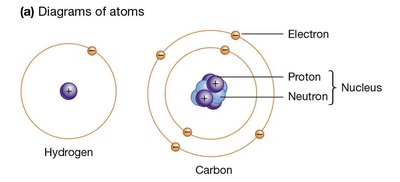
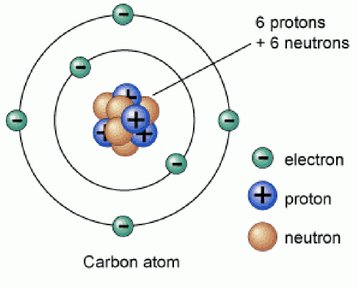
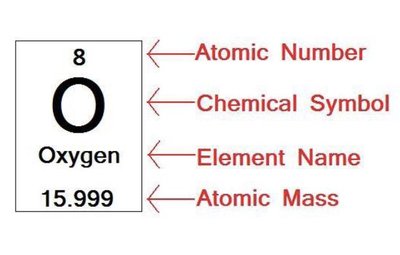
Elements consist entirely of one type of atom, defined by their atomic number (number of protons).
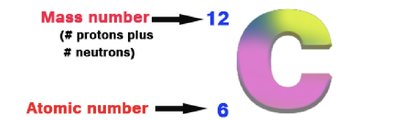
Mass number is the sum of protons and neutrons in an atom.
Each proton and neutron has a mass of one dalton (Da); electron mass is negligible.
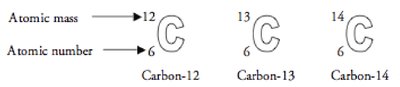
Isotopes are atoms of the same element with different numbers of neutrons, resulting in different mass numbers.
Example: Carbon-12, Carbon-13, and Carbon-14 all have 6 protons but different numbers of neutrons.
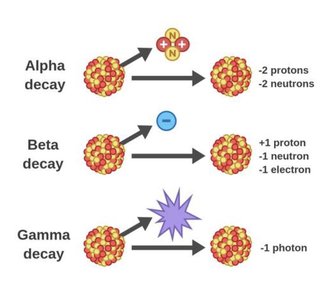
Radioactive isotopes (radioisotopes) decay over time, releasing energy. This process is used in medical treatments.
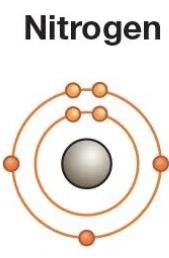
Electron arrangement is organized into electron shells and orbitals. The first shell holds 2 electrons, the second 8, the third 18.
Electrons fill the innermost shells first, then outer shells.
The valence shell is the outermost shell; electrons here are called valence electrons.
Atoms are most stable when their valence shell is full (octet rule: 8 electrons).

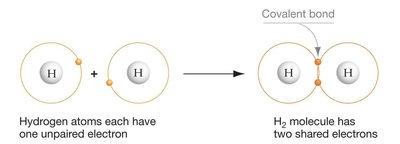
Chemical bonds fill valence shells and stabilize atoms.
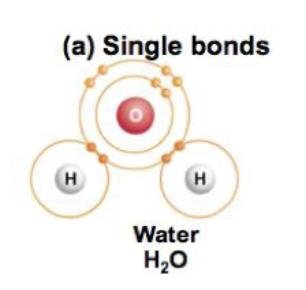
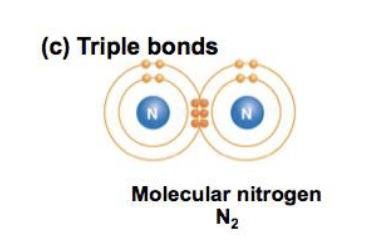
Covalent bonds form when atoms share unpaired valence electrons, creating molecules.
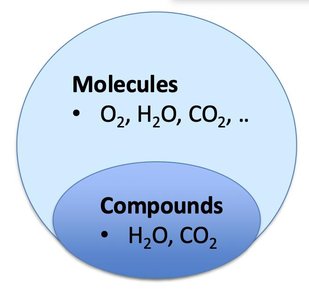
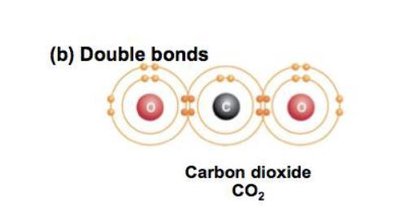
Molecules are substances held together by covalent bonds (e.g., H2O, O2, CO2).
Compounds are molecules containing two or more different elements (e.g., H2O, CO2).
Nonpolar and Polar Covalent Bonds
Covalent bonds can be nonpolar or polar, depending on how electrons are shared between atoms.
Electronegativity is the ability of an atom to attract electrons. It increases up and to the right on the periodic table (F, O, Cl, N are highly electronegative).
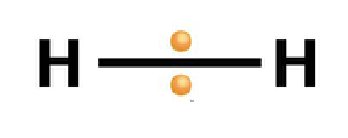
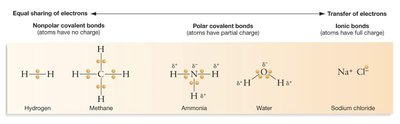
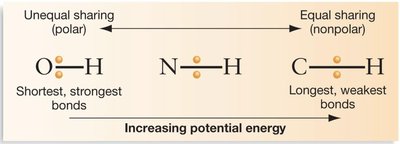
Nonpolar covalent bonds: Electrons are shared equally; bond is symmetrical.
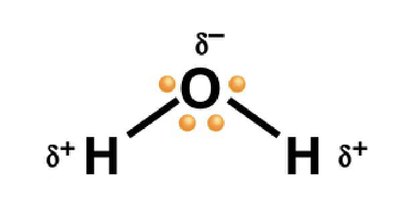
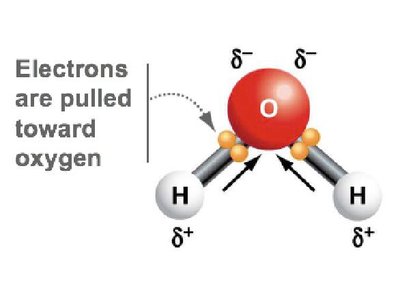
Polar covalent bonds: Electrons are shared unequally; one atom has a partial negative charge, the other a partial positive charge.
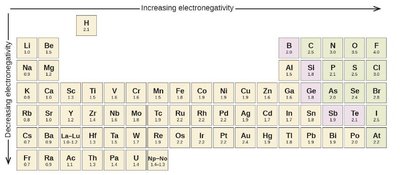
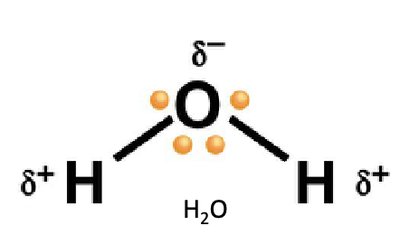
Atoms with high electronegativity (e.g., oxygen) participate in polar covalent bonds.
Ions and Ionic Bonds
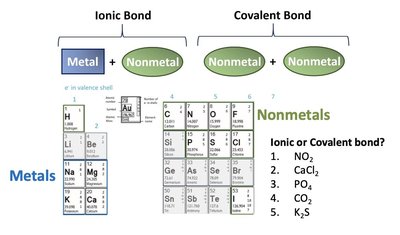
Ions are atoms or molecules with a net charge, formed by gaining or losing electrons. Ionic bonds result from the attraction between oppositely charged ions.
Cation: Positively charged ion (loss of electron).
Anion: Negatively charged ion (gain of electron).
Common biological ions: Na+, K+, Ca2+, Mg2+, Cl-, NH4+, HCO3-, NO3-, OH-.
Ionic bonds are crucial for cellular activities such as muscle contraction and nerve transmission.
Bonding Capacity and Molecular Representation
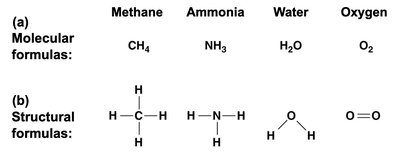
The number of unpaired electrons determines how many bonds an atom can form. Molecules can be represented by molecular and structural formulas.
Atoms with multiple unpaired electrons can form single, double, or triple bonds.
Molecular formulas indicate the types and numbers of atoms (e.g., H2O, CH4).
Structural formulas show how atoms are bonded and the types of bonds.
2.2 The Unique Properties of Water
Water is essential for life due to its unique chemical properties, which arise from its polarity and ability to form hydrogen bonds.
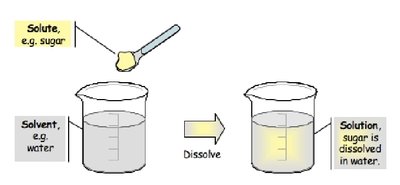
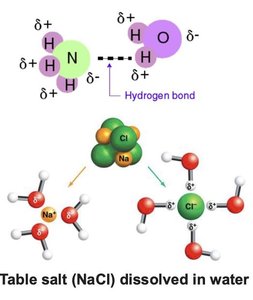
Solvent: Water dissolves many substances, forming solutions.
Polarity: Water molecules have partial negative (O) and partial positive (H) charges.
Hydrogen bonds: Weak attractions between the partial charges of water molecules.
Hydrophilic: Polar and charged molecules dissolve in water.
Hydrophobic: Nonpolar molecules (e.g., oils, fats) do not dissolve in water.
Chemical Reactions
Chemical reactions involve breaking and forming bonds, resulting in new substances. They are represented by equations.
Reactants are combined or broken down to form products.


Acids, Bases, and pH
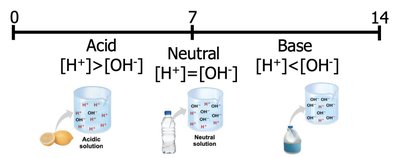
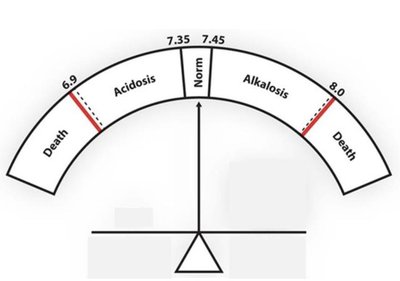
Acids and bases are important in biological systems for maintaining pH balance. The pH scale measures proton concentration in a solution.
Acids: Donate protons (H+), increasing proton concentration and lowering pH.
Bases: Accept protons, decreasing proton concentration and raising pH.
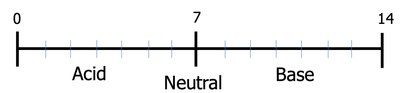
pH scale: Ranges from 0 (acidic) to 14 (basic); pure water is neutral (pH 7).
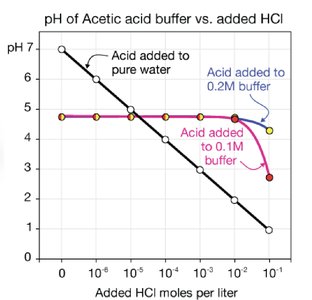
Buffers: Compounds that minimize changes in pH, crucial for homeostasis.
Energy in Biological Systems
Energy is the capacity to do work or supply heat. In cells, electrons are the main source of chemical energy.
Potential energy: Stored energy due to position or bonds.
Kinetic energy: Energy of motion; molecules in constant motion yield thermal energy.
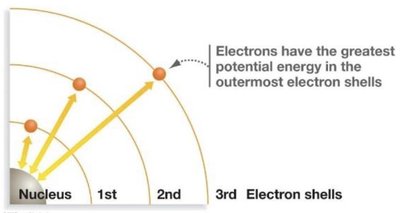
Electrons in outer shells have higher potential energy.
2.5 Carbon’s Role in Life
Carbon is the most versatile atom, forming a wide variety of molecular shapes and bonds, which is essential for the diversity of life.
Carbon has four valence electrons, allowing it to form single, double, and triple bonds.
Carbon-containing molecules can be hydrophilic or hydrophobic, depending on their functional groups.
Functional groups are specific groups of atoms that confer distinct chemical properties to organic molecules (e.g., acidity, solubility).
*Additional info: Functional groups include hydroxyl, carboxyl, amino, phosphate, and methyl groups, each affecting molecular behavior in biological systems.*
