Back
Water and Carbon: The Chemical Basis of Life – Study Notes
Study Guide - Smart Notes
 Tailored notes based on your materials, expanded with key definitions, examples, and context.
Water and Carbon: The Chemical Basis of Life
Introduction
This chapter explores the fundamental chemical principles underlying life, focusing on the structure of atoms, types of chemical bonds, properties of water, acids and bases, energy, and the importance of carbon in biological molecules. Understanding these concepts is essential for grasping how life originated and how biological molecules interact.
Atomic Structure and Elements
Basic Structure of an Atom
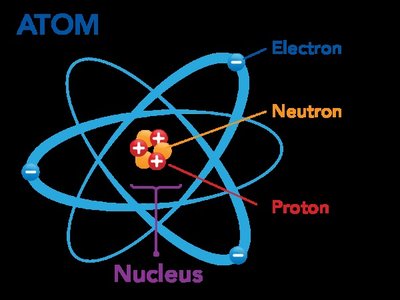
Atoms are the basic units of matter, composed of three subatomic particles: protons, neutrons, and electrons. The nucleus contains protons and neutrons, while electrons orbit the nucleus in shells.
Proton: Positively charged particle in the nucleus.
Neutron: Neutral particle in the nucleus.
Electron: Negatively charged particle orbiting the nucleus.
Dalton (Da): Unit of mass for protons and neutrons; electrons have negligible mass.
Atomic Number, Mass Number, and Isotopes
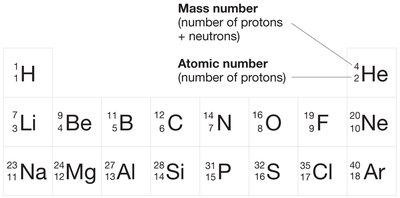
The atomic number is the number of protons in an atom, defining the element. The mass number is the sum of protons and neutrons. Isotopes are variants of elements with different numbers of neutrons.
Example: Carbon-12, Carbon-13, and Carbon-14 are isotopes of carbon.
Chemical Bonds and Electron Sharing
Valence Electrons and Stability
Atoms are most stable when their valence electron shells are full. Chemical bonds form to achieve this stability.
Covalent Bonds: Atoms share unpaired valence electrons.
Molecule: Group of atoms connected by covalent bonds.
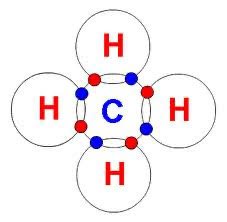
Types of Covalent Bonds: Polar and Nonpolar
Covalent bonds can be polar or nonpolar, depending on the electronegativity of the atoms involved.
Electronegativity: The ability of an atom to attract electrons.
Polar Covalent Bond: Unequal sharing of electrons (e.g., H2O).
Nonpolar Covalent Bond: Equal sharing of electrons (e.g., H2).
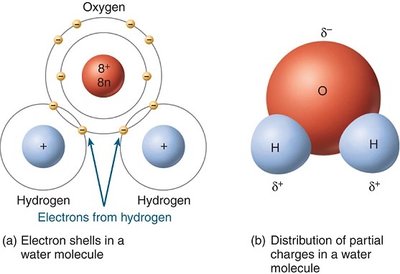
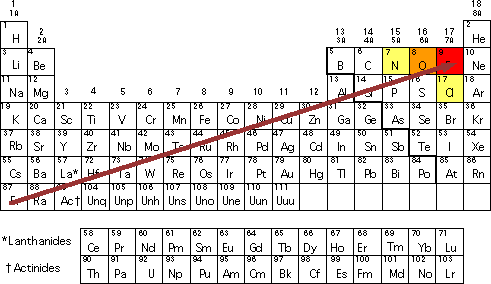
Ionic Bonds and Ion Formation
Ionic bonds form when electrons are completely transferred from one atom to another, resulting in charged ions.
Cation: Atom loses an electron, becomes positively charged.
Anion: Atom gains an electron, becomes negatively charged.
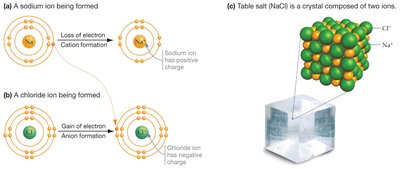
Properties of Water
Hydrogen Bonding
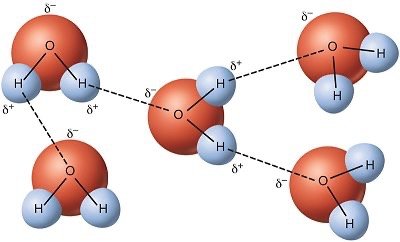
Water molecules form hydrogen bonds due to their polarity, leading to unique properties essential for life.
Hydrogen Bond: Weak attraction between a hydrogen atom and a more electronegative atom.
Importance: Responsible for water’s high specific heat, cohesion, adhesion, and solvent abilities.

Specific Heat and Heat of Vaporization
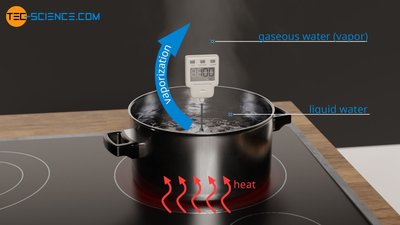
Water has a high specific heat and heat of vaporization due to extensive hydrogen bonding, allowing it to absorb and retain energy efficiently.
Specific Heat: Energy required to change temperature of 1 gram of substance by 1°C.
Heat of Vaporization: Energy required to convert 1 gram of liquid to gas.
Substance | Specific Heat (J/g°C) |
|---|---|
Water (H2O) | 4.18 |
Ethanol (C2H6O) | 2.44 |
Glycerol (C3H8O3) | 2.38 |
Benzene (C6H6) | 1.74 |
Xylene (C8H10) | 1.72 |

Water’s Density and Universal Solvent Properties
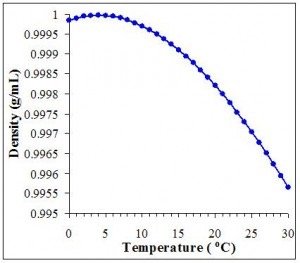
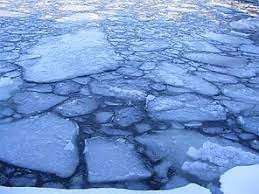
Water is less dense as a solid (ice) than as a liquid, allowing ice to float. Water is also a universal solvent, dissolving many substances due to its polarity.
Hydrophilic: Water-loving substances dissolve easily.
Hydrophobic: Water-fearing substances do not dissolve.
Acids, Bases, pH, and Buffers
Acids and Bases
Acids donate protons (H+) in chemical reactions, increasing proton concentration. Bases accept protons, decreasing proton concentration.
pH Scale: Measures proton concentration; lower pH is more acidic, higher pH is more basic.
Buffers
Buffers are substances that minimize changes in pH, helping maintain homeostasis in organisms.
Example: Blood contains buffers to maintain a stable pH.
Energy and Thermodynamics
Potential and Kinetic Energy
Energy exists in two main forms: potential (stored) and kinetic (motion). Chemical energy is a type of potential energy stored in bonds.
Thermal Energy: Kinetic energy of molecular motion.
Temperature: Measure of thermal energy.
Heat: Transfer of thermal energy between objects.
First and Second Laws of Thermodynamics
The first law states that energy cannot be created or destroyed, only transferred or transformed. The second law states that entropy (disorder) always increases in spontaneous processes.
Spontaneous Reaction: Occurs without continuous external influence.
Entropy: Measure of disorder in a system.
Chemical Evolution and the Origin of Life
Chemical Evolution
Chemical evolution is the process by which simple molecules formed increasingly complex carbon-containing substances, eventually leading to molecules capable of self-replication and biological evolution.
Environments: Early atmosphere (volcanic gases) and deep-sea hydrothermal vents.
Miller’s Experiment
Stanley Miller’s spark-discharge experiment demonstrated that complex organic compounds, such as amino acids, could be synthesized from simple molecules under conditions simulating early Earth.
Conclusion: Chemical evolution occurs readily if simple molecules with high free energy are exposed to kinetic energy.
The Importance of Carbon in Biological Molecules
Carbon’s Unique Properties
Carbon is the backbone of most biological molecules due to its ability to form four covalent bonds, allowing for a limitless array of molecular shapes and combinations.
Organic Compounds: Molecules containing carbon bxonded to other elements.
Example: Amino acids, proteins, carbohydrates, lipids, nucleic acids.