 Back
Water and Carbon: The Chemical Basis of Life – Study Notes
Study Guide - Smart Notes
 Tailored notes based on your materials, expanded with key definitions, examples, and context.
Chapter 2: Water and Carbon – The Chemical Basis of Life
Atoms, Ions, and Molecules: The Building Blocks of Chemical Evolution
Atoms are the fundamental units of matter, and their structure and interactions form the basis for all biological molecules. Hydrogen (H), Carbon (C), Nitrogen (N), and Oxygen (O) are the most abundant elements in living organisms, making up 96% of biological matter.
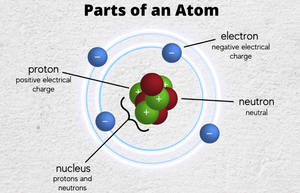
Atom: The smallest identifiable unit of matter, composed of protons, neutrons, and electrons.
Proton: Positively charged particle found in the nucleus.
Neutron: Electrically neutral particle found in the nucleus.
Electron: Negatively charged particle orbiting the nucleus.
Element: A substance consisting entirely of one type of atom (e.g., Hydrogen).
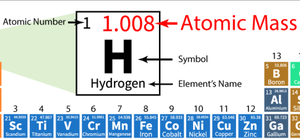
Atomic Number: The number of protons in an atom, defining the element.
Mass Number: The sum of protons and neutrons in an atom.
Dalton (Da): A unit of mass used to express atomic and molecular weights.
Ions and Ionic Bonds
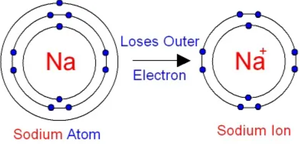
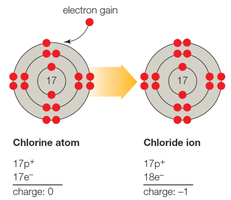
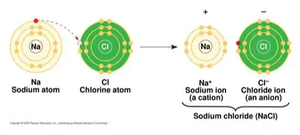
Ions are atoms or molecules that have gained or lost electrons, resulting in a net charge. Ionic bonds form when electrons are transferred between atoms, creating charged ions that attract each other.
Cation: A positively charged ion (e.g., Na+).
Anion: A negatively charged ion (e.g., Cl-).
Ionic Bond: The electrostatic attraction between oppositely charged ions.
Covalent Bonds and Simple Molecules
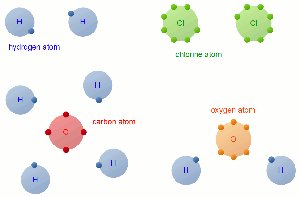
Covalent bonds involve the sharing of electrons between atoms, allowing them to achieve stable electron configurations. The geometry and structure of molecules are determined by the arrangement of these bonds.
Covalent Bond: A chemical bond formed by the sharing of electron pairs between atoms.
Valence Electrons: Electrons in the outermost shell, involved in bonding.
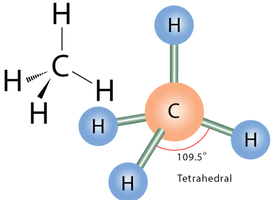
Methane (CH4): Tetrahedral structure due to repulsion between electron pairs.
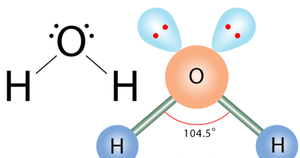
Water (H2O): Bent structure due to unshared electron pairs on oxygen.
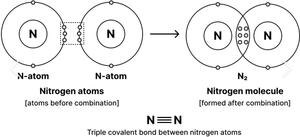
Nitrogen (N2): Linear structure with a triple covalent bond.
Representing Molecules
Molecules can be represented in various ways to convey their composition, structure, and spatial arrangement. These representations help in understanding chemical properties and biological functions.
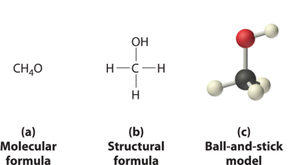
Molecular Formula: Indicates the types and numbers of atoms (e.g., CH4O).
Structural Formula: Shows how atoms are bonded together.
Ball-and-Stick Model: Illustrates the 3D arrangement and relative sizes of atoms.
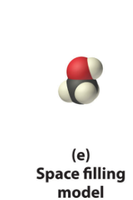
Space-Filling Model: Depicts the spatial relationships and sizes of atoms more accurately.
Properties of Water and the Early Oceans
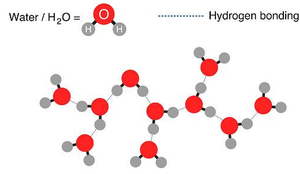
Water is the most abundant molecule in cells and is essential for life. Its unique properties arise from its polarity and ability to form hydrogen bonds.
Polar Molecule: Water has partial negative (O) and partial positive (H) charges.
Hydrogen Bond: Attraction between the partial positive charge of hydrogen and partial negative charge of oxygen in adjacent water molecules.
Solvent: Water dissolves many solutes due to its polarity.
Hydrophilic: Water-loving molecules (ionic and polar) dissolve easily in water.
Hydrophobic: Water-fearing molecules (nonpolar) do not dissolve in water.
Hydrophobic Interactions: Nonpolar molecules cluster together in aqueous solutions.
Van der Waals Interactions: Weak electrical attractions that stabilize hydrophobic molecules.
Cohesion and Adhesion
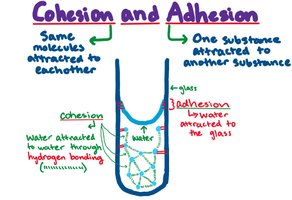
Water molecules exhibit cohesion (attraction to each other) and adhesion (attraction to other substances), which are critical for biological processes such as capillary action and surface tension.
Cohesion: Water molecules stick together via hydrogen bonds, creating surface tension.
Adhesion: Water molecules adhere to other surfaces, such as glass.
Meniscus: The curved surface of water in a container, resulting from adhesion and cohesion.
Chemical Reactions, Energy, and Chemical Evolution
Chemical reactions involve the rearrangement of atoms and are governed by the conservation of mass and energy. These reactions are fundamental to the origin and maintenance of life.
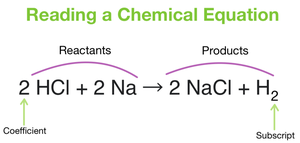
Chemical Equation: Represents reactants and products in a reaction.
Balanced Equation: Ensures equal numbers of each atom on both sides.
System: A closed sample where mass is conserved.
Endothermic Reaction: Absorbs thermal energy (e.g., photosynthesis).
Exothermic Reaction: Releases thermal energy (e.g., combustion).
Potential Energy: Stored energy related to electron position in bonds.
Kinetic Energy: Energy of motion; thermal energy in molecules.
Temperature: Measure of thermal energy in molecules.
Heat: Transfer of thermal energy between objects.

Spontaneous Reactions: Occur when products have lower potential energy and are less ordered than reactants.
Stanley Miller Experiment: Demonstrated that complex organic compounds can be synthesized from simple molecules under early Earth conditions, supporting the theory of chemical evolution.
Life is Carbon Based
Carbon is the most versatile atom, forming the backbone of biological molecules. Its ability to form four covalent bonds allows for a diversity of molecular structures.
Carbon Skeleton: Forms the framework for organic molecules (e.g., glucose, octane).
Functional Groups: Specific groups of atoms (H, N, O, P, S) attached to carbon, determining chemical behavior.
Amino and Carboxyl Groups: Found in amino acids; can attract or release hydrogen ions.
Carbonyl Group: Found in molecules like acetaldehyde and acetone; important for linking larger molecules.
Hydroxyl Group: Acts as a weak acid; polar and forms hydrogen bonds, increasing solubility in water.
Phosphate Group: Carries negative charges; stores chemical energy.
Sulfhydryl Group: Contains sulfur and hydrogen; forms disulfide bonds important for protein structure.
Macromolecules and Polymerization
Macromolecules are large biological molecules formed by the polymerization of smaller subunits called monomers. This process is essential for the formation of proteins, nucleic acids, and carbohydrates.
Monomer: A small molecular subunit used to build macromolecules.
Polymer: A large molecule formed by bonding multiple monomers.
Polymerization: The process of joining monomers, often via condensation (dehydration) reactions.
Hydrolysis: The reverse process, breaking polymers by adding water.
Example: Monomers polymerize to form proteins, nucleic acids, and carbohydrates—the macromolecules of life.
Additional info: Condensation reactions remove a water molecule to form a bond, while hydrolysis adds a water molecule to break a bond.
