 Back
Water and Carbon: The Chemical Basis of Life – General Biology Study Notes
Study Guide - Smart Notes
 Tailored notes based on your materials, expanded with key definitions, examples, and context.
Atoms: The Smallest Unit of Matter
Definition and Structure of Matter
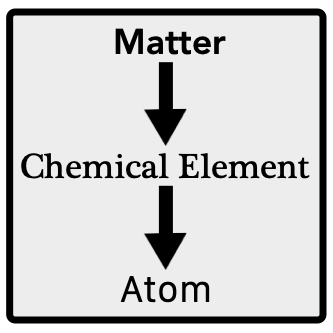
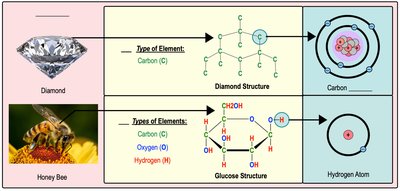
All biological systems are composed of matter, which is anything that takes up space and has mass. Matter is made up of chemical elements, and each element consists of atoms, the smallest unit of matter.
Matter: Includes both living and non-living substances (e.g., organisms, rocks, oceans).
Chemical Element: Pure substance made of only one type of atom.
Atom: Smallest unit of an element; forms both living and non-living matter.
Example: Atoms are the fundamental building blocks of all substances.
Atomic Structure
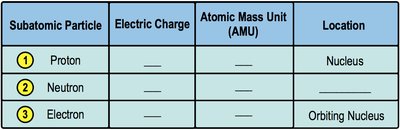
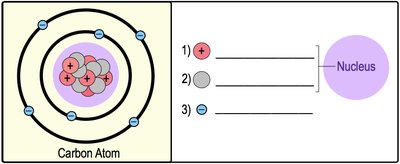
Atoms are composed of three subatomic particles: protons, neutrons, and electrons. Each has distinct properties and locations within the atom.
Proton: Positive charge, 1 atomic mass unit (AMU), located in the nucleus.
Neutron: No charge, 1 AMU, located in the nucleus.
Electron: Negative charge, almost no mass, orbits the nucleus.
Elements of Life
Major and Trace Elements
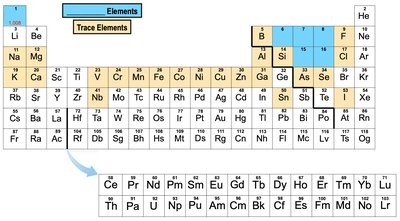
Only a small subset of the known elements are found in living organisms. The periodic table arranges these elements based on their chemical properties.
Bulk Elements: Carbon, Hydrogen, Nitrogen, Oxygen, Phosphorus, Sulfur (CHNOPS) make up ~97% of the mass of most life.
Trace Elements: Required in small amounts for life.
Atomic Properties
Atomic Number, Mass Number, and Atomic Mass
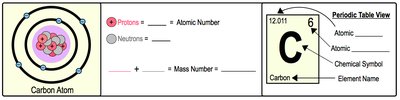
Each atom of an element has unique properties defined by its atomic number and mass number.
Atomic Number: Number of protons in the nucleus; defines the element.
Mass Number: Sum of protons and neutrons in the nucleus.
Atomic Mass: Average total mass of all atoms of an element, considering isotopes.
Electron Orbitals and Energy Shells
Electron Distribution and Valence Electrons
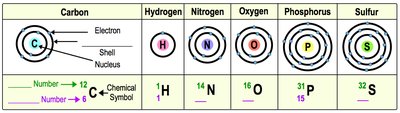
Electrons occupy orbitals, which are three-dimensional regions around the nucleus. These are visualized as energy shells.
Energy Shells: Shells closer to the nucleus are lower in energy; distant shells are higher in energy.
Valence Electrons: Electrons in the outermost energy shell; important for chemical bonding.
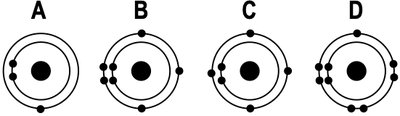
Shell Capacity: 1st shell holds up to 2 electrons; 2nd shell holds up to 8 electrons.
Octet Rule
Stability of Atoms
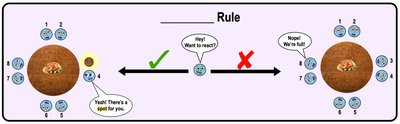
Atoms are more stable when their valence shells are fully occupied, following the octet rule.
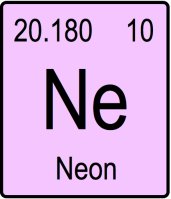
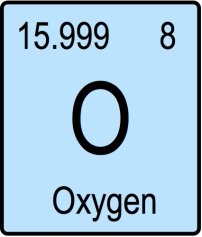
Octet Rule: Atoms are less reactive when their outer valence shells are full (usually 8 electrons).
Example: Neon is unreactive because its valence shell is full.
Isotopes
Definition and Biological Importance
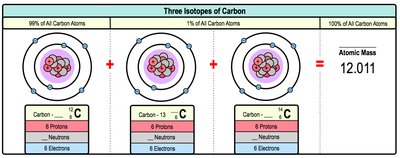
Isotopes are atoms of the same element with different numbers of neutrons. They have the same atomic number but different mass numbers.
Atomic Mass: Average mass of all isotopes of an element.
Example: Carbon-12, Carbon-13, and Carbon-14 are isotopes of carbon.
Radioactive Isotopes
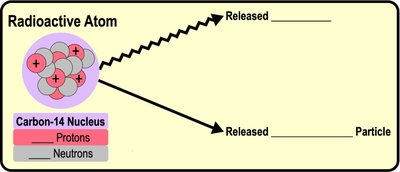
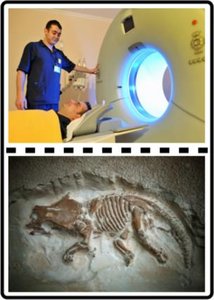
Radioactive isotopes are unstable and break down, emitting energy as rays or particles. They are used in medicine and radiometric dating.
Half-life: Time it takes for half of the radioactive atoms in a sample to decay.
Applications: Medical imaging, fossil dating.
Chemical Bonding
Types of Bonds and Molecules
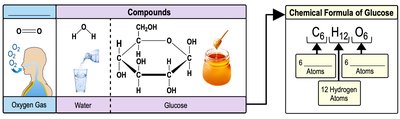
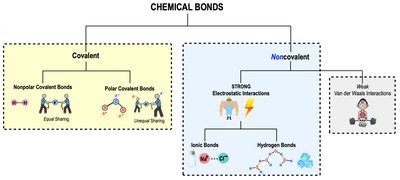
Chemical bonds are attractive forces between atoms, forming molecules and compounds. Molecules contain two or more chemically bound atoms; compounds contain two or more different elements.
Chemical Formula: Shows the number and type of atoms in a molecule (e.g., C6H12O6).
Intramolecular vs. Intermolecular Bonds
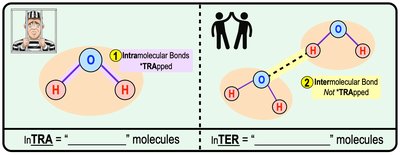
Bonds can be intramolecular (within a molecule) or intermolecular (between molecules).
Intramolecular Bonds: Hold atoms together within a molecule.
Intermolecular Bonds: Occur between different molecules.
Covalent Bonds
Definition and Types
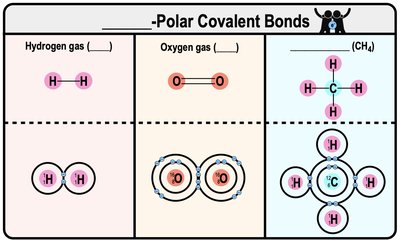
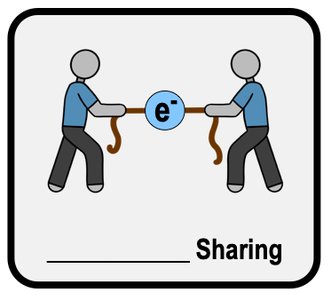
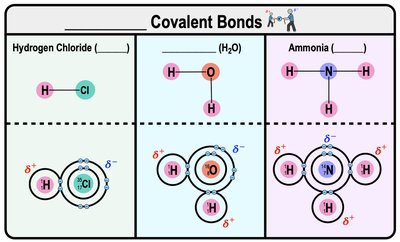
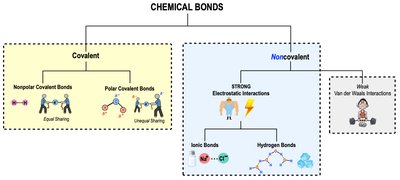
Covalent bonds involve the sharing of electrons between atoms. There are two main types: nonpolar and polar covalent bonds, determined by differences in electronegativity.
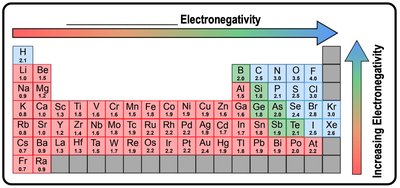
Electronegativity: Measure of an atom’s attraction to electrons (scale 0–4).
Nonpolar Covalent Bonds: Equal sharing of electrons between atoms with similar electronegativities.
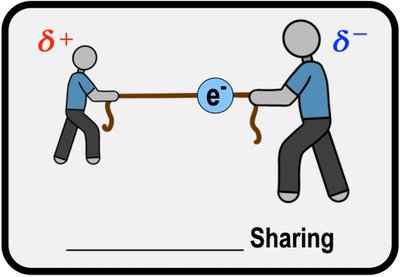
Polar Covalent Bonds: Unequal sharing of electrons between atoms with different electronegativities, resulting in partial charges (δ+ and δ−).
Noncovalent Bonds
Types and Biological Significance
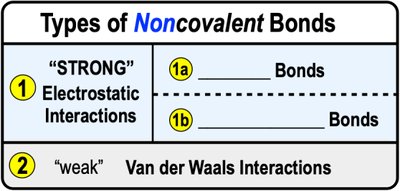
Noncovalent bonds result from full or partial charges, not electron sharing. They include ionic bonds, hydrogen bonds, and van der Waals interactions.
Ionic Bonds: Electrical attractions between oppositely charged ions.
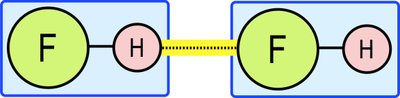
Hydrogen Bonds: Weak interactions between a highly electronegative atom (F, O, N) and hydrogen.
Van der Waals Interactions: Weak, transient attractions between molecules.
Ionic Bonding
Ions: Anions vs. Cations
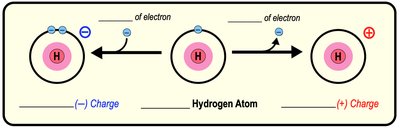
Ions are atoms or molecules with a net electrical charge, formed by gaining or losing electrons.
Anion: Negatively charged ion (gain of electron).
Cation: Positively charged ion (loss of electron).
Ionic Bonds
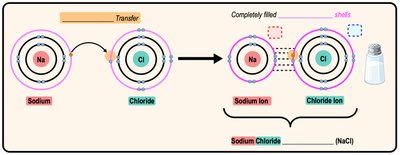
Ionic bonds are formed by the transfer of electrons, resulting in filled valence shells and the creation of charged ions.
Example: Formation of sodium chloride (NaCl) from sodium and chloride ions.
Hydrogen Bonding
Definition and Importance
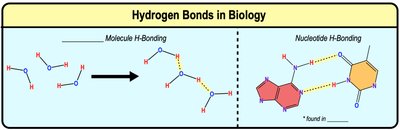
Hydrogen bonds are interactions between a highly electronegative atom and hydrogen. Individually weak, they are collectively strong and crucial for water properties and macromolecule structure.
Example: Hydrogen bonding in water and DNA.
Water: Structure and Properties
Structure of Water
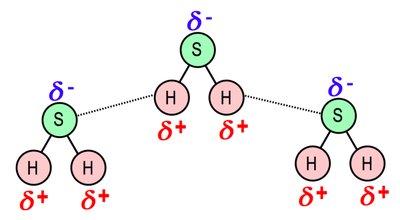
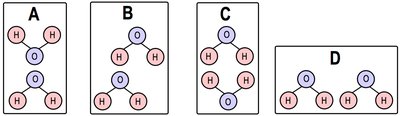
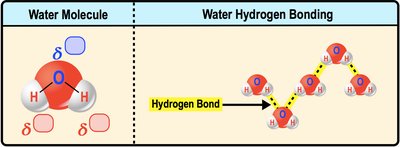
Water is a small, polar molecule with two hydrogen atoms and one oxygen atom (H2O). It has partial negative and positive charges, and forms hydrogen bonds between molecules.
Example: Water’s hydrogen bonding.
Emergent Properties of Water
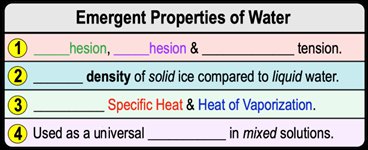
Water’s hydrogen bonding gives rise to several emergent properties essential for life:
Cohesion and Adhesion: Water molecules stick together and to other surfaces.
Surface Tension: Difficulty in breaking the surface of water.
Density: Solid ice is less dense than liquid water, allowing ice to float.
High Specific Heat and Heat of Vaporization: Water resists temperature changes and requires much energy to evaporate.
Universal Solvent: Water dissolves many substances.
Properties of Water: The Universal Solvent
Solvent, Solute, and Solution
Water is called the “universal solvent” because it can dissolve many substances. The solvent is the substance doing the dissolving, while the solute is dissolved. A solution is the combination of solute and solvent.
Hydration Shell: Water molecules surround solute molecules.
Example: Table salt (NaCl) dissolving in water.
Homogenous vs. Heterogenous Solutions
Homogenous solutions are uniformly mixed, while heterogenous solutions are unevenly distributed.
Example: Salt vs. oil in water.
Hydrophilic vs. Hydrophobic
Hydrophilic substances dissolve in water due to their affinity for it; polar and charged molecules are hydrophilic. Hydrophobic substances do not dissolve in water; nonpolar molecules are hydrophobic.
Properties of Water: Cohesion & Adhesion
Cohesion, Adhesion, and Surface Tension
Cohesion is the ability of water molecules to stick together, while adhesion is their ability to stick to other substances. Surface tension measures the difficulty in breaking the surface of water.
Result: These properties arise from hydrogen bonding.
Properties of Water: Density
Density of Liquid Water vs. Solid Ice
Liquid water molecules are highly packed and constantly forming and breaking hydrogen bonds. Solid ice molecules are less packed, forming stable hydrogen bonds in a lattice structure, making ice less dense and allowing it to float.
Biological Importance: Ice floating insulates liquid water below, sustaining life.
Properties of Water: Thermal
Kinetic Energy, Temperature, and Heat
Kinetic energy is the energy of motion. Temperature is the average kinetic energy of molecules, and heat is the total kinetic energy transferred as energy.
Specific Heat: Amount of heat required to raise/lower 1 gram of substance by 1°C.
Homeostasis: Water’s high specific heat helps maintain stable internal conditions.
Heat of Vaporization
Evaporation is the phase transition from liquid to gas. Water has a high heat of vaporization due to abundant hydrogen bonds.
Example: Water’s heat of vaporization is higher than most other molecules.
Acids and Bases
Definition and Effects on Biological Systems
Acids increase the concentration of H+ ions in solution, while bases decrease it. Many biological processes are affected by the concentration of dissolved H+.
Example: Addition of hydrochloric acid (HCl) or sodium hydroxide (NaOH) to water.
pH Scale
Measurement and Biological Relevance
The pH scale measures the concentration of H+ ions in a solution, ranging from 0 (acidic) to 14 (basic). pH also indirectly measures [OH-].
Neutral Solution: [H+] equals [OH-].
Acidic: pH < 7; Basic: pH > 7.
Buffers
Buffers resist changes in pH when acids or bases are added. They help maintain homeostasis in living organisms by donating or accepting H+ as needed.
Example: Bicarbonate buffer system in blood.
Carbon: The Basis of Organic Molecules
Organic Molecules and Hydrocarbons
Carbon is the most abundant element in living systems (excluding water). It forms the backbone of organic molecules, which include carbohydrates, proteins, nucleic acids, and lipids.
Organic Molecules: Contain covalently linked carbon and hydrogen atoms.
Hydrocarbons: Organic molecules made only of carbon and hydrogen.
Carbon as a Building Block
Carbon can form four bonds, allowing for diverse molecular structures: varying length, position of double bonds, branch points, and linear vs. ring forms.
Functional Groups
Definition and Examples
Functional groups are reactive groups of atoms commonly found together, typically extending off the carbon backbone. Seven functional groups are common in biology: methyl, hydroxyl, carbonyl, carboxyl, amino, phosphate, and sulfhydryl.
Example: Functional groups in biological molecules.
Monomers and Polymers
Building Blocks of Biomolecules
Monomers are single, individual building blocks that can be linked to form polymers. Polymers are long chains of monomers. Carbohydrates, proteins, and nucleic acids use consistent monomers, but lipids do not.
Dehydration Synthesis: Forms covalent bonds to build polymers.
Hydrolysis: Breaks covalent bonds to break down polymers.
Example: Formation and breakdown of polymers.
Key Equation:
