 Back
BackWater and Its Essential Role in Life: Structure, Properties, and Biological Significance
Study Guide - Smart Notes
 Tailored notes based on your materials, expanded with key definitions, examples, and context.
Water: Essential for Life
Atomic Structure and Bonding in Water
Water is a fundamental molecule for life, characterized by its unique structure and bonding properties. The arrangement of atoms and the types of bonds formed within and between water molecules are crucial for its biological functions.
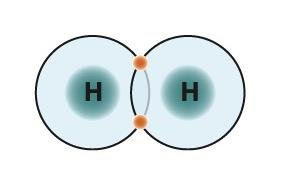
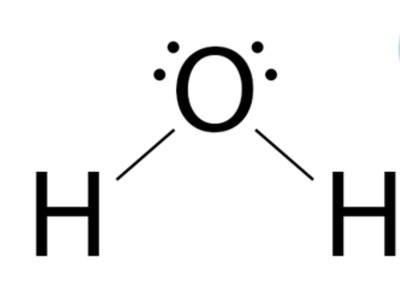
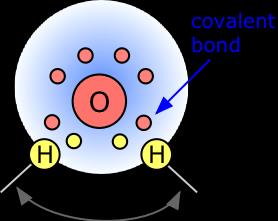
Covalent Bonds: Atoms share electrons to form covalent bonds. In water, hydrogen and oxygen are connected by covalent bonds.
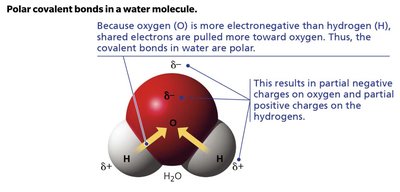
Polar Covalent Bonds: Electrons are shared unequally between atoms with different electronegativities, resulting in partial charges.
Electronegativity: The tendency of an atom to attract electrons. Oxygen (3.44) is more electronegative than hydrogen (2.1), causing electrons to spend more time near oxygen.

Polarity and Shape of Water Molecule
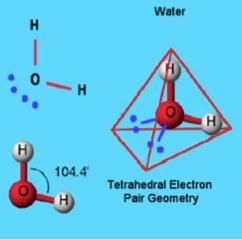
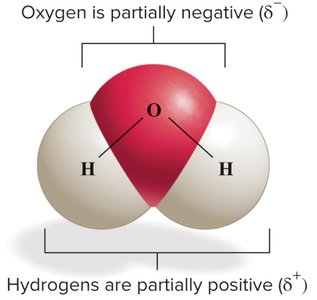
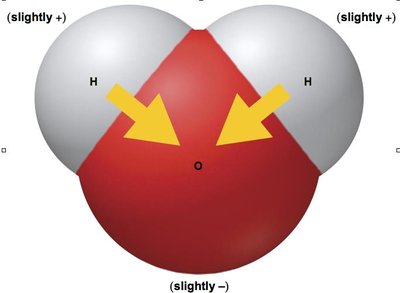
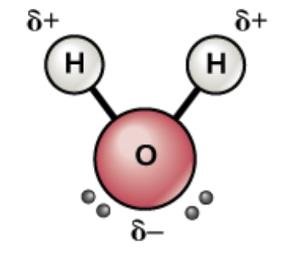
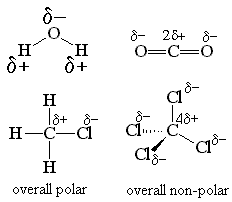
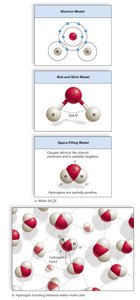
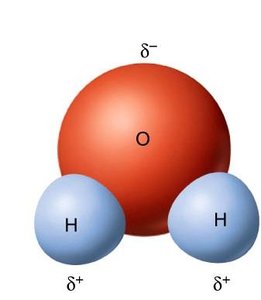
The water molecule (H2O) is asymmetrical and polar due to its bent shape and the unequal sharing of electrons. This polarity is essential for many of water's properties.
Polar Molecule: Water has a partial negative charge on oxygen and partial positive charges on hydrogens.
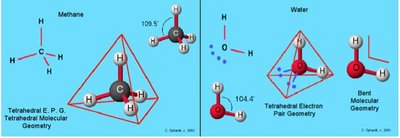
Shape: The bent shape (104.5° angle) results from lone pairs on oxygen, making water directional and polar.
Hydrophilic Nature: Polar molecules are water-loving and interact well with water.
Comparison of Molecular Polarity
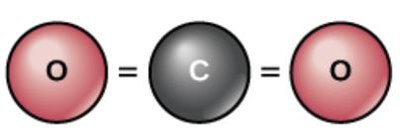
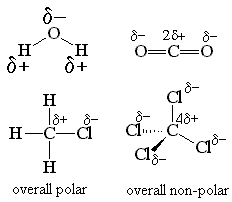
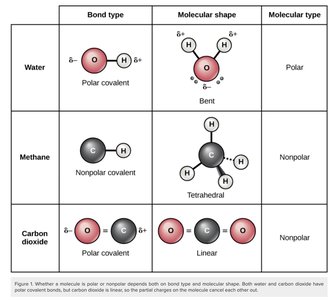
The polarity of a molecule depends on both the type of bonds and the molecular shape.
Bond Type | Molecular Shape | Molecular Type |
|---|---|---|
Water | Bent | Polar |
Methane | Tetrahedral | Nonpolar |
Carbon Dioxide | Linear | Nonpolar |
Hydrogen Bonding in Water
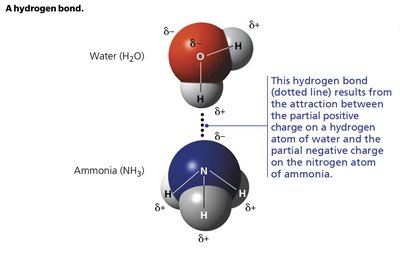
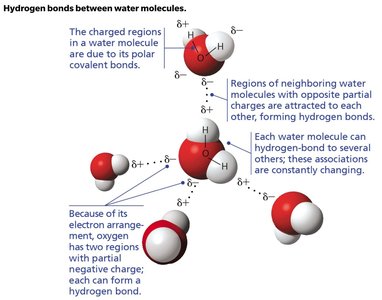
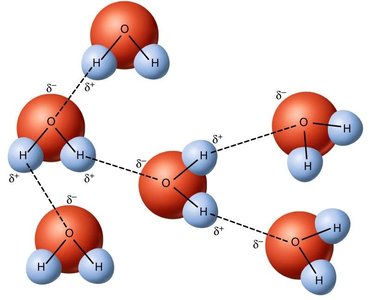
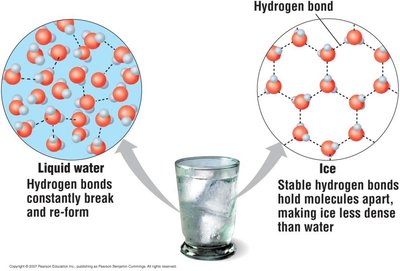
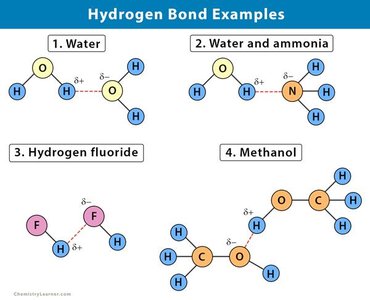
Hydrogen bonds are weak attractions between the partially positive hydrogen atom of one molecule and the partially negative atom (usually oxygen or nitrogen) of another. Although individually weak, their cumulative effect is significant.
Hydrogen Bonds: Formed between δ+ hydrogen and δ- oxygen or nitrogen.
Strength: Each hydrogen bond is about 5% the strength of a covalent bond.
Biological Importance: Responsible for many emergent properties of water.
Emergent Properties of Water
Water's unique properties arise from hydrogen bonding and molecular polarity. These emergent properties are essential for life.
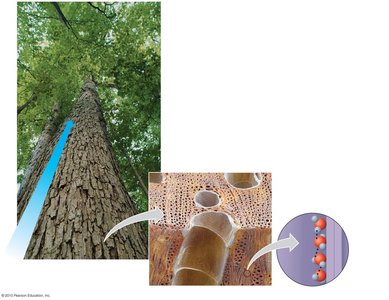
Cohesion: Water molecules stick to each other, enabling surface tension and transport in plants.
Adhesion: Water molecules stick to other polar substances.
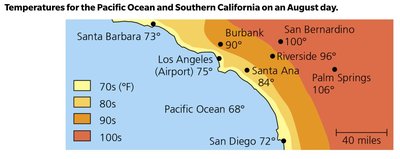
High Specific Heat: Water resists temperature changes, stabilizing environments.
High Heat of Vaporization: Water absorbs large amounts of heat to evaporate, enabling cooling mechanisms.
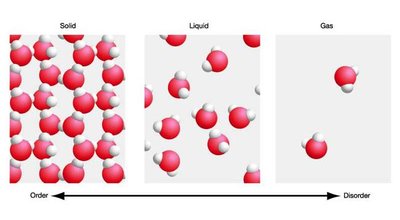
Ice Floats: Hydrogen bonds stabilize in ice, making it less dense than liquid water.
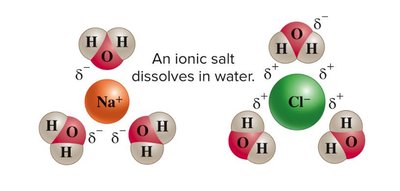
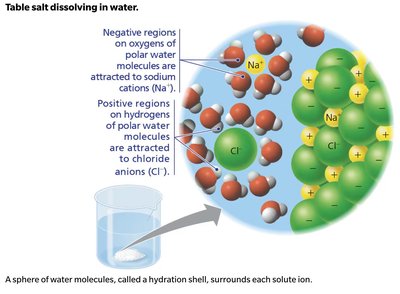
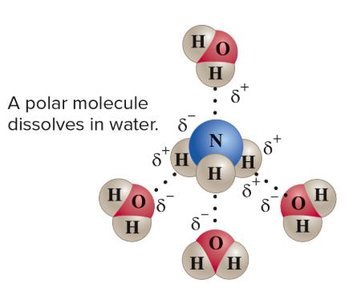
Solvent Properties: Water dissolves polar and ionic substances, facilitating biochemical reactions.
Water as a Solvent
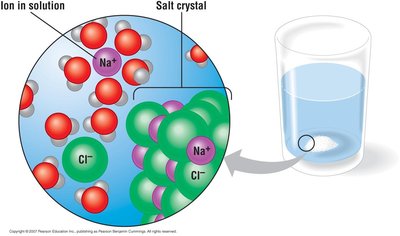
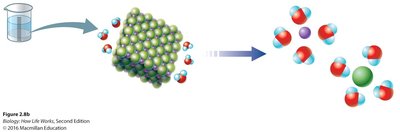
Water's polarity allows it to dissolve many substances, making it the "universal solvent" in biological systems.
Hydrophilic: Polar molecules dissolve easily in water.
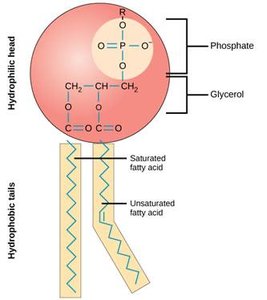
Hydrophobic: Nonpolar molecules do not dissolve in water and are important in membrane structure.
Solubility: Ionic compounds like NaCl dissociate in water, while nonpolar molecules do not.
Hydrogen Bonds in Biological Molecules
Hydrogen bonds play a critical role in the structure and function of biological macromolecules.
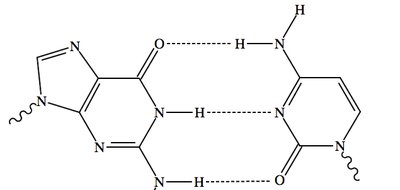
DNA: Hydrogen bonds hold the two strands of the DNA double helix together.
Proteins: Hydrogen bonds contribute to protein folding and stability.
pH and Water Ionization
Water can ionize to form H+ and OH- ions, and the concentration of H+ determines the pH of a solution.
pH Scale: Measures the concentration of hydrogen ions [H+].
Neutral pH: Water has a neutral pH of 7 when [H+] = [OH-].
Logarithmic Scale: Each unit change in pH represents a tenfold change in [H+].
Equation for pH:
Acids, Bases, and Buffers
Acids and bases alter the pH of a solution by donating or accepting hydrogen ions. Buffers are chemicals that resist changes in pH, maintaining homeostasis in biological systems.
Acids: Donate H+ ions, lowering pH.
Bases: Accept H+ ions, raising pH.
Buffers: Stabilize pH by neutralizing excess acids or bases.
Summary of Water's Biological Importance
Water's structure, polarity, hydrogen bonding, and solvent properties are foundational to life. Its ability to moderate temperature, dissolve substances, and participate in biochemical reactions makes it indispensable in biological systems.
Polar covalent bonds and hydrogen bonds are central to water's properties.
Water's emergent properties support life at all levels.
pH and buffers are critical for maintaining biological function.
Additional info: The notes expand on emergent properties, molecular comparisons, and pH calculations to ensure completeness and academic quality for exam preparation.
