 Back
BackWater and Its Essential Role in Life: Structure, Properties, and Biological Significance CHP 4
Study Guide - Smart Notes
 Tailored notes based on your materials, expanded with key definitions, examples, and context.
Water: Essential for Life
Introduction to Water in Biology
Water is fundamental to all known forms of life, comprising 70–95% of cellular content and serving as the medium for most biochemical reactions. Its abundance and unique properties make Earth habitable and support the evolution and maintenance of life.
Life originated in water and evolved there for billions of years.
Modern organisms remain dependent on water for survival.
Water's properties are crucial for cellular structure and function.
Example: Cells, blood, and plant sap all use water as a solvent.
Chemical Structure of Water
Water Molecule: Composition and Bonding
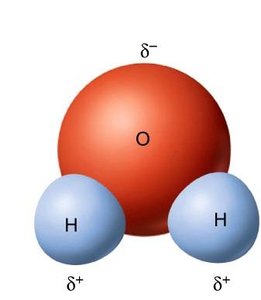
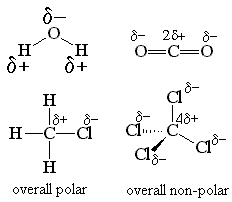
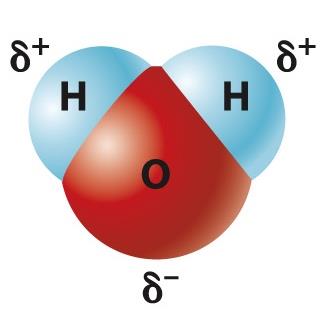
The water molecule (H2O) consists of two hydrogen atoms covalently bonded to one oxygen atom. The oxygen atom is more electronegative, resulting in unequal sharing of electrons and the formation of polar covalent bonds.
Covalent bonds: Electrons are shared between atoms.
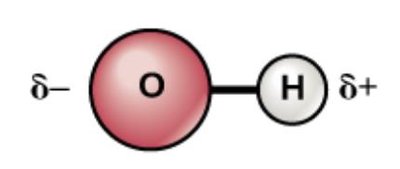
Polar covalent bonds: Electrons are shared unequally, creating partial charges.
Electronegativity: Oxygen (3.44) is more electronegative than hydrogen (2.1).
Example: The oxygen atom attracts electrons more strongly, making it partially negative (δ−), while hydrogen becomes partially positive (δ+).
Shape and Polarity of Water
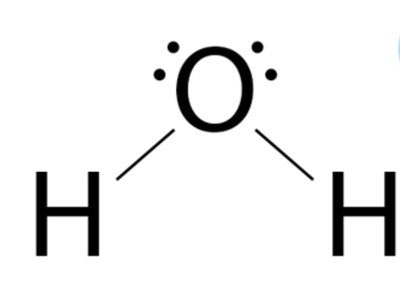
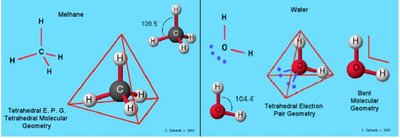
The shape of the water molecule is bent, not linear, due to the two lone pairs of electrons on oxygen. This asymmetry, combined with polar covalent bonds, makes water a polar molecule.
Bent molecular geometry: Water's bond angle is approximately 104.5°.
Polarity: Water has distinct positive and negative regions.
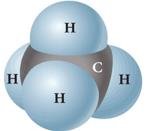
Comparison: Methane (CH4) is symmetrical and nonpolar, while water is asymmetrical and polar.
Types of Chemical Bonds in Biology
Covalent Bonds
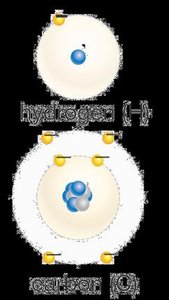
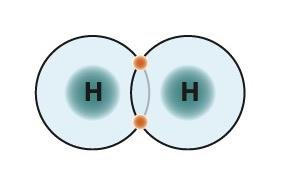
Covalent bonds are strong bonds formed by the sharing of electrons between atoms. They can be classified as polar or nonpolar depending on the electronegativity difference.
Nonpolar covalent bonds: Electrons are shared equally (e.g., C–C, C–H).
Polar covalent bonds: Electrons are shared unequally (e.g., O–H, C–O).
Example: Water contains polar covalent bonds; methane contains nonpolar covalent bonds.
Hydrogen Bonds
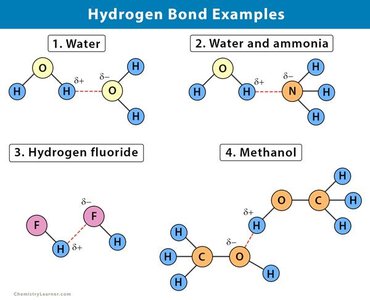
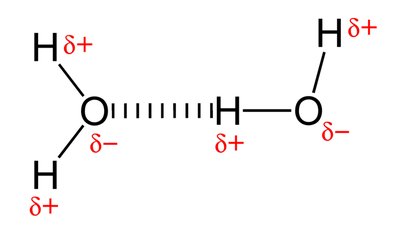
Hydrogen bonds are weak, noncovalent interactions formed between a partially positive hydrogen atom and a partially negative atom (such as oxygen or nitrogen). Although individually weak, their cumulative effect is significant in biological systems.
Hydrogen bonds: Form between water molecules, DNA strands, and protein structures.
Strength: Each hydrogen bond is about 5% the strength of a covalent bond.
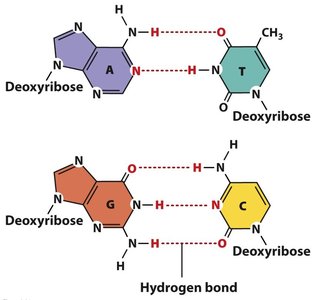
Example: Hydrogen bonds hold the two strands of DNA together.
Emergent Properties of Water
Cohesion and Adhesion
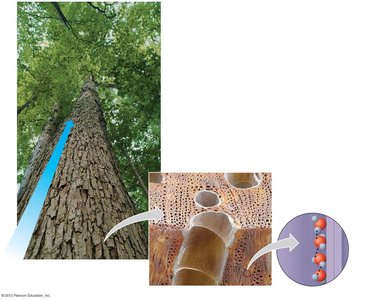
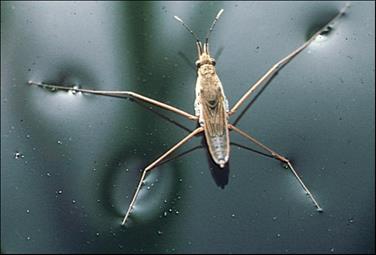
Water molecules exhibit cohesion (attraction to each other) and adhesion (attraction to other polar substances), both due to hydrogen bonding. These properties are essential for biological processes such as water transport in plants and surface tension.
Cohesion: Responsible for surface tension; allows insects to walk on water.
Adhesion: Enables capillary action, pulling water up plant stems.
Example: Water strider walking on water; water moving up a tree.
Temperature Moderation
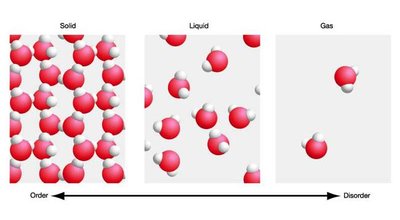
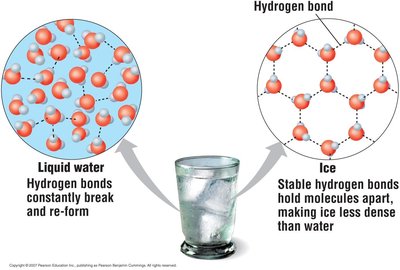
Water has a high specific heat and heat of vaporization, allowing it to resist temperature changes and moderate climate. Hydrogen bonds absorb heat, breaking and reforming as water changes state.
Specific heat: Amount of heat required to change water's temperature is high.
Heat of vaporization: Water absorbs large amounts of heat to evaporate.
Example: Temperatures are milder near large bodies of water; sweating cools the body.
Ice Floats
At low temperatures, hydrogen bonds stabilize, forming a crystalline structure that is less dense than liquid water. This allows ice to float, insulating aquatic life below.
Density: Ice is less dense than liquid water due to stable hydrogen bonds.
Biological significance: Floating ice prevents bodies of water from freezing solid.
Example: Life persists under ice in lakes during winter.

Water as a Solvent
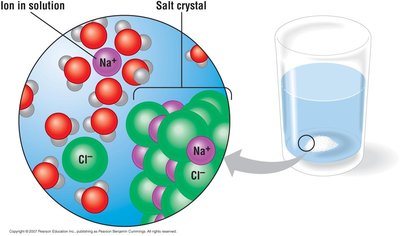
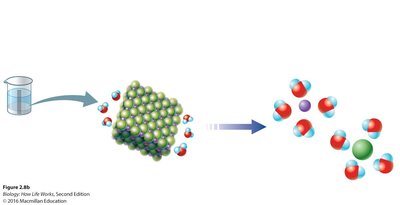
Water is an excellent solvent for polar and ionic substances due to its polarity. It dissolves salts and other hydrophilic molecules, facilitating biochemical reactions and transport.
Hydrophilic: Polar molecules dissolve in water.
Hydrophobic: Nonpolar molecules do not dissolve in water.
Example: Salt (NaCl) dissolves in water as ions separate and interact with water molecules.
Biological Significance of Water and Bonds
Hydrogen Bonds in Biological Structures
Hydrogen bonds are critical for the structure and function of biological macromolecules, including DNA and proteins. They stabilize double helices and contribute to protein folding.
DNA: Hydrogen bonds hold complementary bases together.
Proteins: Hydrogen and ionic bonds stabilize protein structure.
Cell membranes: Hydrophobic and hydrophilic interactions drive membrane formation.
Summary Table: Bond Types and Molecular Properties
The table below summarizes the relationship between bond type, molecular shape, and molecular polarity for water, methane, and carbon dioxide.
Bond type | Molecular shape | Molecular type |
|---|---|---|
Water | Bent | Polar |
Methane | Tetrahedral | Nonpolar |
Carbon dioxide | Linear | Nonpolar |
Key Terms and Concepts
Polar molecule: A molecule with uneven charge distribution.
Hydrogen bond: Weak attraction between a hydrogen atom and an electronegative atom.
Hydrophilic: Water-loving; dissolves in water.
Hydrophobic: Water-fearing; does not dissolve in water.
Emergent properties: New properties arising from interactions among components.
Equations and Scientific Principles
Electronegativity difference: Determines bond polarity.
Specific heat equation:
Additional info: Academic context was added to clarify the significance of water's properties, the nature of chemical bonds, and their biological relevance. The notes are structured to provide a comprehensive overview suitable for General Biology students.
