 Back
Water and Life; Carbon and the Molecular Diversity of Life – Study Notes
Study Guide - Smart Notes
 Tailored notes based on your materials, expanded with key definitions, examples, and context.
Water and Life
Acidic and Basic Conditions Affect Living Organisms
Acidic and basic conditions are crucial for the survival and function of living organisms. The dissociation of water molecules, though rare, has significant effects on biological systems due to the reactivity of H+ and OH– ions. Changes in their concentrations can drastically alter cellular chemistry.
Acid: A substance that increases the H+ concentration of a solution.
Base: A substance that reduces the H+ concentration of a solution.
Strong acids and bases: Dissociate completely in water.
Weak acids and bases: Reversibly release and accept hydrogen ions, shifting the balance away from neutrality.
Example: The internal pH of most living cells is close to 7; even slight changes can be harmful.
Formula:
For a neutral aqueous solution, , so .
Most biological fluids have pH values in the range of 6 to 8.
Acidification: A Threat to Our Oceans
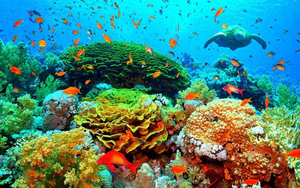
Burning fossil fuels releases CO2, which is absorbed by oceans and forms carbonic acid, leading to ocean acidification. As seawater acidifies, H+ ions combine with carbonate ions to produce bicarbonate, reducing carbonate availability for calcification in marine organisms such as corals.
Calcification: The process by which marine organisms produce calcium carbonate for their skeletons and shells.
Impact: Ocean acidification threatens coral reefs and can cause ecosystem-wide changes.

Carbon and the Molecular Diversity of Life
Organic Chemistry and Carbon's Bonding Properties
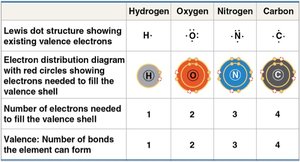
Organic chemistry is the study of compounds containing carbon. Carbon's ability to form four covalent bonds allows for the creation of large, complex molecules. The overall percentages of major elements (C, H, O, N, S, P) are uniform across organisms, and carbon's versatility is foundational to molecular diversity.
Valence electrons: Carbon has four valence electrons, enabling four covalent bonds.
Tetrahedral shape: In molecules with multiple carbons, each carbon bonded to four other atoms forms a tetrahedral shape.
Double bonds: When two carbons are joined by a double bond, the atoms attached are in the same plane.
Molecular Diversity from Carbon Skeletons
Carbon atoms can form chains and rings, creating the skeletons of most organic molecules. These chains vary in length and shape, contributing to molecular diversity.
Hydrocarbons: Organic molecules consisting only of carbon and hydrogen; they can release large amounts of energy.
Carbon dioxide (CO2): Example of carbon partnering with atoms other than hydrogen.
Isomers: Structural Variations in Molecules
Isomers are compounds with the same molecular formula but different structures and properties. There are three main types:
Structural isomers: Differ in the covalent arrangement of atoms.
Cis-trans isomers: Differ in spatial arrangement due to double bonds.
Enantiomers: Mirror images of each other, important in pharmaceuticals.
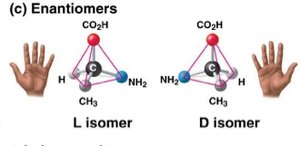
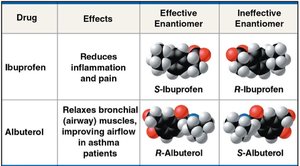
Example: Two enantiomers of a drug may have different effects; often only one is biologically active.
Functional Groups and Molecular Function
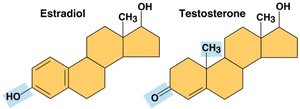
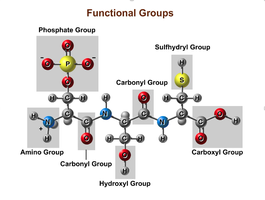
Distinctive properties of organic molecules depend on the carbon skeleton and the chemical groups attached. Functional groups are the components most commonly involved in chemical reactions and help give each molecule its unique properties.
Functional groups: Amino, carbonyl, carboxyl, hydroxyl, phosphate, sulfhydryl.
Example: Estradiol and testosterone differ only in functional groups, yet have distinct biological effects.
ATP: An Important Source of Energy
Adenosine triphosphate (ATP) is an organic molecule consisting of adenosine attached to three phosphate groups. ATP stores potential energy and releases it upon reaction with water, providing energy for cellular processes.
ATP: Used to release energy for cellular functions.
Versatility of carbon: Enables the diversity of organic molecules, foundational to biological diversity.
Additional info: ATP hydrolysis:
