 Back
Water and Life: Properties and Biological Importance
Study Guide - Smart Notes
 Tailored notes based on your materials, expanded with key definitions, examples, and context.
Water and Life
Introduction
Water is an essential molecule for all known forms of life. Its unique chemical and physical properties make it indispensable for biological processes, from cellular metabolism to ecosystem regulation.
Polar Covalent Bonds and Hydrogen Bonding in Water
The Water Molecule
The structure and properties of water are determined by the nature of its chemical bonds and the arrangement of its atoms.
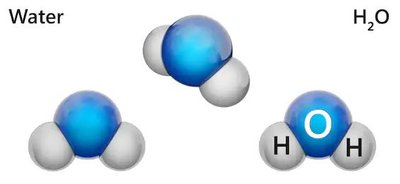
Polar covalent bond: A covalent bond in which electrons are shared unequally between atoms, resulting in partial charges.
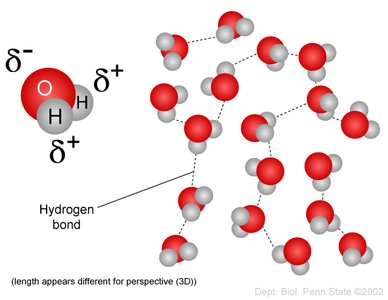
Electronegativity: Oxygen is more electronegative than hydrogen, so it attracts electrons more strongly, giving the oxygen atom a partial negative charge (δ-) and the hydrogen atoms partial positive charges (δ+).
Polarity: Water (H2O) is a polar molecule due to its bent shape and unequal electron distribution.
Hydrogen bonding: The polarity of water molecules allows them to form hydrogen bonds with each other, which are responsible for many of water’s unique properties.
Emergent Properties of Water
Cohesion and Adhesion
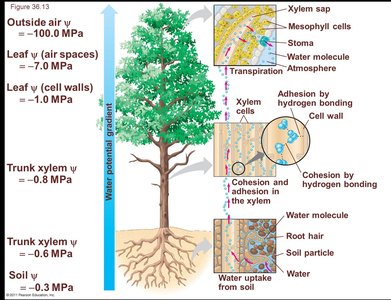
Water molecules exhibit strong cohesive and adhesive behaviors due to hydrogen bonding.
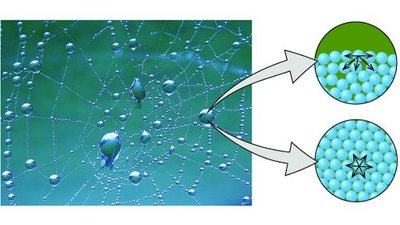
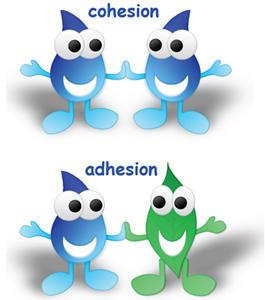
Cohesion: The attraction between water molecules, leading to high surface tension. This allows water droplets to form and enables insects to walk on water surfaces.
Adhesion: The attraction between water molecules and other substances, which helps water climb up plant vessels (capillary action).
Biological example: Transpiration in plants relies on both cohesion and adhesion to move water from roots to leaves.
High Specific Heat
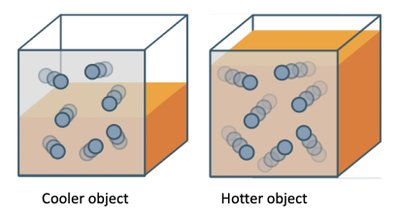
Water has a high specific heat, meaning it can absorb or release large amounts of heat with only a slight change in its own temperature.
Specific heat: The amount of heat required to raise the temperature of 1 gram of a substance by 1°C.
Biological significance: Water’s high specific heat stabilizes temperatures in organisms and environments, moderating climate and body temperature.
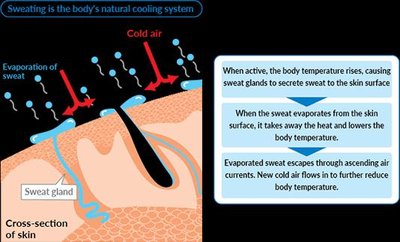
Example: Large bodies of water buffer temperature fluctuations, and sweating helps regulate body temperature in humans.
Heat of Vaporization and Evaporative Cooling
Water requires a large amount of energy to change from liquid to gas (high heat of vaporization), which enables evaporative cooling.
Heat of vaporization: The amount of heat needed to convert 1 gram of liquid into vapor.
Evaporative cooling: As water evaporates, it removes heat from surfaces, cooling organisms and environments.
Examples: Sweating in humans and transpiration in plants are vital cooling mechanisms.

Ice Floats: Density of Solid vs. Liquid Water
Unlike most substances, water is less dense as a solid than as a liquid, causing ice to float.
Reason: Hydrogen bonds stabilize and keep water molecules further apart in ice than in liquid water.
Ecological significance: Floating ice insulates bodies of water, allowing aquatic life to survive beneath the surface during cold periods.
Water as the Universal Solvent
Water’s polarity allows it to dissolve many substances, making it the “solvent of life.”
Solvent: The dissolving agent in a solution.
Solution: A homogeneous mixture of two or more substances.
Aqueous solution: A solution in which water is the solvent.
Hydrophilic: Substances that dissolve easily in water (polar or charged).
Hydrophobic: Substances that do not dissolve in water (non-polar).
Biological importance: Water dissolves salts, sugars, gases, and other molecules necessary for life processes.
Acidic and Basic Conditions Affect Living Organisms
Dissociation of Water and pH
Water can dissociate into hydrogen ions (H+) and hydroxide ions (OH-), affecting the pH of solutions.
Dissociation:
pH scale: Measures the concentration of hydrogen ions in a solution.
Acids: Substances that increase H+ concentration (pH < 7).
Bases: Substances that decrease H+ concentration or increase OH- (pH > 7).
Buffers: Substances that minimize changes in pH by accepting or donating H+ ions.
Biological importance: Maintaining stable pH is critical for enzyme function and cellular processes.
Type | pH Range | [H+] | Examples |
|---|---|---|---|
Acid | 0–7 | High | Lemon juice, stomach acid |
Neutral | 7 | Equal [H+] and [OH-] | Pure water |
Base | 7–14 | Low | Soap, bleach |
Example: Human blood is maintained at a pH of 7.35–7.45 by buffers such as bicarbonate.
Conclusion
Water’s unique chemical structure and properties are fundamental to life on Earth. Its ability to moderate temperature, dissolve substances, and support chemical reactions underpins biological processes from the cellular to the ecosystem level.
