 Back
Water and Life: Properties, Importance, and Biological Implications
Study Guide - Smart Notes
 Tailored notes based on your materials, expanded with key definitions, examples, and context.
Water and Life
Polar Covalent Bonds and Hydrogen Bonding in Water
Water is a unique molecule essential for life, largely due to its polar covalent bonds and the resulting hydrogen bonding between molecules.
Polarity: Water molecules have polar covalent bonds, with oxygen carrying a partial negative charge and hydrogen carrying a partial positive charge.
Hydrogen Bonds: The polarity allows water molecules to form hydrogen bonds with each other. These bonds are short-lived but constantly reform, giving water its unique properties.
Example: At 37°C, about 15% of water molecules are hydrogen-bonded at any moment.
Emergent Properties of Water
Water’s polarity leads to four emergent properties that make Earth suitable for life:
Cohesion: Water molecules stick to each other, aiding processes like water transport in plants.
Moderation of Temperature: Water can absorb or release large amounts of heat with minimal temperature change.
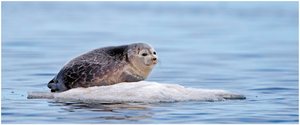
Expansion Upon Freezing: Ice is less dense than liquid water, allowing it to float and insulate aquatic environments.
Versatility as a Solvent: Water dissolves many substances, facilitating biochemical reactions.
Cohesion and Adhesion
Cohesion refers to water molecules sticking to each other, while adhesion is water sticking to other substances. Both are crucial for processes like water transport in plants.
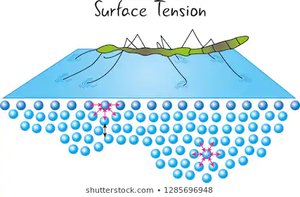
Surface Tension: The cohesive forces at the surface of water create a 'film' that makes it difficult to break the surface.
Example: Water striders can walk on water due to surface tension.
Moderation of Temperature by Water
Water’s high specific heat allows it to buffer temperature changes, stabilizing environments and organisms.
Kinetic Energy: The energy of motion; heat is the total kinetic energy of molecules.
Temperature: Measures the average kinetic energy of molecules.
Specific Heat: Water’s specific heat is 1 cal/g/°C, much higher than many other substances, meaning it resists temperature changes.
Evaporative Cooling: As water evaporates, it removes heat, cooling surfaces (e.g., sweating in humans).
Floating of Ice on Liquid Water
Unlike most substances, water is less dense as a solid than as a liquid. This property allows ice to float, providing insulation for aquatic life in cold climates.
Density: Liquid water is more dense than ice due to the arrangement of hydrogen bonds in the solid state.
Biological Importance: Floating ice insulates water below, protecting aquatic organisms during winter.
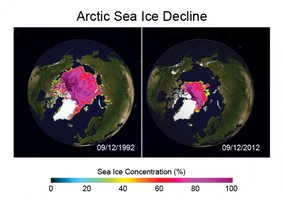
Global Warming: Melting ice due to climate change threatens species that depend on ice for survival.
Water: The Solvent of Life
Water’s polarity makes it an excellent solvent, capable of dissolving a wide variety of substances necessary for life.
Solution: A homogeneous mixture of solute (dissolved substance) and solvent (dissolving agent).
Aqueous Solution: A solution where water is the solvent.
Hydration Shell: Water molecules surround and separate ions or polar molecules, facilitating dissolution.
Hydrophilic: Substances with an affinity for water (ionic or polar).
Hydrophobic: Substances that repel water (nonpolar).
Solute Concentration in Aqueous Solutions
Biochemical reactions often occur in aqueous solutions, making it important to understand solute concentration.
Molarity (M): Number of moles of solute per liter of solution.
Mole: 6.02 × 10²³ molecules (Avogadro’s number).
Molecular Mass: The sum of the masses of all atoms in a molecule, measured in Daltons (D) or grams per mole (g/mol).
Example Calculation:
To make 1 L of a 2 M solution of sucrose (C12H22O11):
Molecular mass = (12 × 12) + (22 × 1) + (11 × 16) = 342 g/mol
2 moles × 342 g/mol = 684 g required
Acidic and Basic Conditions Affect Living Organisms
The concentration of hydrogen ions (H+) and hydroxide ions (OH–) in water affects biological systems.
Dissociation of Water: Water can dissociate into H+ and OH– ions.
Acids: Substances that increase H+ concentration (e.g., HCl).
Bases: Substances that reduce H+ concentration, either by accepting H+ or donating OH– (e.g., ammonia, NaOH).
The pH Scale
The pH scale measures the acidity or basicity of a solution, which is crucial for maintaining life processes.
pH Definition:
Neutral Solution: [H+][OH–] = 10–14 at 25°C; pH = 7
Acidic: pH < 7
Basic: pH > 7
Logarithmic Scale: Each pH unit represents a tenfold difference in H+ concentration.
Buffers
Buffers are substances that minimize changes in pH, helping organisms maintain homeostasis.
Mechanism: Buffers consist of weak acid-base pairs that can absorb or donate H+ as needed.
Example: Carbonic acid/bicarbonate buffer system in blood.
Acidification: A Threat to Water Quality
Human activities, such as burning fossil fuels, increase atmospheric CO2, which dissolves in oceans and forms carbonic acid, leading to ocean acidification.
Impact: Ocean acidification reduces carbonate ion (CO32–) availability, threatening organisms like corals that rely on carbonate for calcification.
