 Back
Water and Life: Properties, Structure, and Biological Importance
Study Guide - Smart Notes
 Tailored notes based on your materials, expanded with key definitions, examples, and context.
Water: The Molecule That Supports All of Life
Polarity and Bonds
Water's unique chemical and physical properties arise from its molecular structure and the nature of its chemical bonds. The polarity of water molecules and their ability to form hydrogen bonds are fundamental to the chemistry of life.
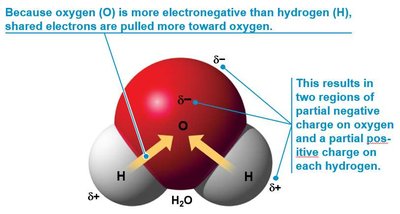
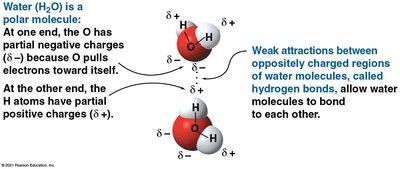
Polar Covalent Bonds: In a water molecule (H2O), oxygen is more electronegative than hydrogen, causing shared electrons to be pulled closer to the oxygen atom. This results in a partial negative charge (δ−) on oxygen and partial positive charges (δ+) on the hydrogens.
Polarity: The uneven distribution of charge makes water a polar molecule, with distinct positive and negative regions.
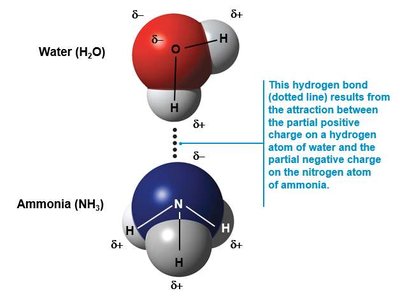
Hydrogen Bonds: The partial charges allow water molecules to form transient hydrogen bonds with each other and with other polar molecules, organizing and stabilizing biological structures.
Biological Importance: Hydrogen bonds are essential for the structure and function of DNA, proteins, and other macromolecules.
Example: The geometry of water allows each molecule to form up to four hydrogen bonds, creating a dynamic network.
Emergent Properties of Water
Cohesion, Adhesion, and Surface Tension
The collective behavior of water molecules, driven by hydrogen bonding, gives rise to several emergent properties critical for life.
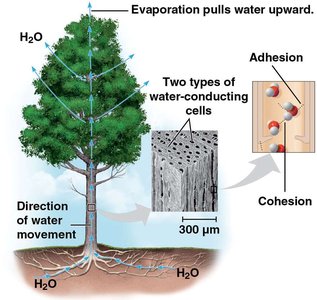
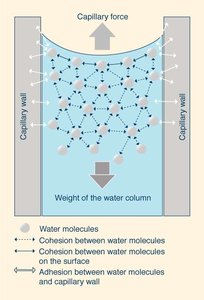
Cohesion: Water molecules stick to each other due to hydrogen bonding, enabling the transport of water against gravity in plants.
Adhesion: Water molecules also adhere to other polar surfaces, such as cell walls, aiding in capillary action.
Surface Tension: At the air-water interface, hydrogen bonds create high surface tension, allowing small organisms to move across the surface without sinking.
Example: Water transport in plant xylem relies on both cohesion and adhesion to move water from roots to leaves.
Thermal Properties: Specific Heat and Evaporative Cooling
Water's ability to absorb and release heat with minimal temperature change is vital for climate regulation and organismal homeostasis.
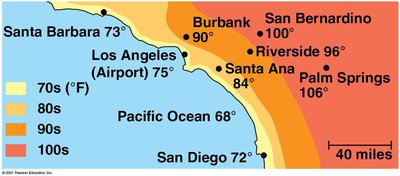
High Specific Heat: Water requires a large amount of energy to change temperature, minimizing temperature fluctuations in the environment and within organisms.
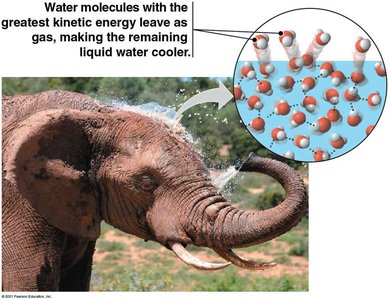
Heat of Vaporization: Significant energy is needed for water to evaporate, allowing for cooling mechanisms such as sweating and transpiration.
Evaporative Cooling: As water evaporates, it removes heat from surfaces, preventing overheating in organisms.
Example: Coastal regions experience moderate temperatures due to water's high specific heat.
Density and the Floating of Ice
Water is less dense as a solid than as a liquid, a property that is crucial for aquatic life and Earth's climate.
Ice Structure: Hydrogen bonds lock water molecules into a crystalline lattice in ice, spacing them farther apart than in liquid water.
Biological Significance: Ice floats, insulating bodies of water and preventing them from freezing solid, which is essential for the survival of aquatic organisms in cold climates.
Water as a Solvent
Solubility and Hydration Shells
Water's polarity makes it an excellent solvent for ionic and polar substances, facilitating chemical reactions and transport in biological systems.
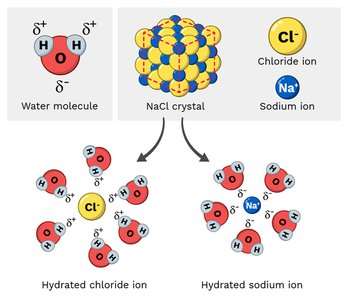
Hydration Shells: Water molecules surround ions and polar molecules, forming hydration shells that keep them dissolved and available for biological processes.
Hydrophilic vs. Hydrophobic: Hydrophilic substances interact readily with water, while hydrophobic substances (like oils) do not, influencing cell membrane structure and function.
Example: Table salt (NaCl) dissolves in water as Na+ and Cl− ions become surrounded by water molecules.
Concentration and Solution Preparation
Percent Solutions, Moles, and Molarity
Biologists use standardized units to measure and prepare solutions, ensuring reproducibility in experiments and cellular environments.
Percent Solution: Expresses the mass of solute per 100 mL of solution (w/v).
Molecular Mass: Calculated by summing the atomic masses of all atoms in a molecule.
Mole: A mole contains molecules, allowing for consistent molecular ratios across substances.
Molarity (M): The number of moles of solute per liter of solution; used to standardize concentrations in wet chemistry.
Example: To make a 1 M solution of sucrose, dissolve 342 g (1 mole) in water to a final volume of 1 liter.
pH and Biological Conditions
Ionization of Water and the pH Scale
Water can dissociate into hydrogen (H+) and hydroxide (OH−) ions, affecting the acidity or basicity of solutions. The pH scale quantifies the concentration of H+ ions in a solution.
Ionization: Water molecules occasionally dissociate, forming highly reactive ions that influence cellular chemistry.
Acids and Bases: Acids increase H+ concentration; bases decrease it. Strong acids and bases dissociate completely in water.
pH Calculation:
Neutral Solution: At 25°C, [H+] = M, so pH = 7.
Buffers and Homeostasis
Buffers are substances that minimize changes in pH by reversibly binding H+ ions. They are essential for maintaining stable internal conditions in organisms.
Buffer Systems: The phosphate buffer system in cells and the carbonic acid-bicarbonate buffer in blood help maintain pH homeostasis.
Clinical Relevance: Blood pH must remain near 7.4; deviations can denature proteins and disrupt metabolism.
Environmental Impact: Ocean Acidification
Absorption of atmospheric CO2 by oceans forms carbonic acid, lowering pH and reducing carbonate ion availability, which threatens marine life such as corals.
Carbonic Acid Pathway: CO2 + H2O → H2CO3 (carbonic acid)
Ecological Consequence: Ocean acidification impairs the ability of marine organisms to build calcium carbonate skeletons.
Summary Tables
Emergent Properties of Water
Process | Component | Resulting Function |
|---|---|---|
Capillary Action | Cohesion and Adhesion | Transporting water and nutrients against gravity in plants |
Thermal Regulation | High Specific Heat | Minimizing temperature fluctuations |
Evaporative Cooling | Heat of Vaporization | Preventing overheating in organisms |
Insulation by Ice | Density Shift (Lattice) | Ice floats, insulating aquatic environments |
pH & Conditions
Process | Component | Resulting Function |
|---|---|---|
Ion Displacement | Acids and Bases | Shifting H+ concentration to define solution chemistry |
Concentration Measurement | pH Scale | Quantifying proton levels in biological systems |
pH Homeostasis | Biological Buffers | Maintaining stable internal environment |
Atmospheric Impact | Ocean Acidification | Reducing carbonate ions for marine calcification |
