 Back
Water and Life: Properties, Structure, and Biological Importance
Study Guide - Smart Notes
 Tailored notes based on your materials, expanded with key definitions, examples, and context.
Water and Life
Polar Covalent Bonds and Hydrogen Bonding
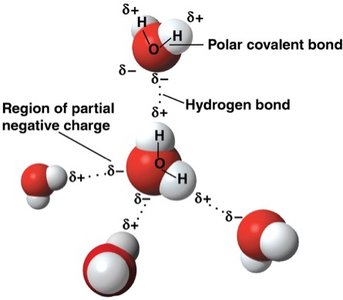
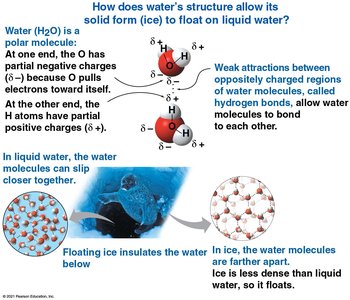
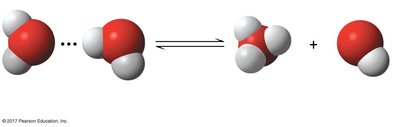
Water's unique properties arise from its molecular structure and the interactions between its molecules. The water molecule (H2O) is polar, with oxygen having a partial negative charge and hydrogen atoms having partial positive charges. This polarity leads to the formation of hydrogen bonds between water molecules.
Polar Covalent Bonds: Electrons are shared unequally between oxygen and hydrogen, resulting in partial charges.
Hydrogen Bonds: Weak attractions between the partially positive hydrogen of one water molecule and the partially negative oxygen of another.
Significance: Hydrogen bonding is responsible for many of water's emergent properties.
Emergent Properties of Water
Water exhibits several properties that are essential for life on Earth. These properties are a direct result of hydrogen bonding and molecular polarity.
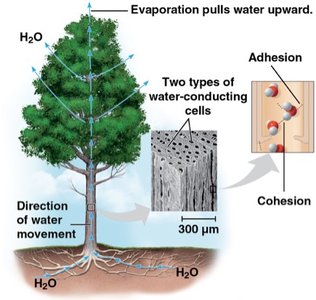
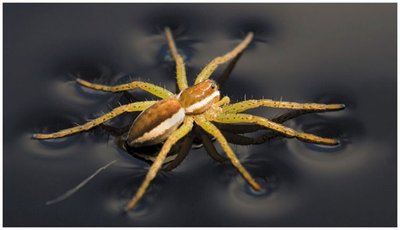
Cohesion: Water molecules stick together due to hydrogen bonding, resulting in high surface tension.
Adhesion: Water molecules can also stick to other substances, such as plant cell walls, aiding in the transport of water against gravity in plants.
High Specific Heat: Water can absorb or release large amounts of heat with only a slight change in its own temperature, helping to moderate Earth's climate and organisms' internal temperatures.
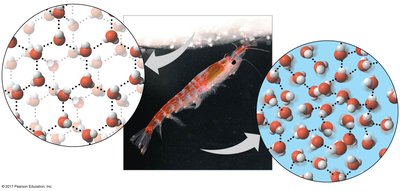
Expansion Upon Freezing: Water is less dense as a solid than as a liquid, causing ice to float and insulate aquatic environments.
Versatility as a Solvent: Water's polarity allows it to dissolve a wide variety of substances, making it the solvent of life.
Cohesion and Adhesion in Plants
Cohesion and adhesion work together to transport water from roots to leaves in plants, overcoming gravity through capillary action.
Surface Tension
High surface tension allows certain organisms, such as insects, to walk on water without sinking.
High Specific Heat and Climate Moderation
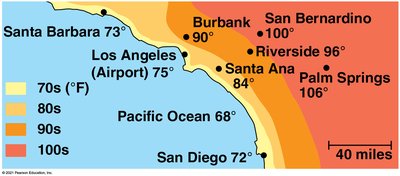
Water's high specific heat helps buffer temperature changes in the environment, stabilizing climates near large bodies of water.
Heat Absorption and Release: Heat is absorbed when hydrogen bonds break and released when they form.
Expansion Upon Freezing
As water freezes, its molecules form a crystalline lattice, making ice less dense than liquid water. This property allows ice to float, insulating aquatic life below and preventing bodies of water from freezing solid.
Water: The Solvent of Life
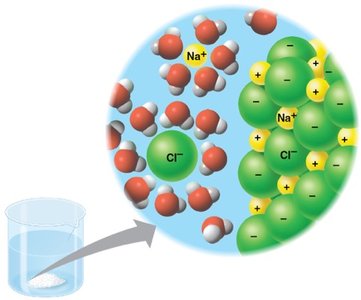
Water's polarity makes it an excellent solvent, capable of dissolving ionic and polar substances. When an ionic compound dissolves, water molecules surround each ion, forming hydration shells.
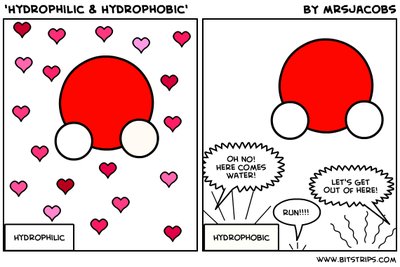
Hydrophilic Substances: Substances that have an affinity for water (e.g., salts, sugars).
Hydrophobic Substances: Substances that repel water, typically nonpolar molecules like oils. These are major components of cell membranes.
Acidic and Basic Conditions Affect Living Organisms
Water can dissociate into hydrogen ions (H+) and hydroxide ions (OH−). The concentrations of these ions determine the pH of a solution, which is crucial for biological processes.
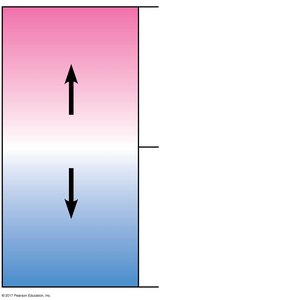
Acids: Substances that increase the H+ concentration of a solution.
Bases: Substances that reduce the H+ concentration, often by donating OH− or accepting H+.
pH Scale: Ranges from 0 (most acidic) to 14 (most basic), with 7 being neutral. Most biological fluids have pH values between 6 and 8.
Importance: Even slight changes in pH can be harmful to living cells.
Key Equations:
Dissociation of water:
pH calculation:
Acidification: A Threat to Our Oceans
Burning fossil fuels increases atmospheric CO2, which dissolves in oceans and forms carbonic acid. This process lowers ocean pH, leading to ocean acidification, which threatens marine life by reducing the availability of carbonate ions needed for shell and coral formation.
CO2 + H2O → H2CO3 (carbonic acid)
H2CO3 → H+ + HCO3−
H+ + CO32− → HCO3−
CO32− + Ca2+ → CaCO3 (calcium carbonate, used by marine organisms)
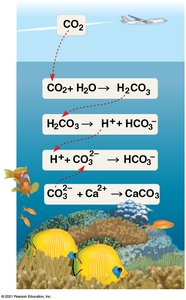
Example: Coral reefs are particularly vulnerable to acidification, which can lead to coral bleaching and loss of biodiversity.
*Additional info: Ocean acidification is a major environmental concern, as it impacts not only marine organisms but also the entire food web and human economies dependent on marine resources.*
