 Back
Water and Sugar Transport in Plants (Chapter 35 Study Notes)
Study Guide - Smart Notes
 Tailored notes based on your materials, expanded with key definitions, examples, and context.
Water and Sugar Transport in Plants
Introduction
Plants require efficient systems for transporting water, minerals, and sugars to sustain growth, metabolism, and reproduction. This chapter explores the mechanisms of water and sugar transport, focusing on the physical principles and cellular structures that enable these processes.
Water Potential and Water Movement
Definition and Importance of Water Potential
Water potential (Ψ) is the potential energy of water in a system compared to pure water, determining the direction of water movement. Water moves from regions of high water potential to regions of low water potential. This principle underlies water uptake by roots and its movement throughout the plant.
Ψ of pure water at atmospheric pressure and room temperature = 0
Measured in megapascals (MPa)
Equation:
Ψp: Pressure potential (physical pressure on water, e.g., turgor pressure)
Ψs: Solute potential (osmotic potential; always zero or negative)
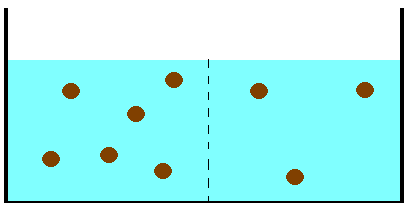
Example: If a plant cell is placed in pure water, water will move into the cell due to the lower Ψ inside the cell (more negative Ψs).
Solute Potential (Ψs)
Solute potential is the effect of dissolved solutes on water potential. Pure water has Ψs = 0; adding solutes makes Ψs negative, lowering water potential and driving osmosis.
Pure water: Ψs = 0
Solution with solutes: Ψs < 0
Pressure Potential (Ψp)
Pressure potential is the physical pressure on water. In plant cells, turgor pressure (positive Ψp) helps maintain cell rigidity, while tension (negative Ψp) can occur in xylem during transpiration.
Ψp = 0: No pressure (e.g., flaccid cell)
Ψp > 0: Turgid cell (positive pressure)
Ψp < 0: Tension (negative pressure, as in xylem during transpiration)
Water Potential Gradients in Plants
Soil-Plant-Atmosphere Continuum
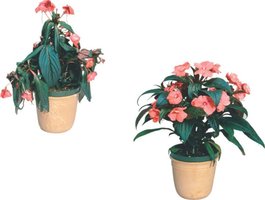
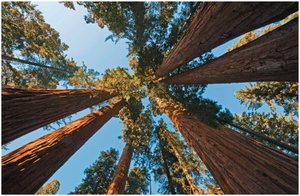
Water moves from soil (high Ψ) to roots, through the plant, and into the atmosphere (very low Ψ) due to a continuous water potential gradient. This passive movement replaces water lost from leaves via transpiration.
Soil: High water potential (unless dry or salty)
Roots: Lower water potential due to solutes
Atmosphere: Lowest water potential (dry air)
Water Uptake and Movement in Roots
Root Structure and Water Absorption
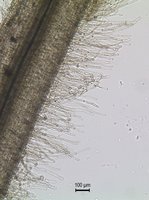
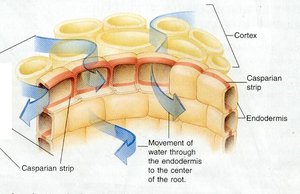
Water is absorbed primarily through root hairs, which increase surface area for uptake. Water and solutes move through the cortex toward the xylem via three main routes: apoplastic, symplastic, and transmembrane.
The Casparian Strip and Endodermis
The Casparian strip is a band of suberin (waxy substance) in the endodermal cell walls that blocks the apoplastic route, forcing water and solutes to cross the plasma membrane before entering the xylem. This selective barrier ensures that harmful substances do not enter the vascular tissue unchecked.
Active Transport of Minerals
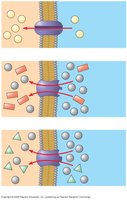
Essential mineral ions (e.g., NO3-, K+, PO43-) are transported into root cells via active transport, often using cotransport mechanisms powered by proton pumps. This process concentrates minerals in the root, lowering Ψs and facilitating water uptake by osmosis.
Water Movement from Roots to Shoots
Mechanisms of Xylem Transport
Water moves upward through xylem by three main forces:
Root Pressure: Generated by osmotic influx of water into the xylem at night, can cause guttation but is insufficient for tall plants.
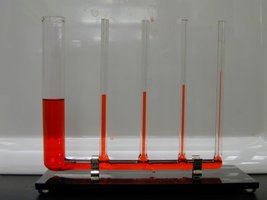
Capillary Action: Movement of water within narrow tubes due to adhesion, cohesion, and surface tension.
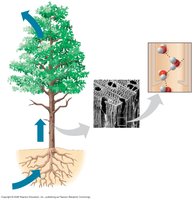
Cohesion-Tension (Transpirational Pull): The primary mechanism in tall plants, where water is pulled up the xylem as a result of transpiration from leaves, with cohesion and adhesion maintaining the water column.
The Cohesion-Tension Theory
The cohesion-tension theory explains how water is transported from roots to leaves:
Transpiration from stomata creates negative pressure (tension) in the leaf xylem.
Hydrogen bonding (cohesion) between water molecules transmits this tension down the water column.
Adhesion to xylem walls helps resist gravity.
The Sun provides the energy for transpiration, not ATP.
Adaptations to Dry Habitats
Plants in arid environments often have adaptations such as thick cuticles, reduced leaf area, sunken stomata, or CAM photosynthesis to minimize water loss.
Sugar Transport in Plants (Phloem Transport)
Phloem Structure and Function
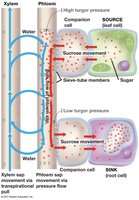
Phloem transports organic nutrients (mainly sucrose) from sources (e.g., leaves) to sinks (e.g., roots, fruits). Sieve-tube elements and companion cells are the main cell types involved in translocation.
Pressure-Flow Hypothesis
The pressure-flow hypothesis explains phloem transport:
Sucrose is actively loaded into phloem at the source, lowering Ψs and causing water to enter by osmosis, increasing turgor pressure.
At the sink, sucrose is unloaded, raising Ψs and causing water to exit, lowering turgor pressure.
The resulting pressure gradient drives bulk flow of phloem sap from source to sink.
Phloem Loading and Unloading
Phloem loading (at the source) and unloading (at the sink) may involve active transport, cotransporters, and proton gradients. Water follows sucrose movement by osmosis, facilitating pressure-driven flow.
Key Concepts Summary
Water moves from high to low water potential, driven by solute concentration and pressure differences.
Transpiration creates a water potential gradient that pulls water from roots to leaves via the cohesion-tension mechanism.
Phloem transports sugars from sources to sinks by pressure-driven bulk flow, powered by active loading and unloading of sucrose.
