 Back
Water: Essential Properties, Bonding, and Biological Significance
Study Guide - Smart Notes
 Tailored notes based on your materials, expanded with key definitions, examples, and context.
Water and the Chemical Context of Life
Bond Types and Electronegativity
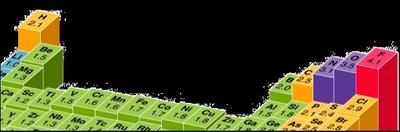
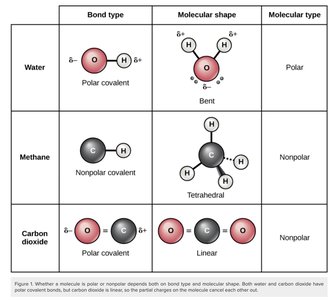
Understanding the types of chemical bonds and the concept of electronegativity is fundamental to grasping why water is essential for life. Electronegativity refers to the ability of an atom to attract electrons in a chemical bond. The difference in electronegativity between atoms determines whether a bond is nonpolar covalent, polar covalent, or ionic.
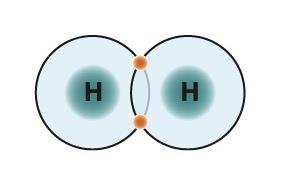
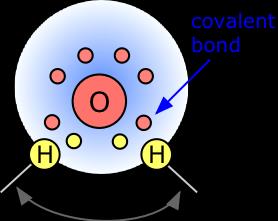
Covalent bonds: Electrons are shared between atoms.
Nonpolar covalent bonds: Electrons are shared equally (e.g., C–C, H–H).
Polar covalent bonds: Electrons are shared unequally due to differences in electronegativity (e.g., O–H, C–O).
Ionic bonds: Electrons are transferred from one atom to another, resulting in charged ions.

Structure and Polarity of Water
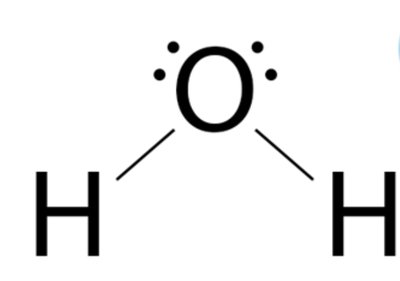
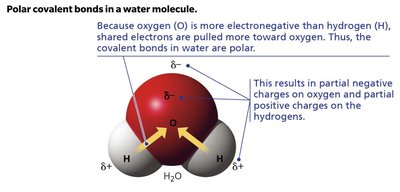
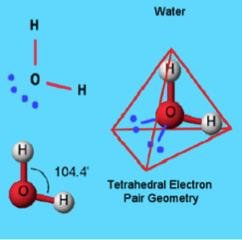
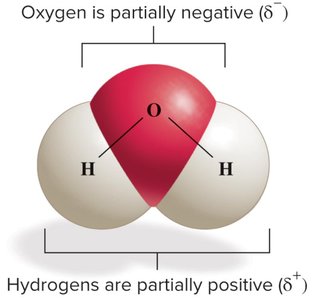
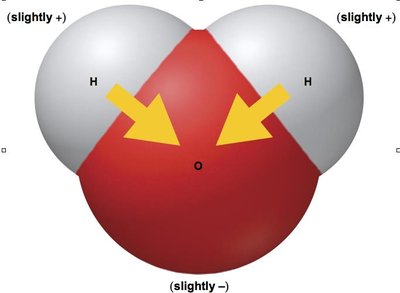
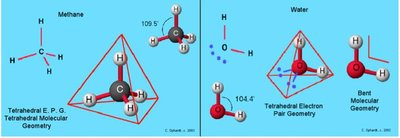
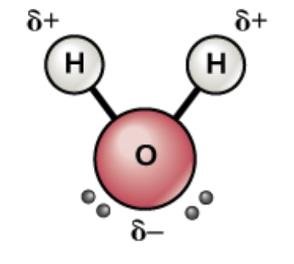
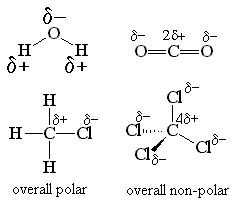
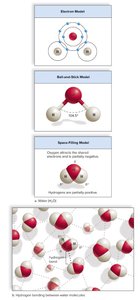
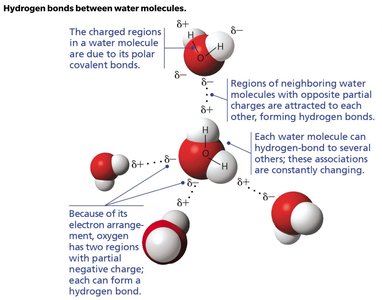
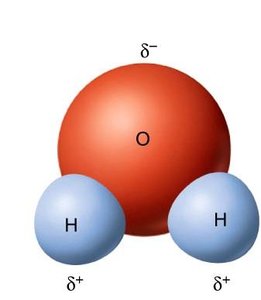
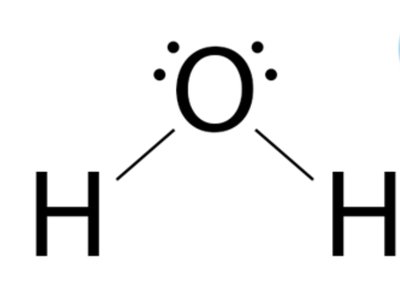
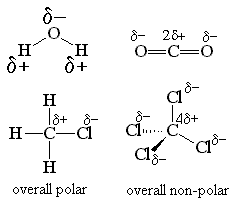
Water (H2O) is a polar molecule due to its bent shape and the difference in electronegativity between oxygen and hydrogen. Oxygen attracts electrons more strongly, resulting in partial negative (δ–) and partial positive (δ+) regions within the molecule.
Asymmetrical shape: Water's bent geometry (104.5° angle) creates a directional molecule.
Polarity: Oxygen is partially negative, hydrogens are partially positive.
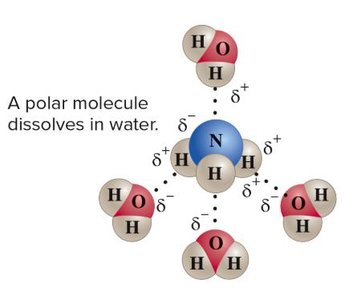
Hydrophilic nature: Polar molecules like water interact well with other polar substances.
Hydrogen Bonding in Water
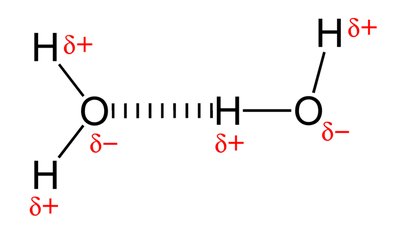
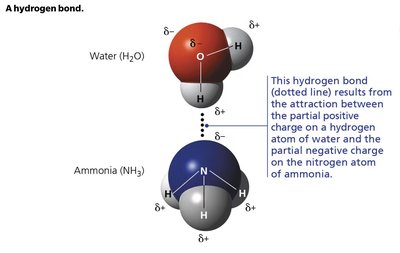
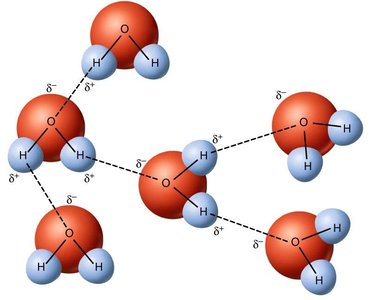
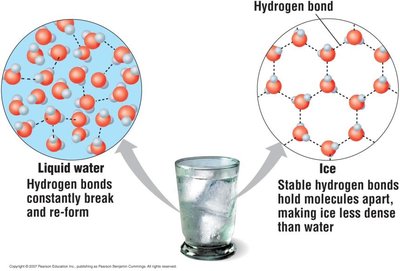
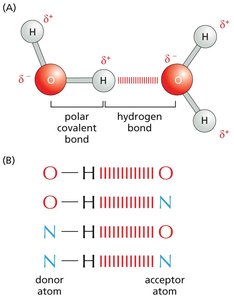
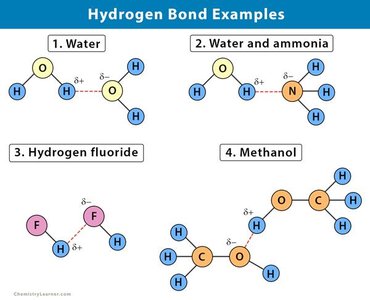
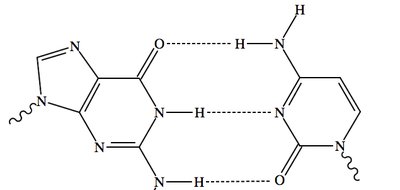
Hydrogen bonds are weak interactions formed between the partially positive hydrogen atom of one water molecule and the partially negative oxygen atom of another. Although each hydrogen bond is weak, their cumulative effect is significant in biological systems.
Hydrogen bonds: Noncovalent, involve partial charges (δ+ and δ–).
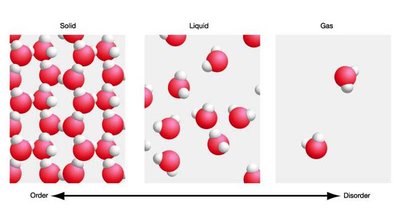
Emergent properties: Cohesion, adhesion, high specific heat, ice floating, and water as a solvent arise from hydrogen bonding.
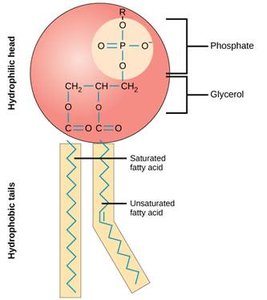
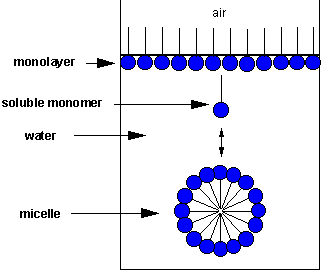
Hydrophilic vs hydrophobic: Polar molecules (hydrophilic) dissolve in water; nonpolar molecules (hydrophobic) do not.
Emergent Properties of Water
Water's unique properties are essential for life and result from its polarity and hydrogen bonding.
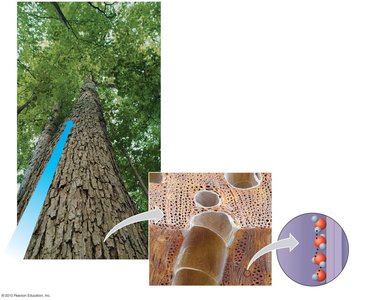
Cohesion: Water molecules stick together, enabling transport in plants.
Adhesion: Water molecules stick to other polar surfaces.
Surface tension: Difficult to break or stretch the surface of water.
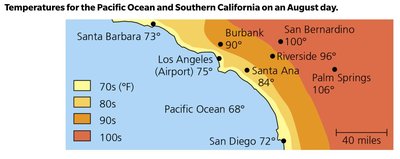
High specific heat: Water resists temperature changes, stabilizing environments.
Ice floats: Hydrogen bonds stabilize, making ice less dense than liquid water.
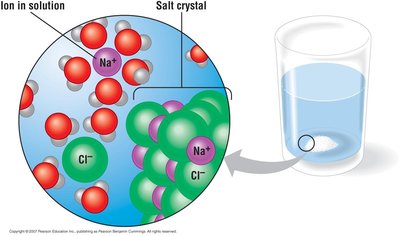
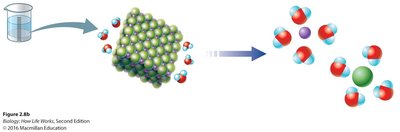
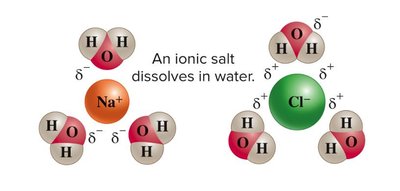
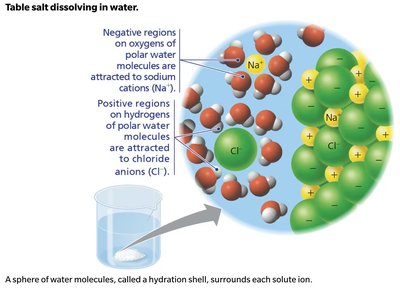
Solvent properties: Water dissolves polar and ionic substances, facilitating biochemical reactions.
pH and Water Ionization
The ionization of water produces hydrogen ions (H+) and hydroxide ions (OH–). The concentration of H+ determines the pH of a solution, which is crucial for biological processes.
pH scale: Logarithmic, each unit represents a tenfold change in H+ concentration.
Neutral pH: Water has a pH of 7, where [H+] = [OH–].
Acids: Donate H+, lower pH.
Bases: Accept H+, raise pH.
Buffers: Chemicals that resist changes in pH, maintaining homeostasis.
Formula:
Summary Table: Water, Methane, and Carbon Dioxide
The table below compares bond type, molecular shape, and polarity for three important molecules:
Bond type | Molecular shape | Molecular type |
|---|---|---|
Water | Bent | Polar |
Methane | Tetrahedral | Nonpolar |
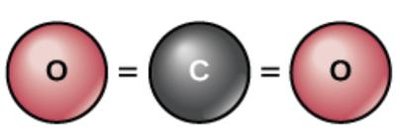
Carbon dioxide | Linear | Nonpolar |
Key Takeaways
Water's polarity and hydrogen bonding are central to its biological functions.
Emergent properties such as cohesion, adhesion, high specific heat, and solvent ability are vital for life.
pH is a measure of hydrogen ion concentration, affecting biomolecular structure and function.
Buffers help maintain stable pH in biological systems.
Additional info: The notes expand on emergent properties and pH scale calculations to ensure completeness for exam preparation.
