 Back
Water: Structure, Polarity, and Its Biological Importance
Study Guide - Smart Notes
 Tailored notes based on your materials, expanded with key definitions, examples, and context.
Water: Structure and Polarity
Atomic Structure of Water
Water (H2O) is a simple molecule composed of two hydrogen atoms covalently bonded to one oxygen atom. The arrangement of these atoms and the distribution of electrons give water its unique properties essential for life.
Covalent Bond: A type of chemical bond where atoms share electrons.
Polar Covalent Bond: Electrons are shared unequally, resulting in partial charges on the atoms.
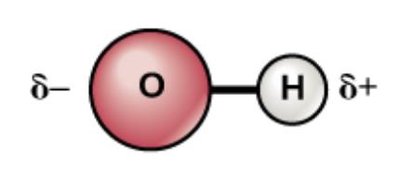
Electronegativity: The tendency of an atom to attract electrons in a bond. Oxygen is more electronegative than hydrogen, causing the shared electrons to spend more time near the oxygen atom.
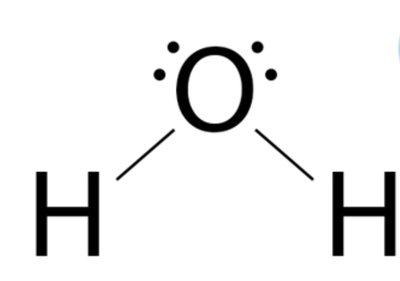
Polarity of Water
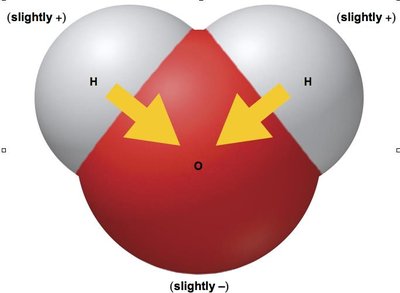
The unequal sharing of electrons and the bent shape of the water molecule make it polar. This means one end of the molecule is slightly negative (oxygen), and the other end is slightly positive (hydrogens).
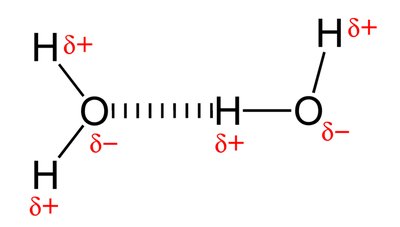
Partial Charges: The oxygen atom carries a partial negative charge (δ−), and the hydrogen atoms carry partial positive charges (δ+).
Bent Shape: The bond angle in water is about 104.5°, contributing to its polarity.
Comparison with Nonpolar Molecules
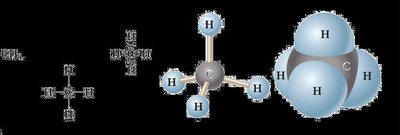
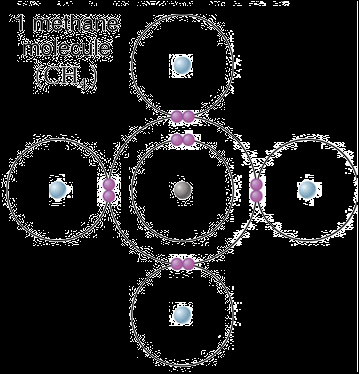
Nonpolar molecules, such as methane (CH4), have symmetrical shapes and equal sharing of electrons, resulting in no overall charge separation.
Nonpolar Covalent Bond: Electrons are shared equally (e.g., C-H bonds in methane).
Symmetry: Methane is tetrahedral and symmetrical, making it nonpolar.
Types of Chemical Bonds in Biology
Covalent and Hydrogen Bonds
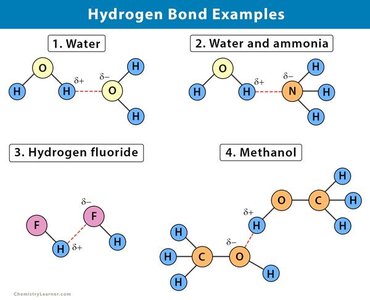
Covalent bonds are strong bonds formed by sharing electrons. Hydrogen bonds are weak attractions between a partially positive hydrogen atom and a partially negative atom (often oxygen or nitrogen).
Polar Covalent Bonds: Found within water molecules (O-H bonds).
Hydrogen Bonds: Form between water molecules due to polarity. Individually weak, but collectively strong and crucial for biological processes.
Electronegativity and Bond Polarity
The difference in electronegativity between atoms determines bond polarity. The greater the difference, the more polar the bond.
Electronegativity Values: O = 3.44, H = 2.1, C = 2.55, N = 3.04, Cl = 3.16, Na = 0.93.
Polarity Scale: Nonpolar (difference < 0.5), Polar (0.5–1.7), Ionic (> 1.7).

Emergent Properties of Water
Cohesion and Adhesion
Hydrogen bonding gives water unique properties such as cohesion (attraction between water molecules) and adhesion (attraction to other polar substances).
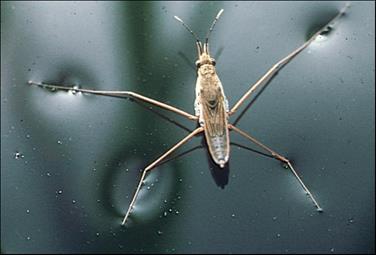
Cohesion: Responsible for surface tension, allowing insects like water striders to walk on water.
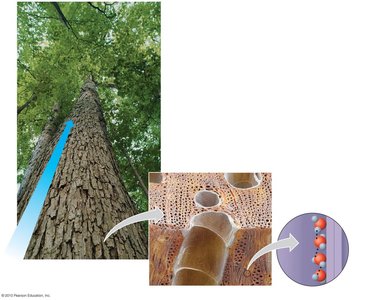
Adhesion: Enables capillary action, helping water move up plant stems.
High Specific Heat and Heat of Vaporization
Water resists temperature changes due to its high specific heat and absorbs large amounts of heat before changing state. This property stabilizes temperatures in organisms and environments.
Specific Heat: The amount of heat needed to raise the temperature of 1 gram of water by 1°C.
Heat of Vaporization: The energy required to convert water from liquid to gas.
Biological Importance: Moderates Earth's climate and helps organisms maintain homeostasis.
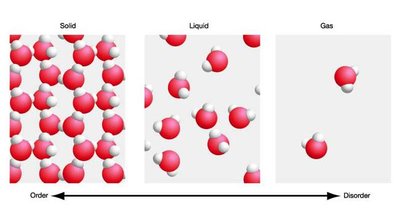
Ice Floats
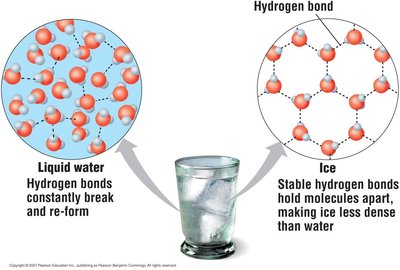
Unlike most substances, solid water (ice) is less dense than liquid water due to the stable hydrogen bonds that form a crystalline structure. This allows ice to float, insulating aquatic life in winter.
Density: Ice is less dense than liquid water because hydrogen bonds hold molecules apart in a lattice.
Ecological Impact: Floating ice insulates water below, allowing life to persist in cold climates.

Water as a Solvent
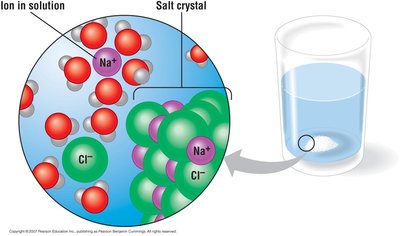
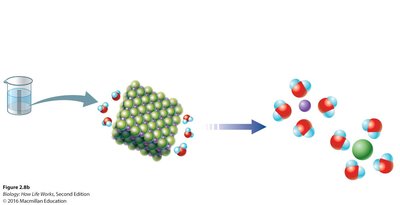
Water is an excellent solvent for polar and ionic substances due to its polarity. It dissolves salts and other molecules essential for biological processes.
Hydrophilic: Polar molecules that dissolve in water.
Hydrophobic: Nonpolar molecules that do not dissolve in water.
Biological Relevance: Water is the solvent in blood, cytoplasm, and plant sap.
Hydrogen Bonds in Biological Molecules
Hydrogen Bonds in DNA and Proteins
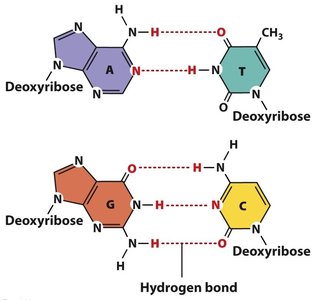
Hydrogen bonds play a critical role in stabilizing the structures of DNA and proteins.
DNA: Hydrogen bonds hold the two strands of the DNA double helix together between complementary bases (A-T and G-C pairs).
Proteins: Hydrogen bonds help proteins fold into their functional three-dimensional shapes.
Summary Table: Bond Types and Molecular Properties
Bond Type | Molecular Shape | Molecular Type |
|---|---|---|
Water | Bent | Polar |
Methane | Tetrahedral | Nonpolar |
Carbon dioxide | Linear | Nonpolar |
Key Concepts Recap
Water's structure and polarity are essential for its biological functions.
Hydrogen bonds, though weak individually, are crucial for the properties of water and the structure of biomolecules.
Water's emergent properties—cohesion, adhesion, high specific heat, ice formation, and solvent abilities—make life possible on Earth.
