 Back
Water: Structure, Polarity, and Its Biological Significance
Study Guide - Smart Notes
 Tailored notes based on your materials, expanded with key definitions, examples, and context.
Water: Structure, Polarity, and Its Biological Significance
Introduction to Water in Biology
Water is fundamental to life, making up the majority of cellular mass and playing a critical role in biological processes. Its unique chemical and physical properties arise from its molecular structure and the interactions between water molecules.
Chemical Structure of Water
Molecular Structure
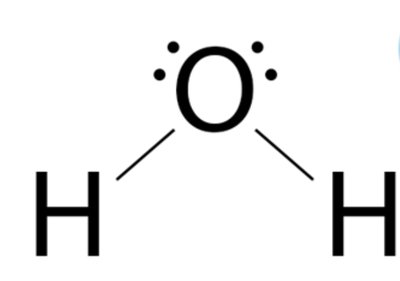
Water (H2O) consists of two hydrogen atoms covalently bonded to one oxygen atom.
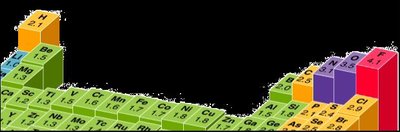
The oxygen atom is more electronegative than hydrogen, resulting in an unequal sharing of electrons (polar covalent bonds).
The molecule has a bent shape due to the two lone pairs of electrons on oxygen, with a bond angle of approximately 104.5°.
Polarity of Water
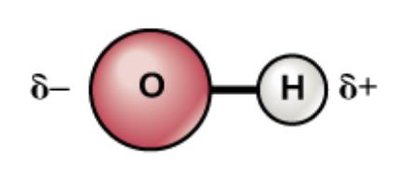
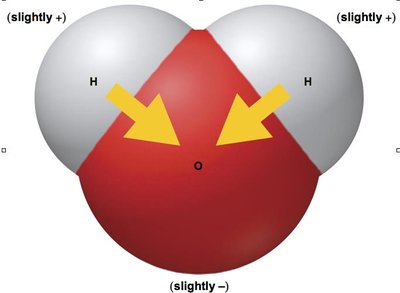
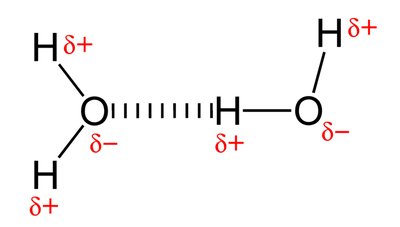
Because of the difference in electronegativity between oxygen and hydrogen, the shared electrons spend more time near the oxygen atom, giving it a partial negative charge (δ-) and the hydrogens a partial positive charge (δ+).
This separation of charge makes water a polar molecule.
Comparison with Nonpolar Molecules
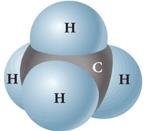
Methane (CH4) is an example of a nonpolar molecule. Its symmetrical tetrahedral shape and equal sharing of electrons result in no overall charge separation.
Nonpolar molecules do not mix well with water and are termed hydrophobic.
Summary Table: Bond Type, Shape, and Polarity
Bond type | Molecular shape | Molecular type |
|---|---|---|
Water | Bent | Polar |
Methane | Tetrahedral | Nonpolar |
Carbon dioxide | Linear | Nonpolar |
Hydrogen Bonding
Definition and Formation
A hydrogen bond is a weak, noncovalent interaction between a partially positive hydrogen atom (usually bonded to O or N) and a partially negative atom (O or N) in another molecule.
Hydrogen bonds are much weaker than covalent bonds but are significant in large numbers.
Hydrogen Bonds in Biological Molecules
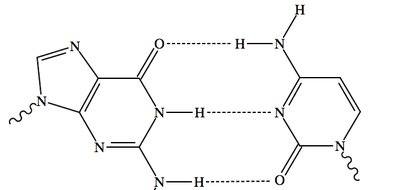
Hydrogen bonds stabilize the structure of DNA (holding the two strands together) and proteins (contributing to secondary and tertiary structures).
Emergent Properties of Water
Cohesion and Adhesion
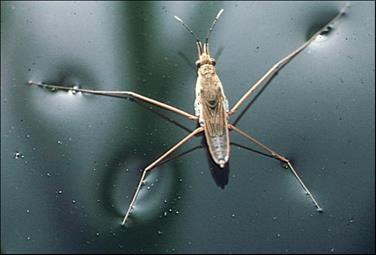
Cohesion: Water molecules stick to each other due to hydrogen bonding, resulting in high surface tension (e.g., water strider walking on water).
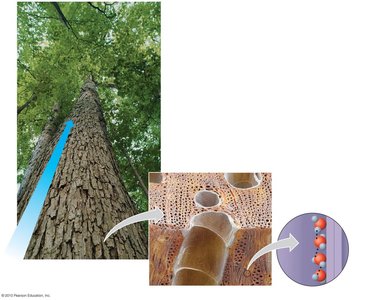
Adhesion: Water molecules stick to other polar substances, aiding in capillary action (e.g., water transport in plants).
High Specific Heat and Heat of Vaporization
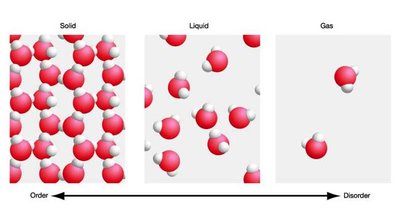
Water can absorb or release large amounts of heat with only a slight change in its own temperature due to hydrogen bonding.
This property helps moderate Earth's climate and stabilize temperatures in organisms.
Evaporative cooling (e.g., sweating) is possible because water has a high heat of vaporization.
Ice Floats
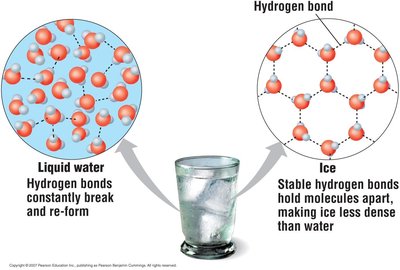
As water freezes, hydrogen bonds form a stable, ordered structure, making ice less dense than liquid water.
This allows ice to float, insulating aquatic life in winter.

Water as a Solvent
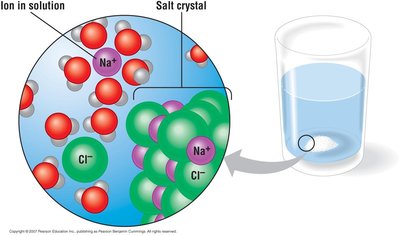
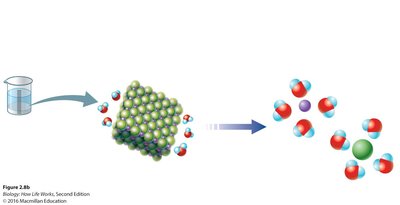
Water dissolves many substances due to its polarity, making it an excellent solvent for ionic and polar compounds (hydrophilic substances).
Nonpolar molecules (hydrophobic) do not dissolve in water and are important in biological structures like cell membranes.
Biological Importance of Water
Water is essential for all known forms of life, making up 70–95% of cell mass.
It provides the medium for biochemical reactions and helps regulate temperature and transport substances.
Summary of Key Concepts
Water's structure leads to polarity and hydrogen bonding.
Hydrogen bonds are crucial for the properties of water and the structure of biological macromolecules.
Water's emergent properties (cohesion, adhesion, high specific heat, ice floating, solvent abilities) are vital for life.
