 Back
Water: Structure, Properties, and Biological Importance
Study Guide - Smart Notes
 Tailored notes based on your materials, expanded with key definitions, examples, and context.
Water and Chemical Bonds
Covalent Bonds and Electronegativity
Covalent bonds are fundamental to molecular structure, involving the sharing of electrons between atoms. The degree to which electrons are shared depends on the electronegativity of the atoms involved.
Electronegativity: A measure of an atom's ability to attract electrons. Oxygen (O) is highly electronegative (3.44), while hydrogen (H) is less so (2.1).
Nonpolar covalent bonds: Electrons are shared equally (e.g., H-H, C-H).
Polar covalent bonds: Electrons are shared unequally, resulting in partial charges (e.g., O-H, C-N).
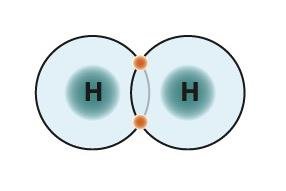

Structure of Water Molecule
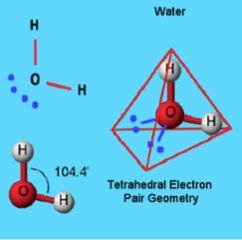
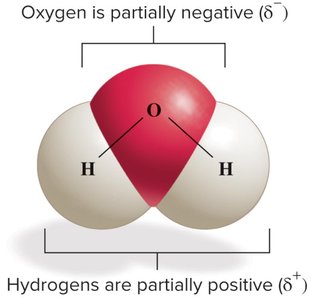
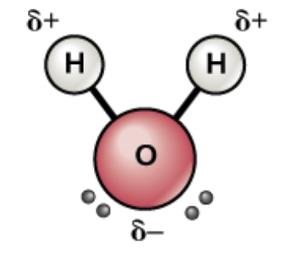
Water (H2O) is a polar molecule due to its asymmetrical shape and the difference in electronegativity between oxygen and hydrogen.
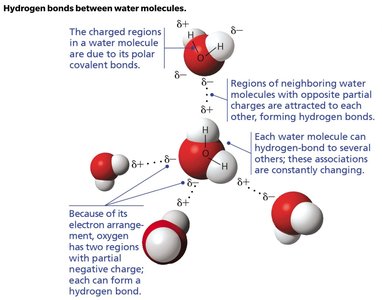
Polar covalent bonds between O and H create partial negative (δ-) and partial positive (δ+) regions.
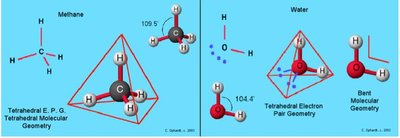
The bent shape (104.5° angle) results from lone pairs on oxygen, making water directional and polar.
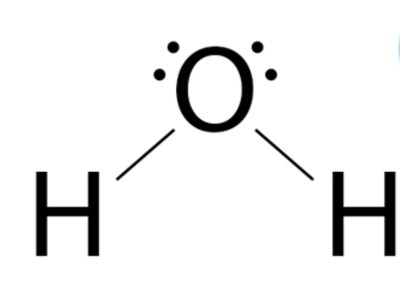
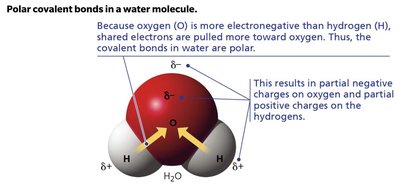
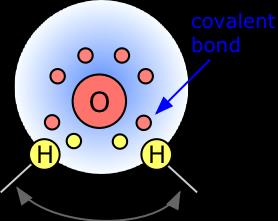
Polarity and Molecular Shape
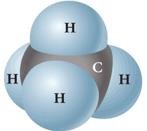
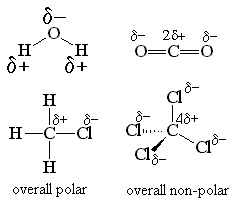
The polarity of a molecule depends on both the type of bonds and the overall shape. Water is polar and asymmetrical, while methane (CH4) is nonpolar and symmetrical.
Hydrophilic molecules: Polar, water-loving, dissolve easily in water.
Hydrophobic molecules: Nonpolar, water-fearing, do not dissolve in water.
Comparison Table: Water, Methane, Carbon Dioxide
The following table compares bond type, molecular shape, and polarity for three important molecules:
Bond type | Molecular shape | Molecular type |
|---|---|---|
Water | Bent | Polar |
Methane | Tetrahedral | Nonpolar |
Carbon dioxide | Linear | Nonpolar |
Hydrogen Bonds and Emergent Properties of Water
Hydrogen Bonding
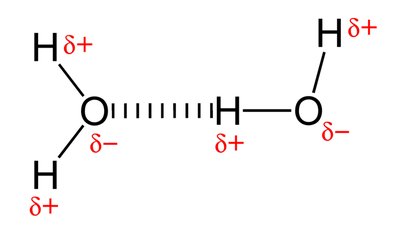
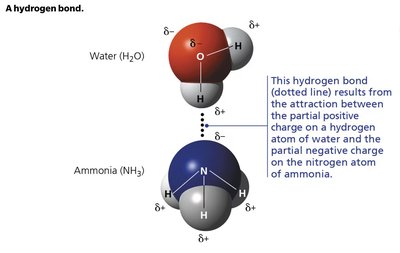
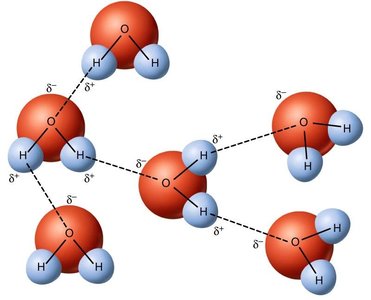
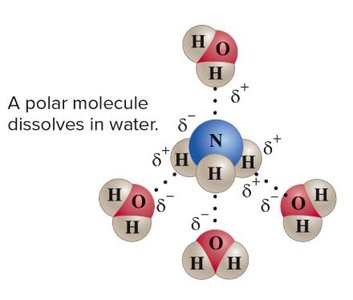
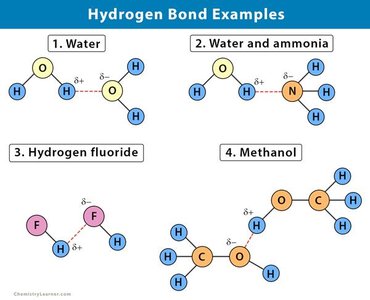
Hydrogen bonds are weak attractions between the partially positive hydrogen atom of one molecule and the partially negative atom (usually O or N) of another. Though individually weak, their cumulative effect is significant.
Hydrogen bonds are noncovalent; electrons are not shared.
Responsible for many unique properties of water.
Emergent Properties of Water
Hydrogen bonding gives rise to several essential properties:
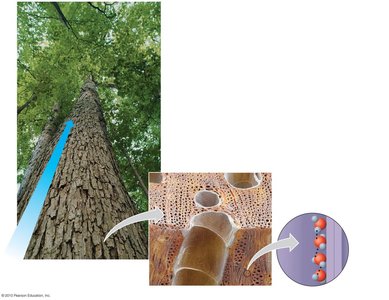
Cohesion: Water molecules stick to each other.
Adhesion: Water molecules stick to other polar substances.
Surface tension: Difficult to break or stretch the surface of water.
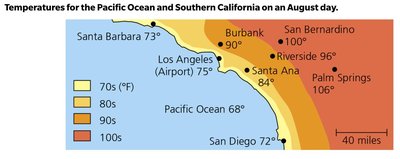
High specific heat: Water resists temperature changes.
High heat of vaporization: Water absorbs a lot of heat before evaporating.
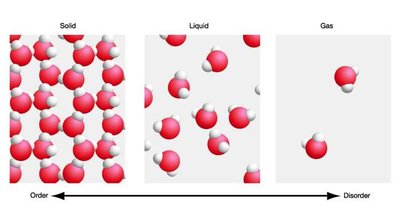
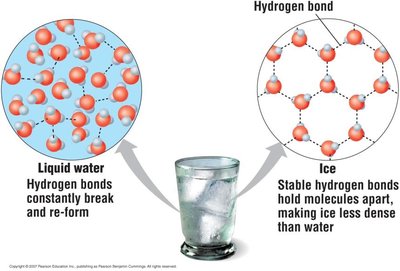
Ice floats: Solid water is less dense than liquid water due to stable hydrogen bonds.
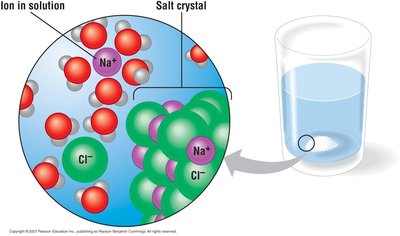
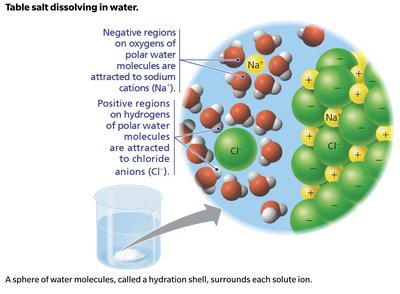
Good solvent: Water dissolves polar and ionic substances.
Water as a Solvent
Solubility of Polar and Ionic Compounds
Water's polarity allows it to dissolve many substances, making it the universal solvent in biological systems.
Hydrophilic: Polar molecules and ions dissolve easily in water.
Hydrophobic: Nonpolar molecules do not dissolve in water.
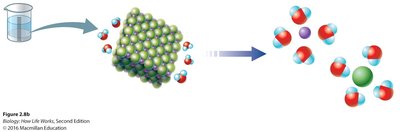
Water forms hydration shells around ions and polar molecules.
Hydrogen Bonds in Biological Molecules
Role in DNA and Proteins
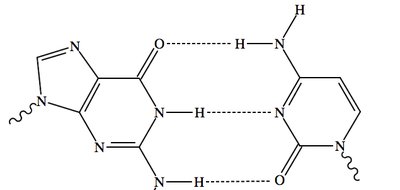
Hydrogen bonds are crucial for the structure and function of biomolecules.
Hold the two strands of DNA together.
Contribute to protein folding and stability.
pH and Water Ionization
Definition and Calculation of pH
pH is a measure of the concentration of hydrogen ions [H+] in a solution. Water ionizes to form H+ and OH-, and neutral water has equal concentrations of both.
pH formula:
The pH scale is logarithmic; each unit change represents a tenfold change in [H+].
Neutral pH is 7, corresponding to M.
Acids, Bases, and Buffers
Acids donate H+ ions and lower pH, while bases accept H+ ions and raise pH. Buffers are chemicals that resist changes in pH, maintaining stability in biological systems.
Acid example:
Base example:
Buffer importance: Essential for maintaining pH in blood and cellular environments.
Summary Table: Key Concepts
Concept | Explanation |
|---|---|
Polar covalent bonds | Electrons shared unequally, creating partial charges |
Hydrogen bonds | Weak attractions between partial charges |
Hydrophilic | Polar, water-loving, dissolves in water |
Hydrophobic | Nonpolar, water-fearing, does not dissolve in water |
pH | Measure of [H+] concentration, affects biomolecule function |
Additional info: The notes expand on emergent properties, pH calculation, and the biological importance of water, making them suitable for exam preparation in General Biology.
