 Back
Water: Structure, Properties, and Biological Importance
Study Guide - Smart Notes
 Tailored notes based on your materials, expanded with key definitions, examples, and context.
Water and Its Chemical Bonds
Types of Chemical Bonds
Chemical bonds are the forces that hold atoms together in molecules. The type of bond formed depends on the difference in electronegativity between the atoms involved.
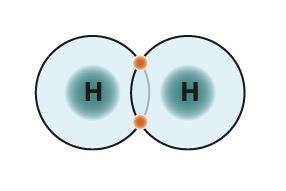
Covalent Bonds: Atoms share electrons. If the sharing is equal, the bond is nonpolar covalent; if unequal, it is polar covalent.
Ionic Bonds: Electrons are transferred from one atom to another, creating ions that attract each other.
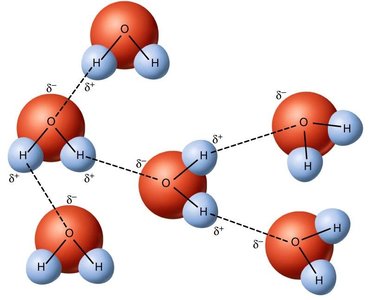
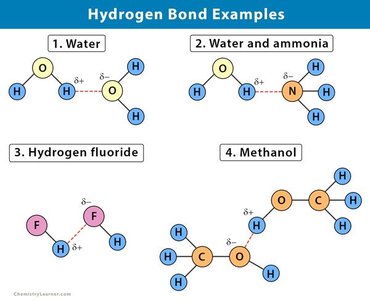
Hydrogen Bonds: Weak attractions between a partially positive hydrogen atom and a partially negative atom (usually O or N) in another molecule.

Electronegativity and Bond Polarity
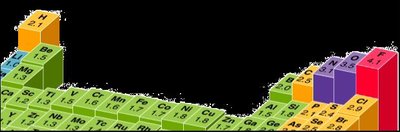
Electronegativity is the ability of an atom to attract electrons in a bond. The greater the difference in electronegativity between two atoms, the more polar the bond.
Nonpolar Covalent Bonds: Electrons are shared equally (e.g., H-H, C-H).
Polar Covalent Bonds: Electrons are shared unequally (e.g., O-H, C=O).
Structure and Polarity of Water
Molecular Structure of Water
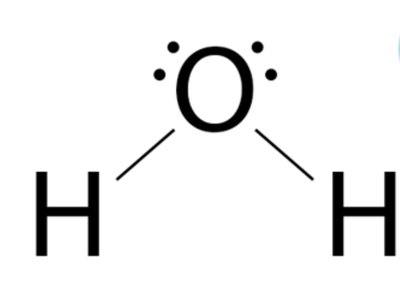
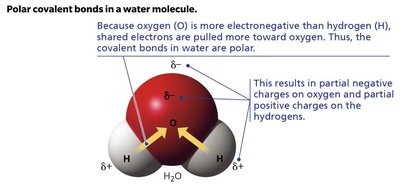
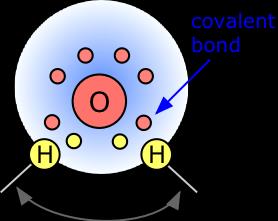
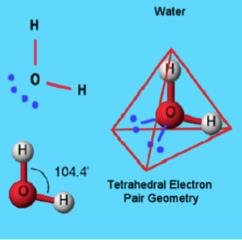
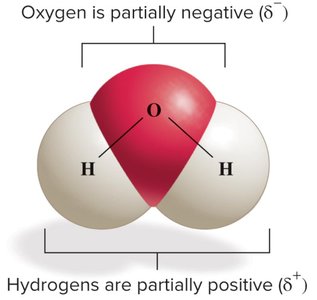
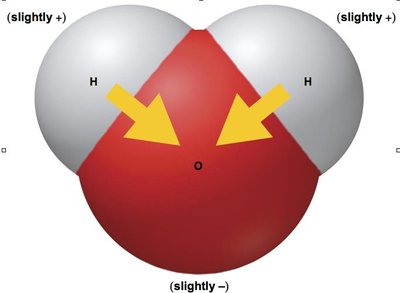
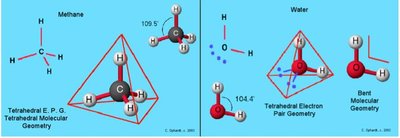
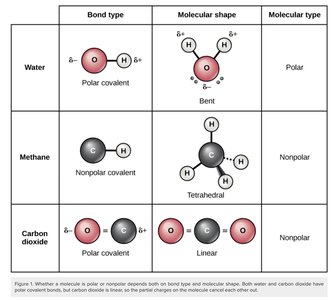
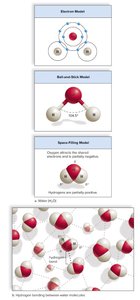
Water (H2O) is a small, bent molecule with two hydrogen atoms covalently bonded to an oxygen atom. The oxygen atom is more electronegative, causing the shared electrons to spend more time near oxygen, creating partial charges.
Bent Shape: The bond angle is approximately 104.5°, making the molecule asymmetrical.
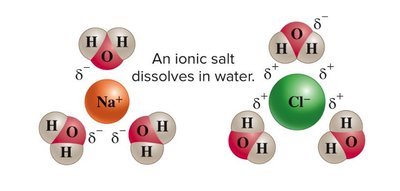
Polarity: Oxygen is partially negative (δ−), hydrogens are partially positive (δ+).
Comparison with Other Molecules
The polarity of a molecule depends on both the type of bonds and the overall shape of the molecule.
Water: Polar covalent bonds, bent shape, overall polar.
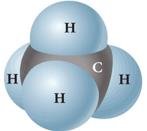
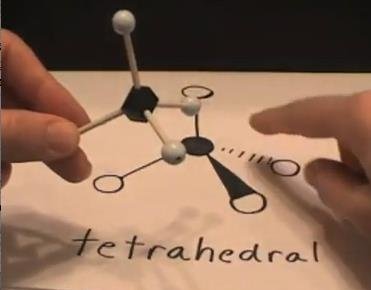
Methane (CH4): Nonpolar covalent bonds, tetrahedral shape, overall nonpolar.
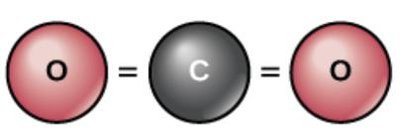
Carbon Dioxide (CO2): Polar covalent bonds, linear shape, overall nonpolar (dipoles cancel).
Hydrogen Bonding in Water
Nature of Hydrogen Bonds
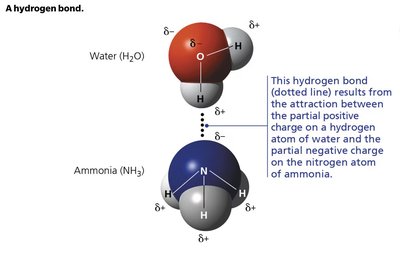
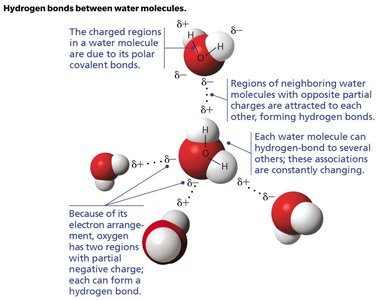
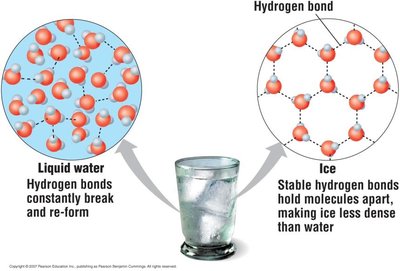
Hydrogen bonds are weak, noncovalent interactions that occur between a partially positive hydrogen atom and a partially negative atom (O or N) in another molecule. Although individually weak, collectively they have significant effects on water's properties.
Hydrogen bonds are not true bonds: No electrons are shared; they are electrostatic attractions.
Represented by dotted or dashed lines in diagrams.
Emergent Properties of Water
Cohesion and Adhesion
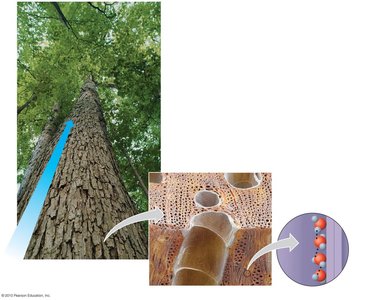
Cohesion is the attraction between water molecules due to hydrogen bonding, leading to high surface tension. Adhesion is the attraction between water molecules and other polar substances.
Surface Tension: Water has a high surface tension, making it difficult to break or stretch its surface.
Capillary Action: Water moves up plant vessels due to cohesion and adhesion.
Temperature Moderation
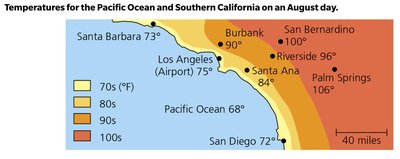
Water has a high specific heat and high heat of vaporization, meaning it resists temperature changes and can absorb large amounts of heat before changing state. This property helps moderate Earth's climate and organisms' internal temperatures.
Specific Heat: Amount of heat needed to raise 1g of water by 1°C.
Heat of Vaporization: Energy required to convert water from liquid to gas.
Ice Floats
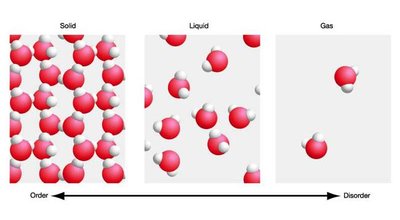
At low temperatures, hydrogen bonds in water become stable, forming a crystalline structure that is less dense than liquid water. This causes ice to float, insulating aquatic life in winter.
Density: Ice is less dense than liquid water due to the open lattice structure of hydrogen bonds.
Water as a Solvent
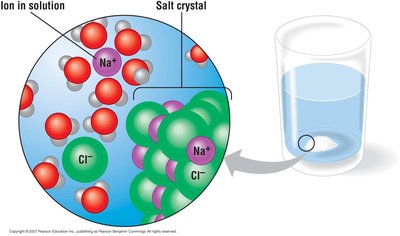
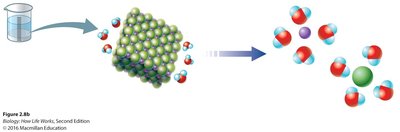
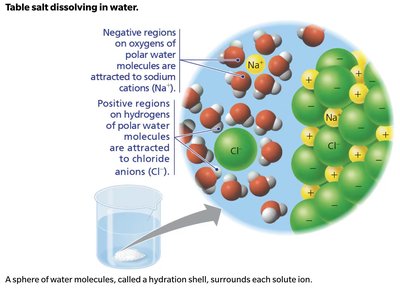
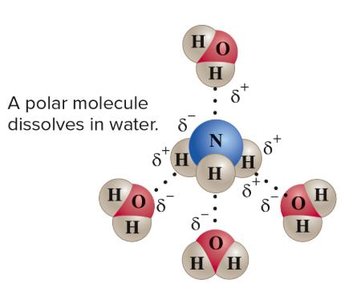
Water is an excellent solvent for polar and ionic substances due to its polarity. It forms hydration shells around ions and polar molecules, allowing them to dissolve.
Hydrophilic: Polar molecules that dissolve in water.
Hydrophobic: Nonpolar molecules that do not dissolve in water.
pH, Acids, Bases, and Buffers
Water Ionization and pH
Water can ionize into hydrogen ions (H+) and hydroxide ions (OH−). The concentration of H+ ions determines the pH of a solution.
pH Scale: Measures the concentration of H+ ions; it is logarithmic and inverse (lower pH = higher [H+]).
Neutral pH: Pure water has a pH of 7 ([H+] = [OH−]).
pH Equation:
Each unit change in pH represents a tenfold change in [H+].
Acids, Bases, and Buffers
Acids: Donate H+ ions, lowering pH (e.g., HCl, COOH).
Bases: Accept H+ ions, raising pH (e.g., NH2).
Buffers: Substances that resist changes in pH by accepting or donating H+ as needed.
Biological Importance of Water
Role in Biomolecules and Cells
Water's unique properties are essential for life. It is the medium for biochemical reactions, influences the structure and function of biomolecules, and is involved in processes such as protein folding, DNA structure, and membrane formation.
Hydrogen bonds: Stabilize DNA double helix and protein structures.
Hydrophobic interactions: Drive membrane and protein folding.
Summary Table: Types of Bonds and Water Properties
Bond Type | Example | Relative Strength | Biological Importance |
|---|---|---|---|
Covalent | O-H in H2O | Strong | Stabilizes molecules |
Hydrogen | Between H2O molecules | Weak (but strong in numbers) | Gives water its unique properties |
Ionic | NaCl in water | Intermediate | Important for solubility and cell function |
Key Takeaways
Water's polarity and hydrogen bonding are responsible for its unique properties essential for life.
These properties include cohesion, adhesion, temperature moderation, ice floating, and solvent abilities.
pH is a measure of hydrogen ion concentration, and buffers help maintain stable pH in biological systems.
