 Back
Water: Structure, Properties, and Biological Importance
Study Guide - Smart Notes
 Tailored notes based on your materials, expanded with key definitions, examples, and context.
Water and Life
The Importance of Water in Biology
Water is fundamental to all known forms of life. It constitutes about 70% of a cell's mass and surrounds cells, providing a medium for biochemical reactions. Life originated in water, and its unique properties have enabled organisms to thrive both in aquatic and terrestrial environments.
Structure of the Water Molecule
Polarity and Hydrogen Bonding
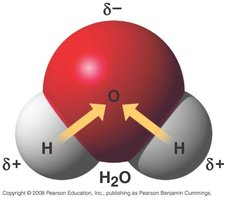
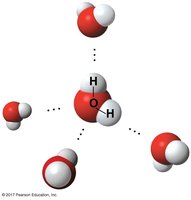
The water molecule (H2O) is composed of two hydrogen atoms covalently bonded to one oxygen atom. The oxygen atom is more electronegative, causing the shared electrons to spend more time near the oxygen, resulting in a partial negative charge (δ–) on the oxygen and partial positive charges (δ+) on the hydrogens. This makes water a polar molecule.
Polar covalent bonds: Unequal sharing of electrons between oxygen and hydrogen.
Hydrogen bonds: Weak attractions between the δ+ hydrogen of one water molecule and the δ– oxygen of another.
Properties of Water Due to Hydrogen Bonding
High Surface Tension
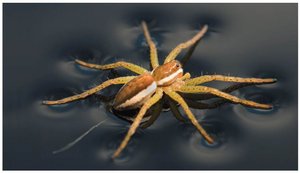
Water exhibits unusually high surface tension because hydrogen bonds hold water molecules together at the surface. This allows small organisms, such as insects, to walk on water without sinking.
Surface tension: The measure of how difficult it is to stretch or break the surface of a liquid.
Biological example: Water striders and other insects exploit surface tension to move across water surfaces.
High Specific Heat
Water resists changes in temperature due to its high specific heat, which is the amount of heat required to raise the temperature of 1 gram of water by 1°C. Hydrogen bonds absorb heat when they break and release heat when they form, stabilizing temperature in organisms and environments.
Specific heat: (where q is heat energy, m is mass, ΔT is temperature change)
Biological importance: Helps maintain stable internal and environmental temperatures.
Ice Floats and Acts as an Insulator
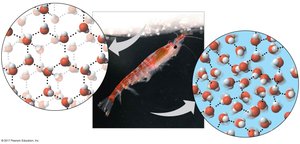
In solid form (ice), water molecules are held in a stable lattice by hydrogen bonds, making ice less dense than liquid water. This allows ice to float, insulating the water below and preventing aquatic life from freezing.
Hydrogen bonds: Stable in ice, constantly breaking and reforming in liquid water.
Biological importance: Floating ice preserves aquatic ecosystems during cold periods.
Water as a Solvent
Versatility of Water as a Solvent
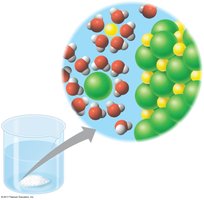
Water's polarity makes it an excellent solvent, capable of dissolving a wide range of substances. An aqueous solution is one where water is the solvent.
Ionic compounds: Dissolve in water as ions are surrounded by hydration shells.
Nonionic polar compounds: Also dissolve due to interactions with water's partial charges.
Proteins: Proteins with ionic and polar regions are soluble in water.
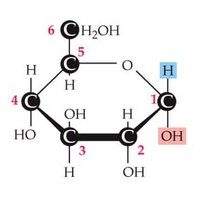
Solubility of Polar Molecules
Polar molecules, such as glucose, are soluble in water because their polar regions interact with water molecules.
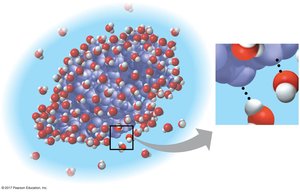
Water Soluble Proteins
Proteins with polar and ionic regions, such as lysozyme found in tears and saliva, are soluble in water. Water molecules form hydration shells around these proteins, facilitating their function in biological fluids.
Hydrophilic and Hydrophobic Substances
Definitions and Biological Relevance
A hydrophilic substance has an affinity for water and readily dissolves, while a hydrophobic substance does not interact with water and tends to aggregate away from it. Hydrophobic molecules, such as oils, are major components of cell membranes.
Hydrophilic: Water-loving; includes salts, sugars, and proteins.
Hydrophobic: Water-hating; includes oils and lipids.
Measurements in Biology and Chemistry
The Mole Concept
The mole is a fundamental unit in chemistry representing 6.02 × 10²³ entities (Avogadro's number). It allows scientists to count atoms, molecules, or ions in a given sample.
1 mole of protons: 6.02 × 10²³ protons
1 mole of water molecules: 6.02 × 10²³ H2O molecules
Atomic and Molecular Mass
Atomic mass is measured in Daltons (Da), where 1 Dalton = 1.66 × 10⁻²⁴ grams. The mass of a mole of a substance is its molecular mass in grams.
Hydrogen atom: ~1 Dalton; 1 mole = ~1 gram
Carbon atom: 12 Daltons; 1 mole = 12 grams
Water molecule: 18 Daltons; 1 mole = 18 grams
Molarity
Molarity (M) is the number of moles of solute per liter of solution, representing concentration.
Formula:
Acids, Bases, and pH
Dissociation of Water
Water molecules can dissociate into hydronium ions (H3O+) and hydroxide ions (OH–). This process is rare but crucial for biological systems.
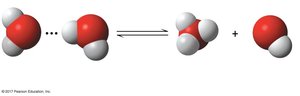
Acids and Bases
An acid increases the H+ concentration in a solution, while a base reduces it. Strong acids and bases dissociate completely, while weak acids and bases dissociate partially and reversibly.
The pH Scale
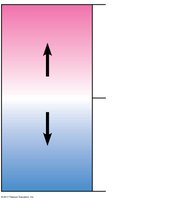
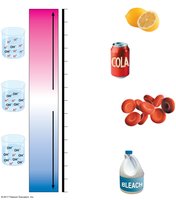
Biologists use the pH scale to describe the acidity or basicity of a solution. The scale ranges from 0 (most acidic) to 14 (most basic), with 7 being neutral.
Formula:
Neutral solution: [H+] = 10–7 M, pH = 7
Acidic: pH < 7
Basic: pH > 7
Biological Importance of pH
Most biological fluids have pH values between 6 and 8. Some organelles and secretions maintain specific pH values for specialized functions, such as gastric juice (pH = 2) and lysosomes (pH = 5.2).
Buffers
Buffers are substances that minimize changes in pH by accepting or donating H+ ions. Most buffer systems consist of a weak acid and its conjugate base. The carbonic acid/bicarbonate system is a key buffer in blood, maintaining pH near 7.4.
Buffer reaction:
Biological importance: Prevents harmful shifts in pH that can disrupt cellular function.
Summary Table: Water's Properties and Biological Importance
Property | Cause | Biological Importance |
|---|---|---|
High Surface Tension | Hydrogen bonding | Allows insects to walk on water |
High Specific Heat | Hydrogen bonding | Stabilizes temperature in organisms |
Ice Floats | Stable hydrogen bonds in ice | Insulates aquatic life |
Solvent Versatility | Polarity | Dissolves ions and polar molecules |
Buffering Capacity | Weak acid/base systems | Maintains pH in biological fluids |
