 Back
Water: Structure, Properties, and Biological Significance
Study Guide - Smart Notes
 Tailored notes based on your materials, expanded with key definitions, examples, and context.
Water and Its Importance in Biology
Introduction
Water is a fundamental molecule for life, playing critical roles in biological systems. Its unique chemical structure and properties make it essential for cellular processes, organismal survival, and the evolution of life on Earth.
Chemical Structure of Water
Molecular Structure
The water molecule (H2O) consists of two hydrogen atoms covalently bonded to one oxygen atom. The oxygen atom is more electronegative, resulting in an unequal sharing of electrons and the formation of polar covalent bonds.
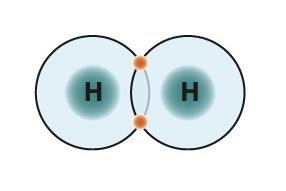
Covalent Bond: A bond formed by the sharing of electrons between atoms.
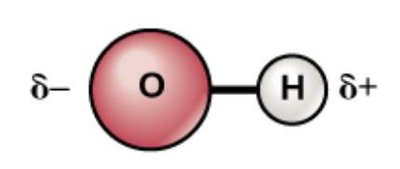
Polar Covalent Bond: Electrons are shared unequally, creating partial charges (δ+ and δ−).
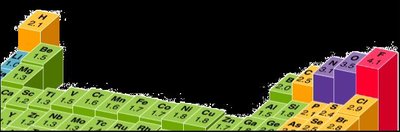
Electronegativity: The tendency of an atom to attract electrons. Oxygen (3.44) is more electronegative than hydrogen (2.1).
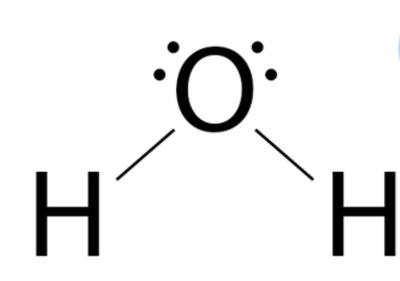
Polarity and Shape
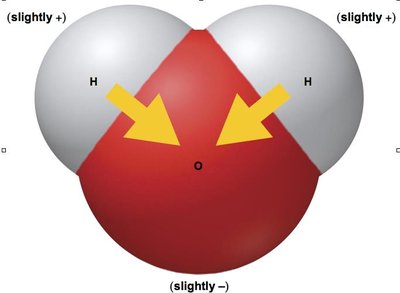
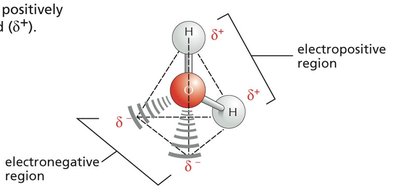
Water is a polar molecule due to its bent shape and the difference in electronegativity between oxygen and hydrogen. The molecule has a partial negative charge near the oxygen and partial positive charges near the hydrogens.
Bent Molecular Geometry: The angle between hydrogen atoms is about 104.5°, making the molecule asymmetrical.
Polarity: The asymmetrical shape and polar bonds result in distinct regions of charge.
Comparison: Water vs. Methane
Polar and Nonpolar Molecules
Methane (CH4) is a nonpolar molecule with a symmetrical tetrahedral shape, while water is polar and asymmetrical. The shape and bond type determine whether a molecule is polar or nonpolar.
Methane: Nonpolar, tetrahedral geometry, equal sharing of electrons.
Water: Polar, bent geometry, unequal sharing of electrons.
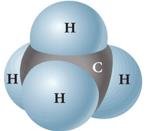
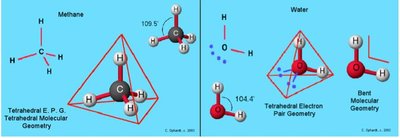
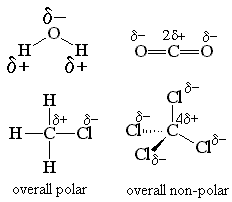
Table: Bond Type, Shape, and Polarity
Bond Type | Molecular Shape | Molecular Type |
|---|---|---|
Water: Polar covalent | Bent | Polar |
Methane: Nonpolar covalent | Tetrahedral | Nonpolar |
Carbon dioxide: Polar covalent | Linear | Nonpolar |
Hydrogen Bonding
Formation and Properties
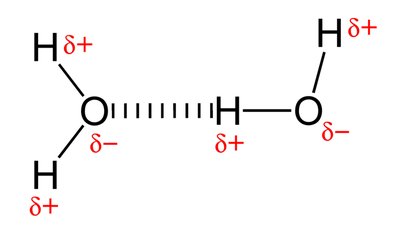
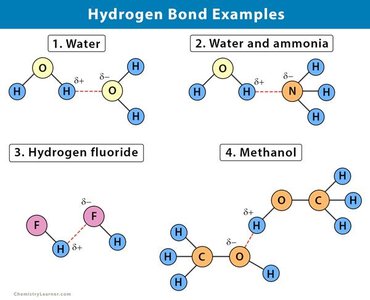
Hydrogen bonds are weak attractions between the partially positive hydrogen atom of one molecule and the partially negative atom (such as oxygen or nitrogen) of another. Although individually weak, their cumulative effect is significant in biological systems.
Hydrogen Bond: Noncovalent interaction; electrons are not shared.
Strength: About 5% the strength of a covalent bond.
Biological Importance: Stabilizes DNA, proteins, and contributes to water's unique properties.
Emergent Properties of Water
Cohesion and Adhesion
Water molecules exhibit cohesion (attraction to each other) and adhesion (attraction to other polar substances), both due to hydrogen bonding.
Cohesion: Responsible for surface tension; allows insects to walk on water.
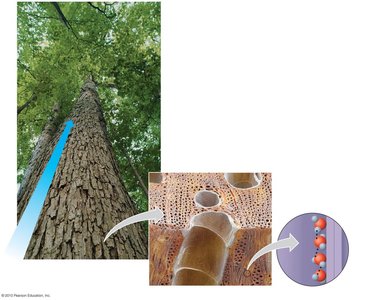
Adhesion: Enables capillary action, important for water transport in plants.

Temperature Moderation
Water has a high specific heat and heat of vaporization, allowing it to resist temperature changes and moderate climate.
Specific Heat: The amount of heat required to change the temperature of water is high due to hydrogen bonding.
Heat of Vaporization: Water absorbs large amounts of heat before evaporating.
Example: Coastal areas have milder climates due to water's heat absorption.
Ice Formation and Density
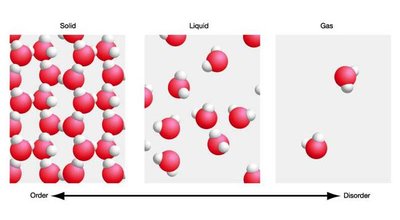
At low temperatures, water forms a crystalline structure due to stable hydrogen bonds, making ice less dense than liquid water. This allows ice to float, which is crucial for aquatic life.
Density: Ice is less dense than liquid water.
Biological Significance: Floating ice insulates water below, allowing life to persist.

Water as a Solvent
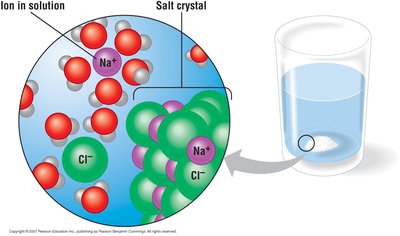
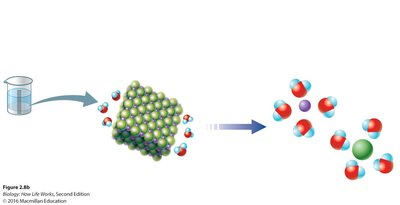
Water is an excellent solvent for polar and ionic substances due to its polarity. It dissolves salts and other hydrophilic molecules, facilitating biochemical reactions.
Hydrophilic: Polar molecules that dissolve in water.
Hydrophobic: Nonpolar molecules that do not dissolve in water.
Example: Salt (NaCl) dissolves in water as ions are separated and surrounded by water molecules.
Biological Significance of Hydrogen Bonds
DNA Structure
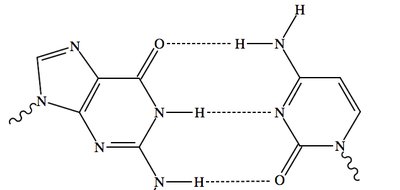
Hydrogen bonds hold the two strands of DNA together, enabling the double helix structure and accurate replication.
Base Pairing: Adenine pairs with Thymine (2 H-bonds), Guanine pairs with Cytosine (3 H-bonds).
Protein Structure
The folding of proteins into specific three-dimensional shapes relies on hydrogen bonds and ionic interactions. Proper structure is essential for protein function.
Secondary Structure: Alpha helices and beta sheets are stabilized by hydrogen bonds.
Tertiary Structure: Further folding involves hydrogen and ionic bonds.
Recap and Key Concepts
Water is composed of polar covalent bonds and forms hydrogen bonds.
Hydrogen bonds are crucial for the structure of DNA and proteins.
Water's polarity drives membrane structure and solubility of biological molecules.
Hydrophilic molecules are water-soluble; hydrophobic molecules are not.
