 Back
Wildlife Radiotelemetry: Principles, Equipment, and Field Techniques
Study Guide - Smart Notes
 Tailored notes based on your materials, expanded with key definitions, examples, and context.
Wildlife Radiotelemetry
Introduction to Radiotelemetry
Radiotelemetry is a critical technique in wildlife biology for studying animal movements, survival, and behavior. It involves attaching a small radio transmitter to an animal and using specialized equipment to detect and locate the signal, allowing researchers to monitor animals in their natural habitats.
Applications: Tracking locations and movements, studying habitat selection, estimating home range, and determining causes of mortality.
Key Considerations: Objectives of the study, effects of radiomarking on animals, and transmitter attachment methods.
Critical Considerations Before Using Radiotelemetry
Study Design and Animal Welfare
Before implementing radiotelemetry, researchers must address several important questions to ensure ethical and effective study design.
Objectives: Clearly define what information is needed (e.g., movement, survival, behavior) and whether radiotelemetry is the best method.
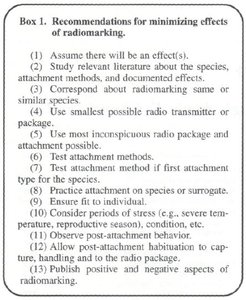
Effects on Animals: Always assume radiotags may affect animals, potentially causing stress, unusual behavior, increased mortality, or reduced reproduction.
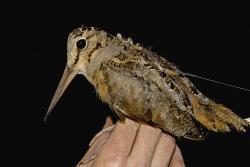
Attachment and Size: Select the most appropriate attachment method and ensure the transmitter is ideally ≤3% of the animal's body weight.
Transmitter Attachment Methods
Types of Attachments and Their Impacts
Different attachment methods are used depending on the species and study objectives. Each method has trade-offs in terms of animal welfare and data reliability.
Double Loop Body Harness: Higher mortality, less transmitter loss.
Modified Godfrey Wing Harness: Higher mortality, less transmitter loss.
Single Wire Belly Loop: Reduced mortality, some transmitter loss.
Glue Only: No mortality, high transmitter loss.
Transmitter Weight Example: For an adult male American woodcock (~135 g), a 4 g transmitter is about 2.96% of body weight.

Basic Equipment for Radiotelemetry
Transmitters, Receivers, and Antennas
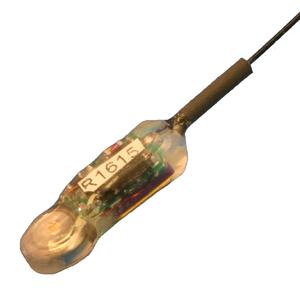
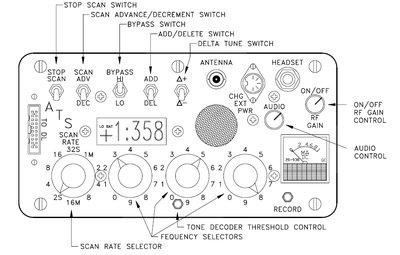
Radiotelemetry systems consist of three main components: the radiotransmitter, the receiver, and the receiving antenna.
Radiotransmitter: Emits a frequency-specific signal, powered by a battery, with user-defined pulse rate and intensity.
Receiver: Detects and amplifies the signal, reduces interference, and converts the signal to audible noise. Features include frequency selection, volume, and gain controls.
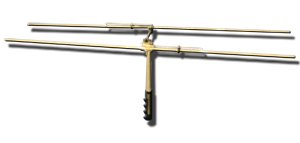
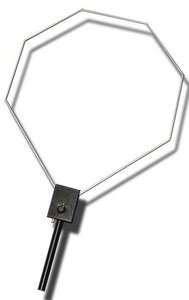
Receiving Antenna: Picks up the signal and helps estimate direction and relative distance. Common types include Yagi, H-Adcock, dipole, and loop antennas.
Transmitter Battery Life
Factors Affecting Battery Longevity
The operational life of a radiotransmitter depends on battery capacity and current drain. There are trade-offs between power, size, and longevity.
Equation for Battery Life:
Where: = Life expectancy (days) = Battery capacity (milliamp-hours) = Current drain (milliamps)
Maximizing Battery Life: Increase battery capacity (but increases size/weight), decrease current drain (but reduces signal strength).
Technological Advances: Satellite transmitters offer improved longevity and data transmission.
Types of Receiving Antennas
Comparison and Field Use
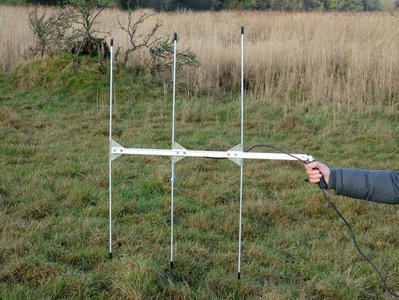
Different antenna types offer varying degrees of directionality and sensitivity. The 3-element Yagi antenna is most commonly used in the field due to its accuracy in determining signal direction.
Antenna Type | Key Features |
|---|---|
Yagi | High directionality, best for field use |
Dipole | Simple, less directional |
H-Adcock | Good for certain applications, moderate directionality |
Loop | Used for close-range or specific studies |
Using a 3-Element Yagi Antenna
Field Techniques
The Yagi antenna is held parallel to the ground and swung to detect the direction of the strongest signal. The loudest signal indicates the most accurate direction to the transmitter. Orientation (vertical or horizontal) may be adjusted based on environmental interference.
Principles of Radiotelemetry Signal Reception
Frequency and Environmental Influences
Each transmitter emits a unique frequency, similar to different radio stations. Signal reception can be affected by environmental factors such as buildings, trees, precipitation, humidity, elevation, and the animal's own body.
Frequency Example: 150.100 MHz = 150,100,000 cycles per second.
Environmental Interference: Obstacles can reflect, absorb, or scatter signals, complicating fieldwork.
Determining Animal Location: Homing vs. Triangulation
Techniques for Locating Animals
There are two main methods for determining the location of a radiotagged animal: homing and triangulation.
Homing: The researcher moves toward the animal by following the strongest signal, marking the location when close enough. Best for open terrain or when animals are approachable.
Triangulation: Bearings are taken from at least three known locations. The intersection of these bearings (error polygon) estimates the animal's location. Useful when direct approach is not possible.
Technique | Pros | Cons |
|---|---|---|
Homing | High accuracy, direct location | May disturb animal, not always feasible |
Triangulation | Less disturbance, works for elusive animals | Lower accuracy, requires multiple observers/locations |
Null Points and Gain Settings
Understanding Signal Intensity
Null points are positions where the signal intensity drops sharply, helping to refine the direction to the transmitter. Adjusting the receiver's gain setting changes the sensitivity and the position of null points, affecting the accuracy of direction finding.
Low Gain: Null points are closer together, useful for strong signals.
High Gain: Null points are farther apart, useful for weak signals.
Summary Table: Key Terms and Concepts
Term | Definition |
|---|---|
Radiotelemetry | Technique for tracking animals using radio transmitters |
Radiomarking | Attaching a radio transmitter to an animal |
Yagi Antenna | Highly directional antenna used for locating transmitters |
Null Point | Location where signal intensity drops, used for direction finding |
Gain | Receiver sensitivity control |
Triangulation | Locating an animal by intersecting bearings from multiple points |
Homing | Approaching the animal directly by following the strongest signal |
Best Practices for Minimizing Effects of Radiomarking
Assume effects will occur and study literature for guidance.
Use the smallest and least conspicuous transmitter possible.
Test attachment methods and monitor post-attachment behavior.
Allow animals to habituate to the transmitter and report both positive and negative outcomes.
