 Back
BackX-Linked and Y-Linked Inheritance, Chromosome Structure, and Genetic Mapping
Study Guide - Smart Notes
 Tailored notes based on your materials, expanded with key definitions, examples, and context.
X-Linked Genes and Patterns of Inheritance
Basics of X-Linked Inheritance
X-linked genes are located on the X chromosome and exhibit unique inheritance patterns due to the difference in sex chromosome composition between males (XY) and females (XX). Recessive X-linked traits are more commonly expressed in males because they have only one X chromosome (hemizygous), while females require two copies of the recessive allele (homozygous) to express the trait.
Hemizygous: Males have only one X chromosome, so a single recessive allele on the X will result in the trait being expressed.
Homozygous: Females must inherit two copies of the recessive allele to express the trait.
Examples of X-linked recessive disorders: Color blindness, Duchenne muscular dystrophy, and hemophilia.
Inheritance Patterns and Pedigrees
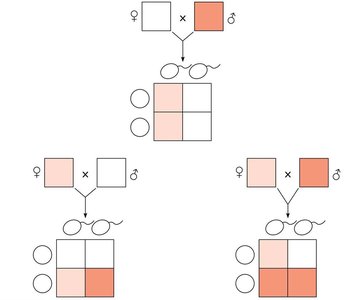
X-linked recessive traits often show distinct patterns in pedigrees:
More males than females are affected.
Affected males usually have carrier mothers.
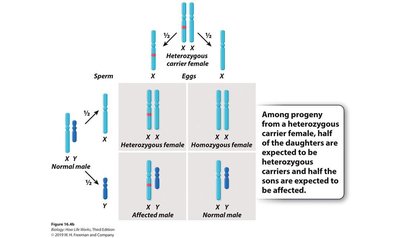
Carrier females can have affected sons.
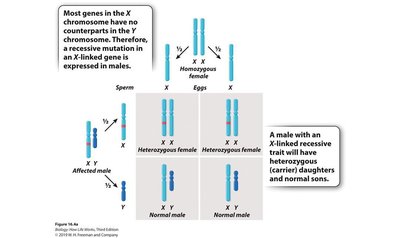
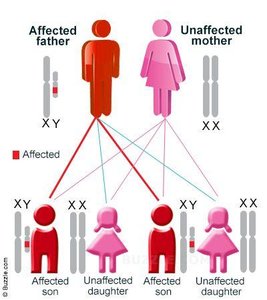
Affected males do not pass the trait to their sons, but all daughters become carriers.
Genotype Analysis Example
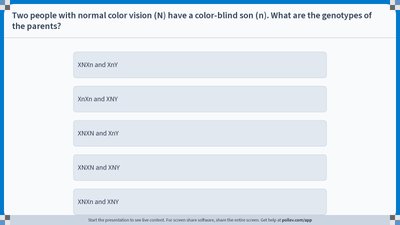
Consider the question: "Two people with normal color vision (N) have a color-blind son (n). What are the genotypes of the parents?" The answer is that the mother must be a carrier (XNXn) and the father must be normal (XNY).
Pedigree Analysis
Pedigrees can be used to trace X-linked inheritance. In X-linked recessive inheritance, affected fathers cannot pass the trait to their sons, but all daughters become carriers. Carrier mothers can have affected sons.
Y-Linked Genes
Inheritance of Y-Linked Traits
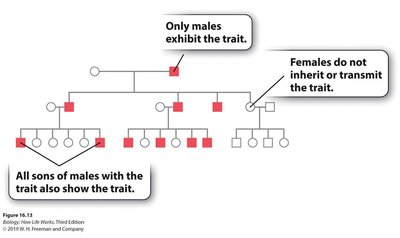
Y-linked genes are found only on the Y chromosome, which is present only in males. These genes are passed directly from father to son, and only males exhibit Y-linked traits. There are relatively few genes on the Y chromosome (~50).
All sons of males with a Y-linked trait will also show the trait.
Females do not inherit or transmit Y-linked traits.
X-Inactivation
Mechanism and Consequences
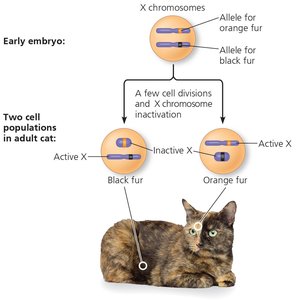
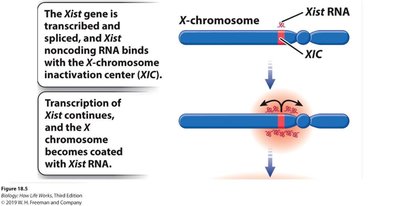
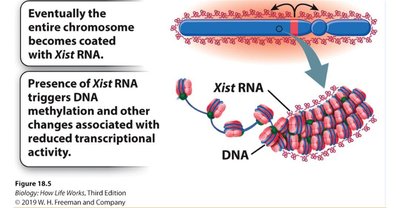
In female mammals, one of the two X chromosomes in each cell is randomly inactivated during early embryonic development. This process, called X-inactivation, ensures dosage compensation between males and females. The inactivated X chromosome forms a structure called a Barr body.
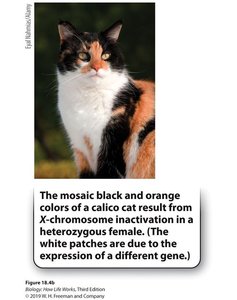
Mosaicism: Heterozygous females can show mosaic expression of X-linked traits, as seen in calico cats.
Xist gene: The Xist gene produces a noncoding RNA that coats the X chromosome, leading to its inactivation through DNA methylation and other modifications.
Linkage and Genetic Mapping
Linked Genes and Recombination
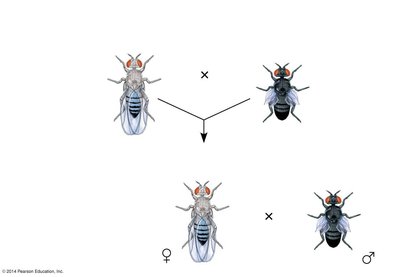
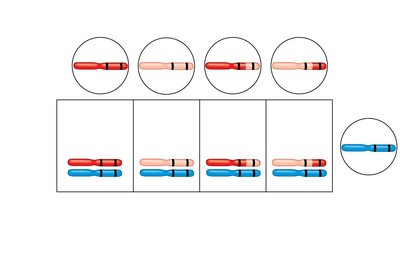
Genes located on the same chromosome that tend to be inherited together are called linked genes. However, crossing over during meiosis can produce recombinant chromosomes, resulting in new combinations of alleles.
Parental types: Offspring with phenotypes matching the parental generation.
Recombinant types: Offspring with new combinations of traits due to crossing over.
Recombination frequency: The percentage of recombinant offspring, used to estimate the distance between genes on a chromosome.
Genetic Mapping
The farther apart two genes are on a chromosome, the higher the probability that a crossover will occur between them, resulting in a higher recombination frequency. Genetic maps are constructed using recombination data to determine the order and relative distances of genes along a chromosome.
Map unit (centimorgan, cM): One map unit corresponds to a 1% recombination frequency.
Chromatin Structure and DNA Packaging
DNA and Chromatin Organization
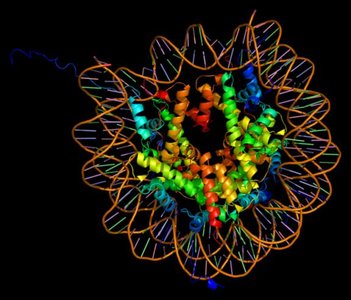
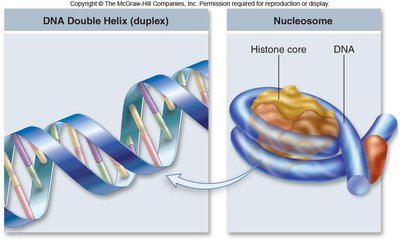
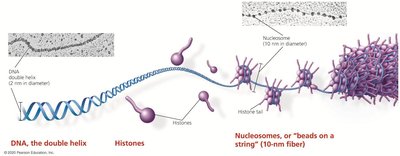
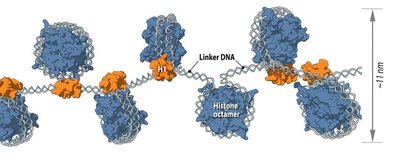
DNA in eukaryotic cells is packaged with proteins (histones) to form chromatin. The basic unit of chromatin is the nucleosome, which consists of DNA wrapped around a core of eight histone proteins. Chromatin can exist in a more condensed form (heterochromatin) or a less condensed form (euchromatin), affecting gene accessibility and expression.
Nucleosome: DNA wound twice around a histone octamer.
Heterochromatin: Densely packed, transcriptionally inactive regions.
Euchromatin: Loosely packed, transcriptionally active regions.
Dynamic Chromatin Packaging
Chromatin structure is dynamic and can be modified to regulate access to genetic information. Chemical modifications of histones, such as methylation and acetylation, play a key role in chromatin remodeling and gene regulation.
Dense heterochromatin is largely inaccessible to transcription machinery.
Chromatin can be remodeled as needed for DNA replication, repair, and transcription.
Discovery of DNA as Genetic Material
Griffith's Transformation Experiment
Frederick Griffith's experiments with Streptococcus pneumoniae demonstrated that a "transforming principle" could transfer virulence from dead pathogenic bacteria to live non-pathogenic bacteria, suggesting that genetic information could be transferred between cells.
S strain: Virulent, smooth colonies.
R strain: Non-virulent, rough colonies.
Transformation: Uptake of genetic material from the environment by a cell.
Hershey-Chase Experiment
Alfred Hershey and Martha Chase used bacteriophages labeled with radioactive isotopes to show that DNA, not protein, is the genetic material that enters bacterial cells and directs viral replication.
Radioactive phosphorus labeled DNA; radioactive sulfur labeled protein.
Only DNA entered the host cell and directed the production of new viruses.
Conclusion: DNA is the hereditary material in all living organisms.
