Pearson+ LogoPearson+ Logo
Ch. 15 - DNA and the Gene: Synthesis and Repair
Freeman - Biological Science 7th Edition
Freeman7th EditionBiological ScienceISBN: 9783584863285Not the one you use?Change textbook
Chapter 15, Problem 7

How does telomerase prevent linear chromosomes from shortening during replication?

Verified step by step guidance
1
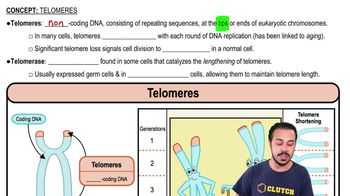
Understand the structure of chromosomes: Chromosomes are made up of DNA, and at the ends of each chromosome are regions called telomeres, which protect the genetic data in the chromosome from being lost during cell division.
Recognize the problem of replication: When a cell divides, the enzymes that replicate DNA cannot continue replication all the way to the end of the chromosome. This results in the progressive shortening of the chromosome with each cell division.
Learn about telomerase function: Telomerase is an enzyme that adds repetitive nucleotide sequences to the ends of the telomeres. This enzyme includes a component that serves as a template for adding these sequences.
Connect telomerase activity to telomere length: By extending the telomeres, telomerase ensures that the length of the telomeres is maintained or even extended, thus preventing the chromosome from shortening significantly.
Consider the implications of telomerase activity: In normal somatic cells, telomerase activity is low, leading to gradual telomere shortening and aging. In contrast, in stem cells and cancer cells, high telomerase activity allows these cells to divide repeatedly without substantial telomere shortening, contributing to their longevity and, in the case of cancer cells, unchecked growth.

Verified video answer for a similar problem:

This video solution was recommended by our tutors as helpful for the problem above.
Video duration:
2m
Was this helpful?

Key Concepts

Here are the essential concepts you must grasp in order to answer the question correctly.

Telomeres

Telomeres are repetitive nucleotide sequences located at the ends of linear chromosomes. They protect the chromosome from deterioration or fusion with neighboring chromosomes. During DNA replication, the enzymes that replicate DNA cannot fully replicate the ends of linear chromosomes, leading to gradual shortening with each cell division. Telomeres act as a buffer zone, ensuring that essential genetic information is not lost.
Recommended video:

DNA Replication

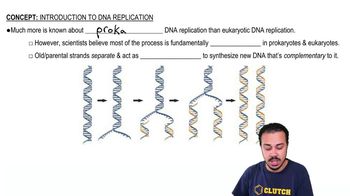
DNA replication is the biological process by which a cell duplicates its DNA before cell division. This process involves unwinding the double helix and synthesizing new strands complementary to the original ones. However, due to the nature of DNA polymerase, the enzyme responsible for replication, the very ends of linear chromosomes cannot be fully copied, resulting in the progressive shortening of telomeres with each replication cycle.
Recommended video:
Guided course
03:37
Introduction to DNA Replication

Telomerase

Telomerase is an enzyme that adds repetitive nucleotide sequences to the ends of telomeres, counteracting the shortening that occurs during DNA replication. It is composed of a protein component and an RNA template that guides the addition of telomeric repeats. Telomerase is particularly active in stem cells and cancer cells, allowing them to maintain telomere length and continue dividing, which is crucial for their longevity and proliferation.
Recommended video: