 Back
BackCell Division and Regulation: Mitosis, Cell Cycle, and Cancer
Study Guide - Smart Notes
 Tailored notes based on your materials, expanded with key definitions, examples, and context.
Cell Reproduction and Division
Functions of Cell Division
Cell division is essential for reproduction, growth, and repair in living organisms. In unicellular organisms, division produces new individuals, while in multicellular organisms, it enables growth, development, and replacement of damaged cells.
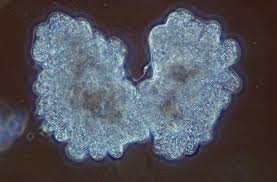
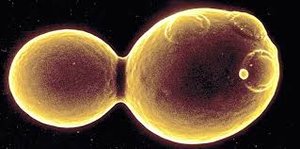
Unicellular Reproduction: One cell divides into two, creating new organisms such as bacteria, yeast, and amoeba.
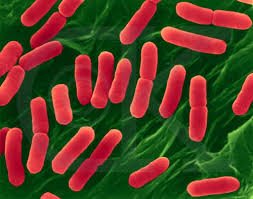
Binary Fission: Bacteria reproduce by binary fission, a process where a single cell splits into two identical cells.
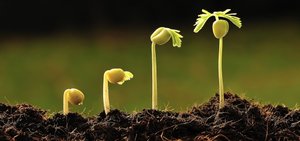
Multicellular Growth: Cell division is used for growth and development of fertilized eggs and for replacing damaged or dead cells.
Genome and Chromosomes
The genome is the complete set of DNA unique to a species. During cell division, the genome is passed from one generation to the next, organized into multiple chromosomes in eukaryotes.
Chromosomes: Threadlike structures made of DNA and histone proteins, visible only during cell division.
Chromatin: DNA-protein complex present in non-dividing cells; coils to form chromosomes during division.
Genes: Each chromosome contains thousands of genes and proteins for structure and regulation.
Chromosome Number and Types
Somatic Cells: Diploid (2n), contain two sets of chromosomes (e.g., humans have 46).
Gametes: Haploid (n), contain one set of chromosomes (e.g., humans have 23).
Chromatin vs. Chromosomes
Chromatin is the loose form of DNA in non-dividing cells, while chromosomes are condensed and visible during cell division.
Mitosis and the Cell Cycle
The Cell Cycle
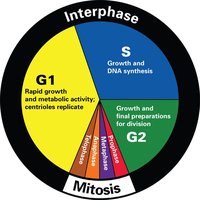
The cell cycle is a sequence of events from one cell division to the next, including growth, DNA replication, mitosis, and cytokinesis.
Interphase: Non-dividing stage, accounts for 90% of the cell cycle. Consists of three phases:
G1 (First Gap): Cell growth and metabolic activity; longest phase.
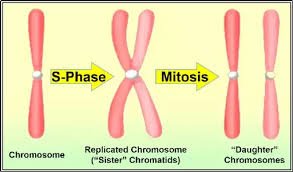
S (Synthesis): DNA replication; genetic material is copied precisely.
G2 (Second Gap): Further growth and preparation for division.
Mitosis: Nuclear division where duplicated chromosomes are evenly distributed into two genetically identical daughter cells.
Cytokinesis: Division of cytoplasm and organelles.
Interphase Details
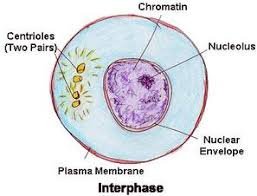
During G2, the nucleus is well-defined, nucleoli are present, centrosomes are duplicated, and chromatin is not individually distinguishable.
Mitosis Phases
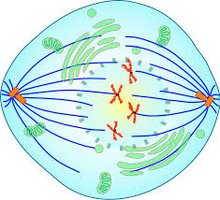
Mitosis is unique to eukaryotes and consists of five phases: prophase, prometaphase, metaphase, anaphase, and telophase.
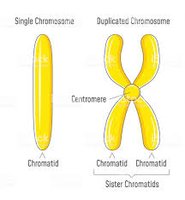
Prophase: Chromosome fibers condense, nucleoli disappear, chromosomes become visible as sister chromatids joined by a centromere.
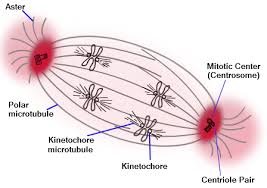
Prometaphase: Nuclear membrane fragments, spindle fibers interact with chromosomes, kinetochores form at centromeres.
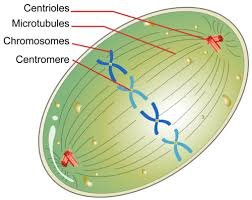
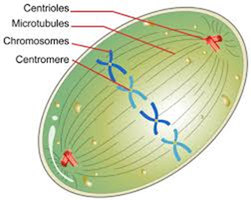
Metaphase: Chromosomes align at the metaphase plate, kinetochores face opposite poles.
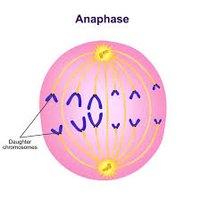
Anaphase: Sister chromatids separate and move to opposite poles, cell elongates.
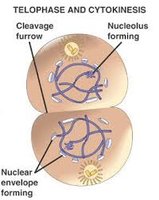
Telophase: Nuclear membranes reform, nucleoli reappear, chromosomes decondense.
Cytokinesis
Animal Cells: Cleavage furrow forms, contractile ring pinches cell into two.
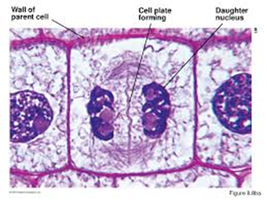
Plant Cells: Cell plate forms at the midline, vesicles from Golgi fuse to create new cell wall.
Regulation of the Cell Cycle
Checkpoints and Regulation
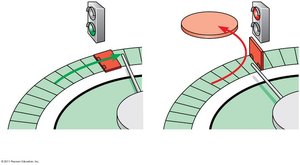
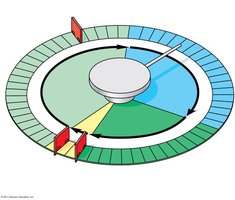
Cell division is regulated by internal and external cues, ensuring proper timing and rate. Checkpoints in G1, S, G2, and M phases control progression.
G1 Checkpoint: Determines if cell will divide or enter G0 (non-dividing state).
G2 and M Checkpoints: Ensure DNA is properly replicated and chromosomes are correctly aligned.
Factors Influencing Cell Division
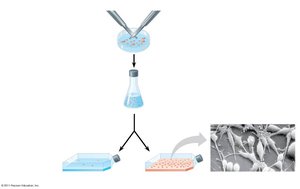
Nutrients and Growth Factors: Essential for division; PDGF stimulates fibroblast division for wound healing.
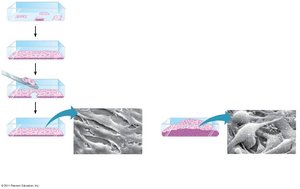
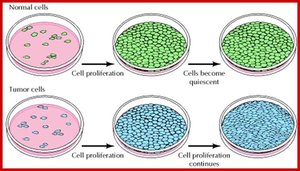
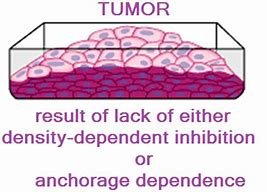
Cell Density: Density-dependent inhibition prevents overcrowding; anchorage dependence requires cells to adhere to a surface.
Cell Size: Critical cytoplasmic volume to genome ratio must be reached for division.
Cyclins and Kinases
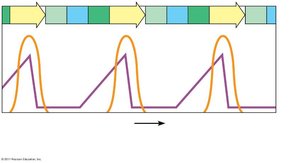
Regulatory proteins called cyclins and cyclin-dependent kinases (cdks) synchronize cell cycle events. MPF (maturation promoting factor) is required for entry into mitosis.
Cyclin: Concentration fluctuates during the cell cycle.
CDKs: Activity depends on cyclin binding; concentration remains constant.
MPF: Active complex of cyclin and cdk, triggers mitosis.
Cancer and Loss of Cell Cycle Control
Cancer Cell Characteristics
Cancer cells do not exhibit density-dependent inhibition or anchorage dependence, leading to uncontrolled division and tumor formation.
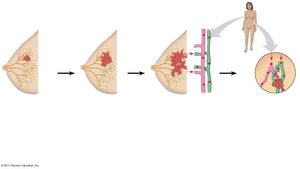
Benign Tumor: Stays at original location.
Malignant Tumor: Invades other tissues.
Metastasis: Cancer cells spread to other parts of the body, forming new tumors.
Comparison Table: Normal vs. Cancer Cells
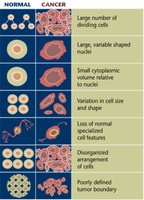
Feature | Normal Cells | Cancer Cells |
|---|---|---|
Density-dependent inhibition | Present | Absent |
Anchorage dependence | Present | Absent |
Cell proliferation | Stops when crowded | Continues |
Tumor formation | No | Yes |
Metastasis | No | Possible |
Cell shape and size | Uniform | Variable |
Arrangement | Organized | Disorganized |
Tumor boundary | Defined | Poorly defined |
Key Equations and Concepts
DNA Replication and Chromosome Number
Somatic cell chromosome number:
Gamete chromosome number:
Cell Cycle Regulation
MPF activity:
Summary
Cell division is a highly regulated process essential for life. The cell cycle ensures accurate DNA replication and distribution, while checkpoints and regulatory proteins maintain order. Loss of regulation leads to cancer, characterized by uncontrolled cell proliferation and metastasis.
