- Download the worksheet to save time writing
- Start solving the practice problems
- If you're stuck, watch the video solutions
- See your summary to get more insights

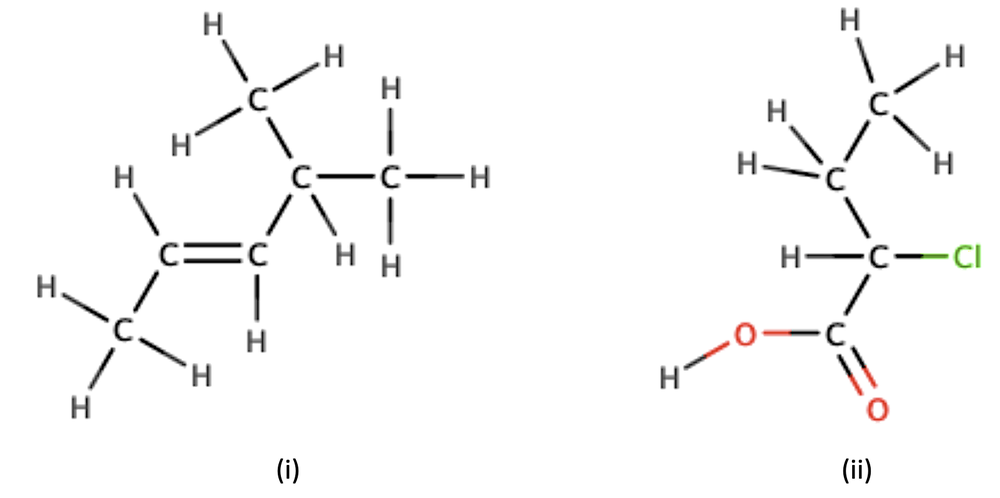
Draw the condensed formula for the following structural formulas
Saccharin (C7H5NO3S) is an artificial sweetener that is about 550 times as sweet as sucrose. Each carbon, oxygen, and nitrogen atom follow the octet rule, while each hydrogen only forms one bond. The sequence of carbon atoms is shown below. Provide the complete structural formula for saccharin.

Identify the orbitals that overlap for each of the indicated bonds below:

Are the molecules shown below enantiomers or identical?

Is optical isomerism present in the following compound?

Which of the structures below represent an isobutyl group

Give the IUPAC name for the compound below with the molecular formula of C10H22

Which of the following is the correct name for the alkene?

Which of the following is the correct name for the alkyne?

Provide the name of the following carboxylic acid.

Write the name of the given ether.

Determine the systematic name of the given disubstituted benzene.

What is/are the product/s for the following alkane substitution if only monosubstitution occurred?

Identify the organic product of the addition reaction below: