Energy Diagrams definitions Flashcards

Energy Diagrams definitions
Control buttons has been changed to "navigation" mode.
1/13
  • Energy Diagram
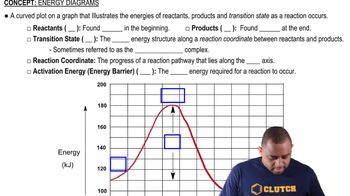
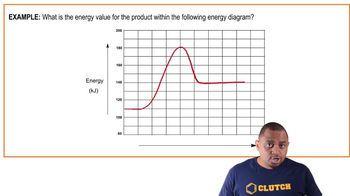
    A graph illustrating the energy changes of reactants, products, and transition state during a chemical reaction.
  • Reactants
    Substances present at the start of a chemical reaction, located on the left side of an energy diagram.
  • Products
    Substances formed at the end of a chemical reaction, located on the right side of an energy diagram.
  • Transition State
    The highest energy structure along the reaction coordinate, representing a peak in energy.
  • Activated Complex
    Another term for the transition state, indicating the highest energy point in a reaction.
  • Reaction Coordinate
    The progress of a reaction pathway, typically represented along the x-axis of an energy diagram.
  • Activation Energy
    The minimum energy required for a reaction to occur, measured from reactants to the transition state.
  • Energy Barrier
    Another term for activation energy, representing the energy threshold that must be overcome.
  • Exothermic Process
    A reaction where energy is released, resulting in products that are lower in energy than reactants.
  • Endothermic Process
    A reaction where energy is absorbed, resulting in products that are higher in energy than reactants.
  • Stability
    Determined by the overall energy change, with lower energy indicating greater stability in reactions.
  • ΔE
    The overall energy change of a reaction, calculated as products minus reactants.
  • ΔH
    The change in thermal energy of a reaction, interchangeable with ΔE in energy diagrams.