Intro to Redox Reactions definitions Flashcards

Intro to Redox Reactions definitions
Control buttons has been changed to "navigation" mode.
1/15
  • Redox Reactions
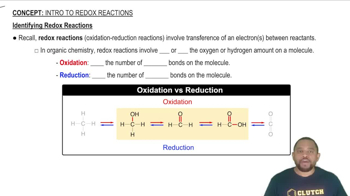
    Involve electron transfer between reactants, altering oxidation states.
  • Oxidation
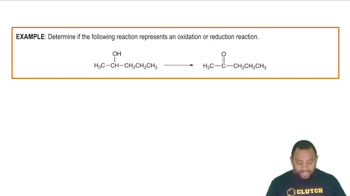
    Increases carbon-oxygen bonds, transforming alcohols to aldehydes or ketones.
  • Reduction
    Increases carbon-hydrogen bonds, converting carboxylic acids to alcohols.
  • Carbon-Oxygen Bonds
    Increase during oxidation, indicating a higher oxidation state.
  • Carbon-Hydrogen Bonds
    Increase during reduction, indicating a lower oxidation state.
  • Alcohols
    Organic compounds that can be oxidized to aldehydes or ketones.
  • Aldehydes
    Intermediate oxidation products between alcohols and carboxylic acids.
  • Ketones
    Similar to aldehydes, formed during oxidation of secondary alcohols.
  • Carboxylic Acids
    Result from further oxidation of aldehydes, containing three carbon-oxygen bonds.
  • Hydrocarbons
    Compounds with only carbon and hydrogen, not central in redox reactions.
  • Carbon Dioxide
    End product of complete oxidation, not typically involved in organic redox.
  • Functional Groups
    Specific groups of atoms within molecules that determine chemical reactions.
  • Organic Chemistry
    Branch of chemistry focusing on carbon-containing compounds and their transformations.
  • Electron Transfer
    Movement of electrons from one reactant to another in redox reactions.
  • Oxidation State
    Indicates the degree of oxidation of an atom in a chemical compound.