Ionic Salts definitions Flashcards
You can tap to flip the card.
Control buttons has been changed to "navigation" mode.
1/15
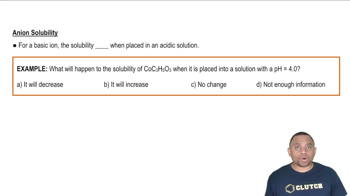
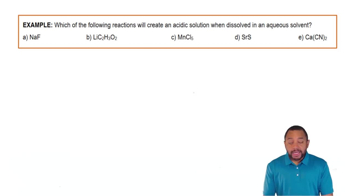
Ionic SaltA compound formed from the neutralization reaction between an acid and a base, resulting in a cation and an anion.CationA positively charged ion in an ionic compound, which can be acidic or neutral based on its charge and identity.AnionA negatively charged ion in an ionic compound, which can be basic or neutral based on its reaction with a proton.Neutralization ReactionA chemical reaction between an acid and a base that produces an ionic salt and water.Main Group MetalsElements that form cations with a charge of +3 or higher, making them acidic.Transition MetalsElements that form cations with a charge of +2 or higher, making them acidic.Positively Charged AminesAmines that are always acidic due to their positive charge.SolubilityA chemical property indicating the ability of a solute to dissolve in a solvent, increasing for acidic ions in basic solutions.ProtonA positively charged subatomic particle, represented as H+, used to determine anion acidity or basicity.Weak AcidAn acid that partially dissociates in solution, forming a basic anion when its conjugate base is created.Strong AcidAn acid that completely dissociates in solution, forming a neutral anion when its conjugate base is created.Sodium ChlorideAn example of an ionic salt formed from hydrochloric acid and sodium hydroxide, resulting in a neutral chloride ion.Potassium FluorideAn ionic salt that forms a basic fluoride ion when reacting with a proton to create a weak acid.Ammonium NitrateAn ionic salt that produces an acidic ammonium ion due to its positively charged amine.Zinc ChlorideAn ionic salt that forms an acidic zinc cation due to its +2 charge.