Kinetic Molecular Theory definitions Flashcards
Kinetic Molecular Theory definitions
You can tap to flip the card.
Control buttons has been changed to "navigation" mode.
1/15
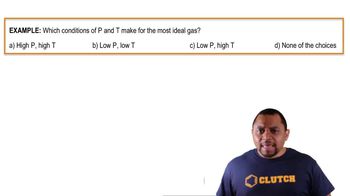
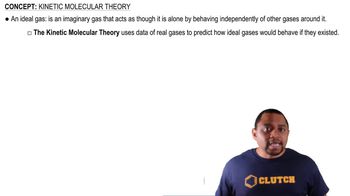
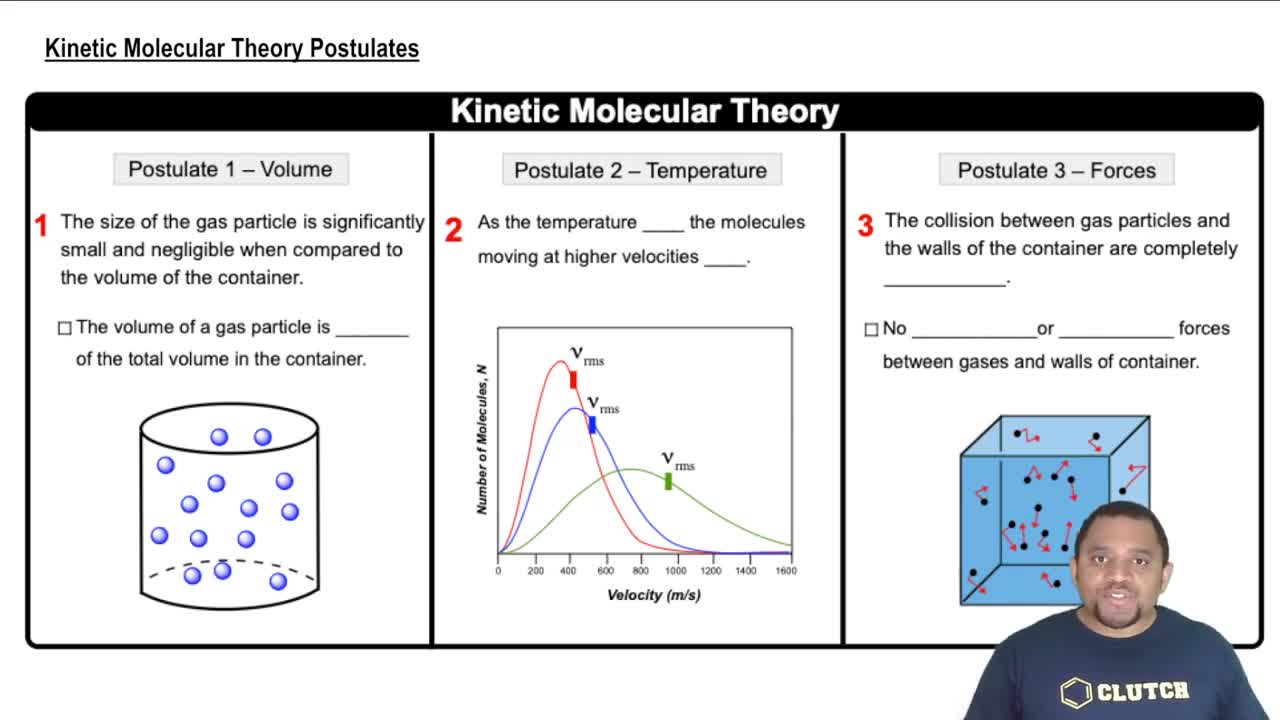
Ideal GasA hypothetical gas that behaves independently, with no interactions or volume, used to model real gas behavior.Kinetic Molecular TheoryA framework predicting ideal gas behavior using real gas data, based on three key postulates.PostulateA fundamental assumption in a theory, used to explain the behavior of gases in the kinetic molecular theory.VolumeThe space occupied by gas particles, considered negligible in the context of ideal gases.TemperatureA measure affecting gas molecule velocity, with higher temperatures increasing molecular speed.VelocityThe speed of gas molecules, which increases with temperature according to the kinetic molecular theory.Root Mean Square SpeedA statistical measure of the speed of gas molecules, varying with temperature.Elastic CollisionAn interaction where gas particles bounce off each other or container walls without energy loss.Attractive ForcesForces that pull gas particles together, absent in ideal gas behavior.Repulsive ForcesForces that push gas particles apart, not present in ideal gas interactions.Gas MoleculeA small particle in a gas, whose volume is negligible in the kinetic molecular theory.ContainerThe space enclosing gas particles, where elastic collisions occur in the kinetic molecular theory.MomentumThe quantity of motion of a moving gas particle, conserved in elastic collisions.TrajectoryThe path followed by a gas molecule, influenced by collisions in real gases.HypotheticalAn imagined scenario or model, such as the concept of ideal gases in kinetic molecular theory.