Back

Physical & Chemical Changes quiz

Control buttons has been changed to "navigation" mode.
1/15
  • What is the main difference between a physical change and a chemical change?

    A physical change alters the physical state without changing the substance's composition, while a chemical change creates new chemical bonds and new substances.
  • What happens to the identity of a substance during a physical change?

    The identity of the original substance remains intact during a physical change.
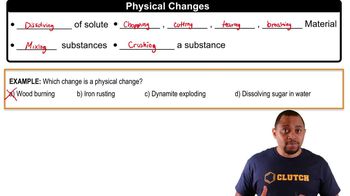
  • Give two examples of physical changes.

    Examples include dissolving a solute and crushing a can.
  • What is a solute in the context of physical changes?

    A solute is the substance that gets dissolved within a liquid.
  • What are some keywords to look for when identifying physical changes?

    Keywords include mixing, chopping, cutting, tearing, breaking, and crushing.
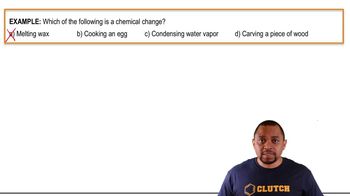
  • What is a chemical change?

    A chemical change involves a change in chemical composition, forming new chemical bonds and new substances.
  • Name three common examples of chemical changes.

    Examples include rusting of metals, burning materials, and metabolism of food.
  • How can you visually identify a chemical change?

    Chemical changes can be identified by color changes or odor changes.
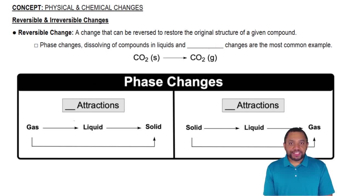
  • What is a reversible change in chemistry?

    A reversible change is one that can be reversed to restore the original substance, such as phase changes or dissolving.
  • List three types of phase changes that are reversible.

    Melting (fusion), freezing, and vaporization are reversible phase changes.
  • What is the process called when a gas turns directly into a solid?

    This process is called deposition.
  • What is the term for melting in chemistry, and what else can it refer to?

    Melting is also called fusion, which can also refer to nuclear chemistry where elements combine.
  • What is sublimation?

    Sublimation is the process where a solid turns directly into a gas.
  • What is an irreversible change?

    An irreversible change is permanent and cannot be undone to restore the original structure, often involving chemical changes.
  • Why is the reaction N2 + 3 H2 → 2 NH3 considered irreversible?

    Because new chemical bonds are formed and the original gases cannot be easily restored under normal conditions.