 Back
Aldehydes and Ketones: Structure, Properties, and Reactions
Study Guide - Smart Notes
 Tailored notes based on your materials, expanded with key definitions, examples, and context.
Chapter 14: Aldehydes and Ketones
Introduction to Aldehydes and Ketones
Aldehydes and ketones are important classes of organic compounds characterized by the presence of a carbonyl group (C=O). The carbonyl group is highly reactive and influences the physical and chemical properties of these molecules.
Aldehydes contain a carbonyl group bonded to at least one hydrogen atom.
Ketones have the carbonyl group bonded to two carbon atoms, with no C-H bonds at the carbonyl carbon.
The carbonyl group is polar, with the oxygen atom being more electronegative and attracting electron density away from the carbon.
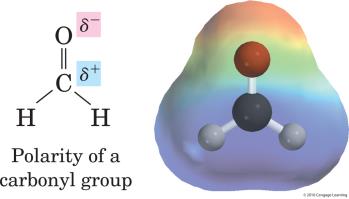
Structure and Nomenclature
Formaldehyde (methanal) is the simplest aldehyde, with two C-H bonds.
Other aldehydes have one C-H bond and one C-C bond at the carbonyl carbon.
Acetone (propanone) is the simplest ketone, with two C-C bonds at the carbonyl carbon.
Aldehydes are typically found at the end of a carbon chain, while ketones are found within the chain.
Physical Properties and Boiling Points
The polarity of the carbonyl group affects the boiling points and solubility of aldehydes and ketones.
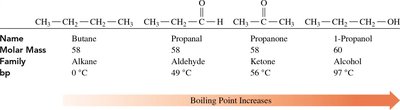
Aldehydes and ketones have higher boiling points than alkanes due to dipole-dipole interactions, but lower than alcohols because they lack hydrogen bonding.
Alcohols have the highest boiling points among these families due to strong hydrogen bonding.
Name | Molar Mass | Family | Boiling Point (°C) |
|---|---|---|---|
Butane | 58 | Alkane | 0 |
Propanal | 58 | Aldehyde | 49 |
Propanone | 58 | Ketone | 56 |
1-Propanol | 60 | Alcohol | 97 |
Oxidation of Alcohols
Oxidation reactions are key in the synthesis of aldehydes and ketones.
Primary alcohols (1°) are oxidized to aldehydes, which can be further oxidized to carboxylic acids.
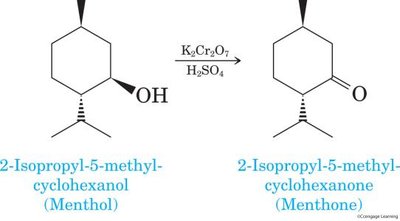
Secondary alcohols (2°) are oxidized to ketones only.
Tertiary alcohols (3°) cannot be oxidized under normal conditions.
Potassium dichromate (K2Cr2O7) is a common oxidizing agent used in these reactions.

Oxidation States and Electron Control
Oxidation is the loss of electrons (or increase in bonds to oxygen).
Reduction is the gain of electrons (or increase in bonds to hydrogen).
Carbon becomes more oxidized as it forms more bonds to oxygen and fewer to hydrogen.
Reduction of Aldehydes and Ketones
Reduction reactions convert carbonyl groups to alcohols.
Aldehydes are reduced to primary alcohols.
Ketones are reduced to secondary alcohols.
Common reducing agents include hydrogen (H2) with a metal catalyst (Pd or Pt), and sodium borohydride (NaBH4).
NaBH4 is selective and will not reduce C=C bonds in alkenes or aromatic rings.
Biological Reduction: NAD+ and NADH
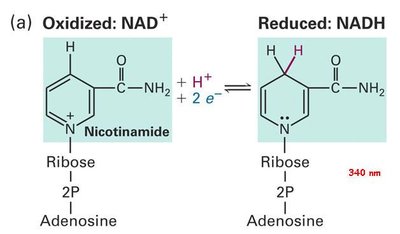
In biological systems, reduction of aldehydes and ketones is carried out by the coenzyme NAD+ (nicotinamide adenine dinucleotide).
NAD+ is reduced to NADH, which delivers a hydride ion (H-) to the carbonyl carbon.
This process is essential in metabolic pathways, such as the reduction of pyruvate to lactate during lactic acid fermentation.
Addition of Alcohols: Hemiacetals and Acetals
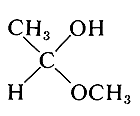
Addition of an alcohol to a carbonyl group forms a hemiacetal (carbon bonded to -OH and -OR).
Further addition of alcohol forms an acetal (carbon bonded to two -OR groups).
Hemiacetals are generally unstable except in cyclic forms, such as glucose.
Acetal formation is acid-catalyzed and reversible, following Le Chatelier's principle.
Keto-Enol Tautomerism
Keto-enol tautomerism is the reversible interconversion between a ketone and its constitutional isomer, an enol.
The α-carbon (adjacent to the carbonyl) and its α-hydrogen are involved in this process.
In aqueous solution, the keto form is generally favored due to greater stability.
This tautomerism is important in biochemistry and organic chemistry, affecting reactivity and structure.
Summary Table: Aldehydes vs. Ketones
Property | Aldehyde | Ketone |
|---|---|---|
Functional Group | Carbonyl with at least one C-H bond | Carbonyl with two C-C bonds |
Location in Chain | End | Middle |
Oxidation | Can be oxidized to carboxylic acid | Cannot be further oxidized |
Reduction | Forms primary alcohol | Forms secondary alcohol |
Key Equations
Oxidation of primary alcohol:
Oxidation of secondary alcohol:
Reduction of aldehyde:
Reduction of ketone:
Keto-enol tautomerism:
Conclusion
Aldehydes and ketones are central to organic and biological chemistry, with distinct structural features, reactivity, and roles in metabolic pathways. Understanding their properties, reactions, and biological significance is essential for GOB Chemistry students. Additional info: Cyclic hemiacetals are especially important in carbohydrate chemistry, as most sugars exist in this form under physiological conditions.
