 Back
BackAlkanes, Alkenes, Alkynes, and Aromatic Compounds: Structure, Nomenclature, and Reactions
Study Guide - Smart Notes
 Tailored notes based on your materials, expanded with key definitions, examples, and context.
Alkanes and Cycloalkanes
Structure and Nomenclature of Cycloalkanes
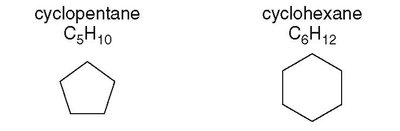
Cycloalkanes are saturated hydrocarbons with carbon atoms arranged in a ring. Their general formula is CnH2n. The simplest cycloalkanes include cyclopropane, cyclobutane, cyclopentane, and cyclohexane. - Cyclopropane: C3H6 (triangle ring) - Cyclobutane: C4H8 (square ring) - Cyclopentane: C5H10 (pentagon ring) - Cyclohexane: C6H12 (hexagon ring) 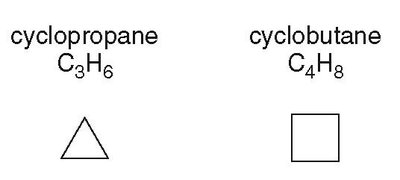
Naming Cycloalkanes
The parent compound is determined by the largest carbon chain or ring. If the ring has only one group attached, compare the ring and chain; the larger is the parent. If two or more groups are attached, the ring is usually the parent. - Rule 1: Determine the parent structure. - Rule 2: For cyclic compounds with one substituent, name the substituent followed by the parent. - Rule 3: When two or more substituents are present, number the ring to give the lowest possible numbering. Alphabetize substituents in the name.
Alkanes: Combustion Reactions
Combustion of Alkanes
Alkanes undergo combustion, an oxidation-reduction reaction, in the presence of O2 to produce CO2 and H2O. The products are always CO2 and H2O, regardless of the alkane. Example: 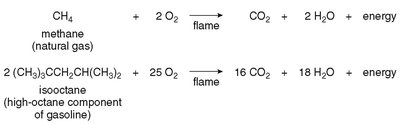
Incomplete Combustion
If there is insufficient O2, incomplete combustion occurs, producing CO (carbon monoxide), a poisonous gas. Example: 
Alkenes and Alkynes
Structure and Properties
Alkenes contain at least one carbon-carbon double bond (C=C), while alkynes contain at least one carbon-carbon triple bond (C≡C). - Alkenes: General formula CnH2n, each C is trigonal planar (120° bond angles). - Alkynes: General formula CnH2n-2, each C is linear (180° bond angles). 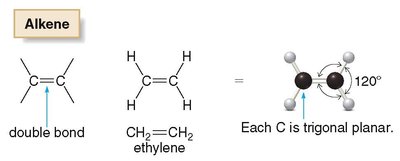
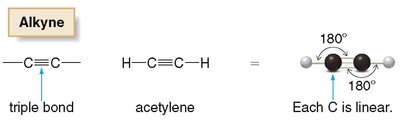
Condensed Structural Formulas
Condensed formulas omit single bond lines and focus on double or triple bonds. 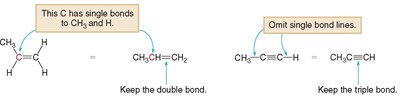
Naming Alkenes and Alkynes
- Find the longest chain containing the double or triple bond. - Change the suffix from -ane to -ene (alkene) or -yne (alkyne). - Number the chain to give the bond the lowest possible number. - Indicate the position of the bond before the parent name.
Cyclic Alkenes
Number the ring starting at the double bond, giving substituents the lowest possible numbers. 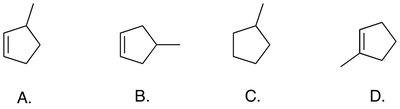
Isomerism in Alkenes
Cis–Trans Isomerism
Restricted rotation around the double bond leads to cis–trans isomers. - Cis isomer: Groups on the same side of the double bond. - Trans isomer: Groups on opposite sides. 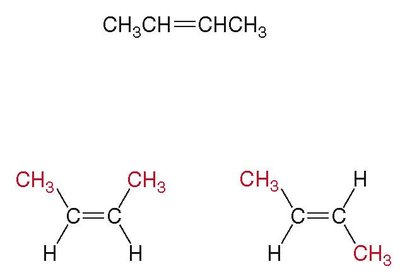
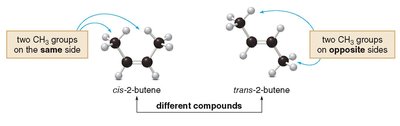
Constitutional vs. Stereoisomers
- Constitutional isomers: Differ in connectivity of atoms. - Stereoisomers: Same connectivity, different spatial arrangement. 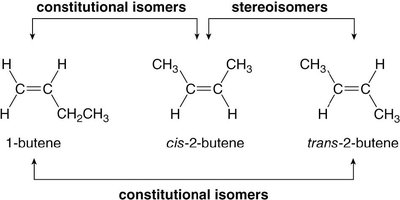
Reactions of Alkenes
Addition Reactions
Alkenes undergo addition reactions, where the double bond is broken and two new single bonds are formed. 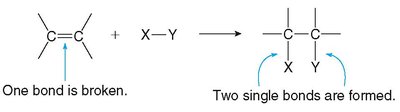
Hydrogenation
Addition of H2 to an alkene forms an alkane. Requires a metal catalyst (Pd, Pt, Ru). 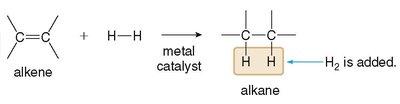
Halogenation
Addition of Cl2 or Br2 to an alkene forms a dihalide. No catalyst required. 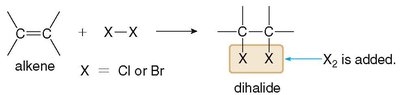
Test for Unsaturation
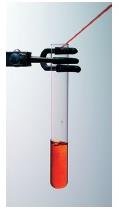
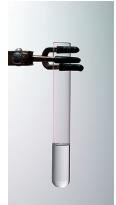
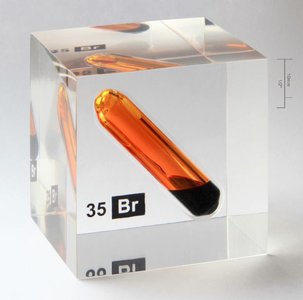
Bromine (Br2) is used to test for unsaturation. Alkenes decolorize Br2, while alkanes do not. 

Hydrohalogenation
Addition of HX (Cl, Br, or I) to an alkene forms an alkyl halide. 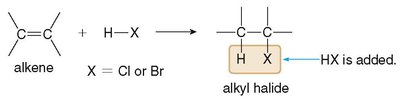
Hydration
Addition of H2O to an alkene forms an alcohol. Requires a strong acid catalyst (H2SO4). 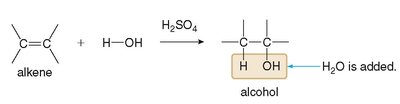
Polymers
Structure and Formation
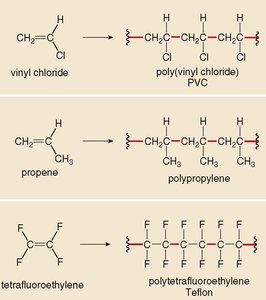
Polymers are large molecules made from repeating units (monomers) covalently bonded together. Polymerization is the process of joining monomers.
Common Synthetic Polymers
- Polyethylene, polyvinyl chloride, polypropylene, polytetrafluoroethylene (Teflon), polystyrene, Saran™. 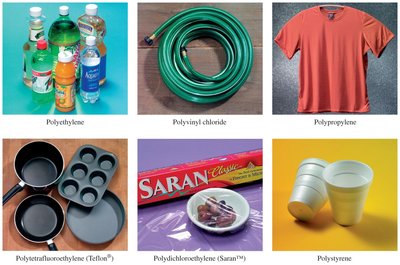
Safety Glass and Car Windows
Polymers such as polyvinyl butyral (PVB) are used as interlayers in safety glass. 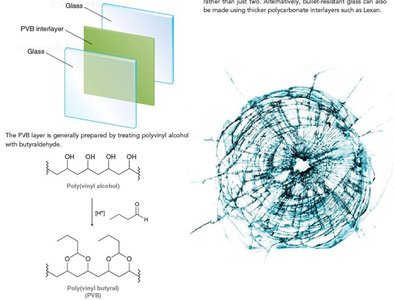
Sodium Polyacrylate
Sodium polyacrylate is a polymer capable of absorbing 200–300 times its mass in water. 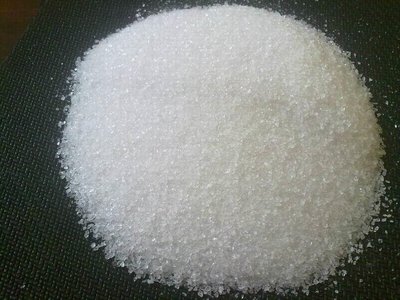
Aromatic Compounds
Structure of Benzene
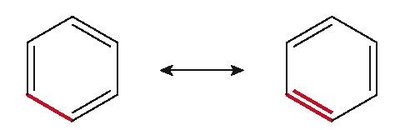
Benzene (C6H6) is a planar molecule with trigonal planar carbon atoms and delocalized electrons. 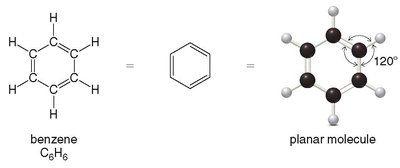
Nomenclature of Benzene Derivatives
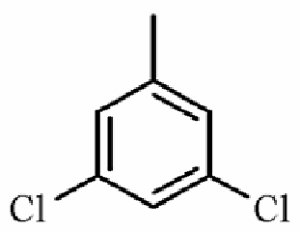
- Monosubstituted: Name substituent followed by benzene. - Disubstituted: Use ortho (1,2), meta (1,3), para (1,4) designations or numbers. - Polysubstituted: Number to give lowest possible numbering; do not use ortho/meta/para. 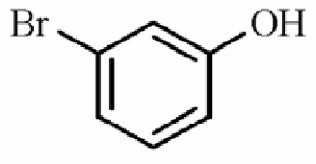
Reactions of Aromatic Compounds
Substitution Reactions
Aromatic compounds undergo substitution reactions, where an atom (usually H) is replaced by another atom or group, preserving the aromatic ring. 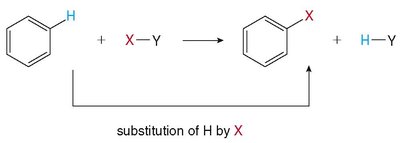
Halogenation and Nitration
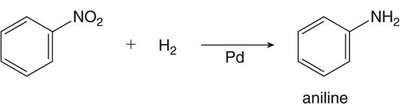
- Halogenation: Benzene reacts with Br2 or Cl2 to form bromobenzene or chlorobenzene. - Nitration: Benzene reacts with HNO3/H2SO4 to form nitrobenzene.
Sulfa Drugs and Aromatic Amines
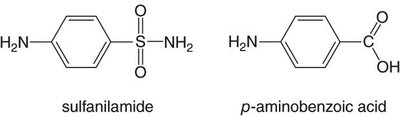
Sulfa drugs contain NH2 groups bonded to benzene rings and are used as antibacterial agents. 
Sulfonation
Benzene reacts with SO3/H2SO4 to form benzenesulfonic acid. 
Additional info:
The notes above expand on the original content by providing definitions, examples, and academic context for each topic, ensuring completeness and clarity for exam preparation.
