 Back
Amines and Amides: Structure, Properties, and Biological Roles
Study Guide - Smart Notes
 Tailored notes based on your materials, expanded with key definitions, examples, and context.
Chapter 18: Amines and Amides
Introduction to Amines and Amides
Amines and amides are essential classes of organic compounds with significant roles in biological systems and pharmaceuticals. Amines are derivatives of ammonia, while amides are formed from the reaction of carboxylic acids and amines. This chapter explores their structure, classification, properties, and biological importance.
Amines: Structure & Classification
Basic Structure and Types of Amines
Amines are organic derivatives of ammonia (NH3), where one or more hydrogen atoms are replaced by alkyl or aryl groups. They are classified based on the number of carbon-containing groups attached to the nitrogen atom:
Primary (1°) amine: One alkyl or aryl group attached to nitrogen.
Secondary (2°) amine: Two alkyl or aryl groups attached to nitrogen.
Tertiary (3°) amine: Three alkyl or aryl groups attached to nitrogen.
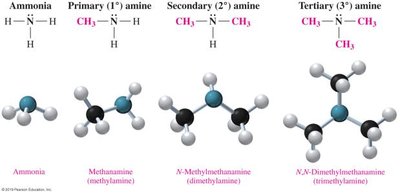
Aliphatic amines have only alkyl groups attached to the nitrogen, while aromatic amines have at least one aryl group.
Heterocyclic Amines
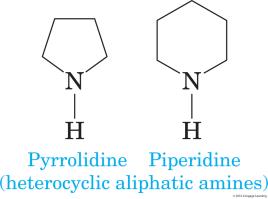
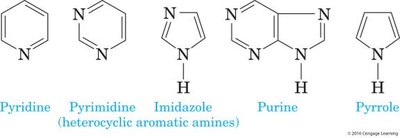
Heterocyclic amines contain the nitrogen atom as part of a ring structure. They are further classified as:
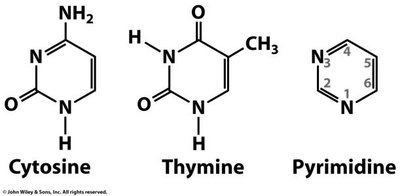
Heterocyclic aromatic amines: Nitrogen is part of an aromatic ring (e.g., pyridine, purine).
Heterocyclic aliphatic amines: Nitrogen is part of a non-aromatic ring (e.g., pyrrolidine, piperidine).
Nitrogenous Bases in Nucleic Acids
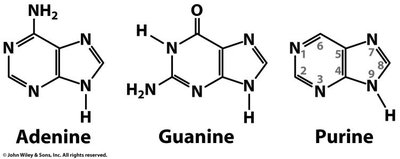
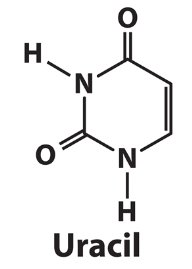
Many biologically important molecules, such as DNA and RNA bases, are heterocyclic aromatic amines. These include purines (adenine, guanine) and pyrimidines (cytosine, thymine, uracil).
Physical Properties of Amines
Polarity and Hydrogen Bonding
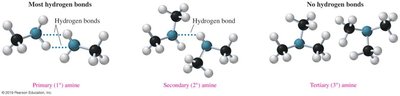
Amines are polar compounds. Their ability to form hydrogen bonds depends on their classification:
Primary and secondary amines have N-H bonds and can form hydrogen bonds with each other and with water.
Tertiary amines lack N-H bonds and cannot form hydrogen bonds with each other, but can still accept hydrogen bonds from water.
All classes of amines are more soluble in water than hydrocarbons of similar molecular weight. Low molecular-weight amines are highly soluble, while higher molecular-weight amines are less soluble.
Boiling points: Alkanes < Amines < Alcohols (of similar size), due to differences in hydrogen bonding strength.
Basicity of Amines
Amines as Weak Bases
Amines act as weak bases in aqueous solution, accepting protons from water to form ammonium ions and hydroxide ions:
General reaction:
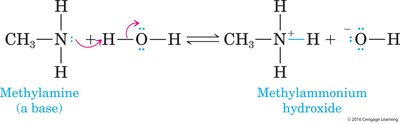
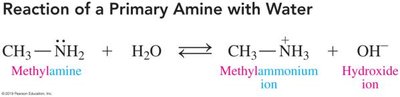
The base dissociation constant (Kb) and its negative logarithm (pKb) quantify the basicity of amines. The pKa of the conjugate acid is also used to predict the predominant form at physiological pH (7.4).
Protonation and Ammonium Salts
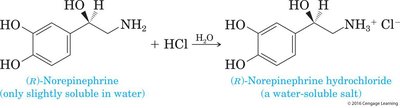
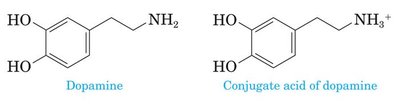
At physiological pH, most amines are protonated, forming water-soluble ammonium salts. This property is exploited in drug formulation to increase solubility and bioavailability.
Reactions of Amines
Salt Formation
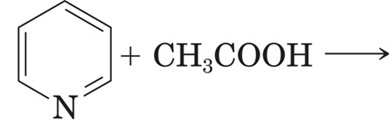
Amines react with strong acids to form ammonium salts, which are more polar and water-soluble than the parent amine. This is important for drug delivery and biological transport.
Example:
Quaternary Ammonium Salts
Quaternary ammonium salts have a nitrogen atom bonded to four carbon groups, carrying a permanent positive charge. They do not have a pKa because they cannot lose a proton under physiological conditions.
Biological Roles: Neurotransmitters
Function and Importance
Neurotransmitters are chemical messengers that transmit signals across synapses in the nervous system. Many neurotransmitters are amines, such as acetylcholine, dopamine, norepinephrine, and serotonin.
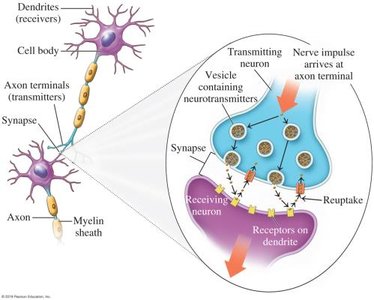
Neurotransmitter Imbalance and Disease
Imbalances in neurotransmitter levels are linked to diseases such as Parkinson's disease, which is characterized by decreased dopamine production. Treatment may involve administration of precursors like L-dopa.
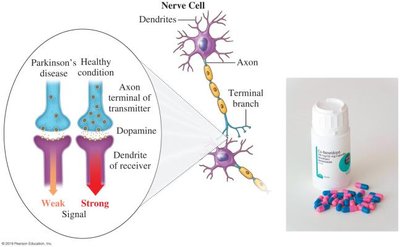
Selected Neurotransmitters Table
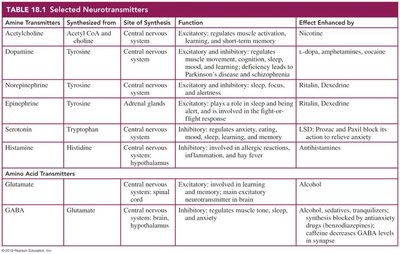
The following table summarizes key neurotransmitters, their synthesis, function, and effects:
Amine Transmitter | Synthesized from | Site of Synthesis | Function | Effect Enhanced by |
|---|---|---|---|---|
Acetylcholine | Acetyl CoA and choline | Central nervous system | Excitatory; regulates muscle activation, memory, and short-term memory | Nicotine |
Dopamine | Tyrosine | Central nervous system | Excitatory and inhibitory; regulates mood, cognition, motor activity | L-dopa, amphetamines, cocaine |
Norepinephrine | Tyrosine | Central nervous system, adrenal glands | Excitatory and inhibitory; sleep, focus, alertness | Ritalin, Dexedrine |
Serotonin | Tryptophan | Central nervous system | Inhibitory; regulates anxiety, cognition, mood, sleep | LSD, Prozac, Paxil |
Histamine | Histidine | Central nervous system | Excitatory; involved in immune response, learning, alertness | Antihistamines |
Amides: Structure, Properties, and Synthesis
Structure and Classification
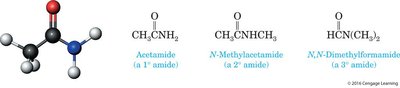
Amides are organic compounds containing a carbonyl group (C=O) bonded to a nitrogen atom. They are classified as:
Primary (1°) amide: One carbon group attached to nitrogen
Secondary (2°) amide: Two carbon groups attached to nitrogen
Tertiary (3°) amide: Three carbon groups attached to nitrogen
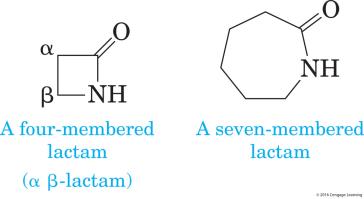
Cyclic Amides (Lactams)
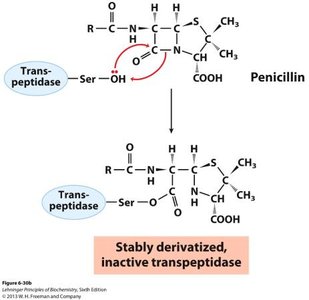
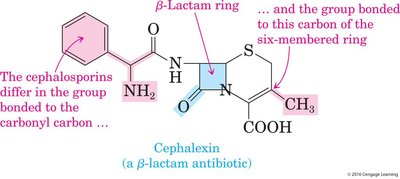
Cyclic amides are called lactams. The size of the ring is indicated by Greek letters (e.g., β-lactam is a four-membered ring). β-lactams are found in antibiotics like penicillin.
Preparation of Amides
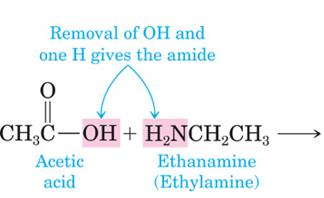
Amides can be synthesized by:
Direct reaction of a carboxylic acid with an amine (requires heat).
Reaction of an acid anhydride with an amine (faster and more favorable).
Reaction of an ester with ammonia or amines.


Biological Importance: β-Lactam Antibiotics
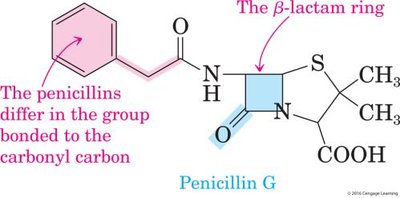
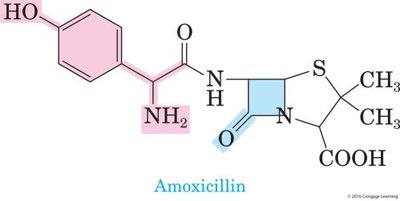
Penicillins and cephalosporins are antibiotics containing a β-lactam ring. They inhibit bacterial cell wall synthesis by irreversibly binding to transpeptidase enzymes.
Hydrolysis of Amides and Related Compounds
Hydrolysis Reactions
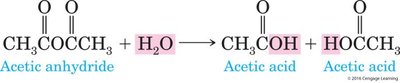
Hydrolysis is the cleavage of a chemical bond by water. Amides are more stable than esters and require strong acid or base and heat for hydrolysis.
Acid hydrolysis: Produces a carboxylic acid and an ammonium salt.
Base hydrolysis: Produces a carboxylate salt and an amine.



Phosphoric Anhydrides and Esters
Phosphoric Anhydrides
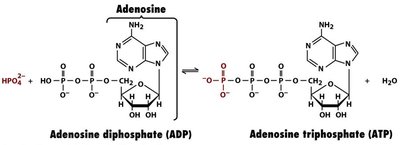
Phosphoric anhydrides contain two or more phosphoryl (P=O) groups bonded to the same oxygen atom. They are formed from phosphoric acid and are important in energy metabolism (e.g., ATP).

Phosphoric Esters
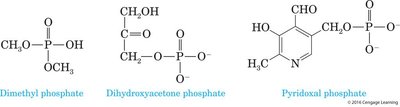
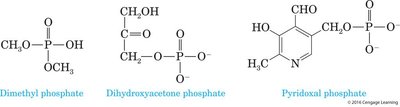
Phosphoric esters are formed by the reaction of phosphoric acid with alcohols. They are distinguished from carboxylic esters by the presence of phosphorus. Examples include intermediates in metabolism and the active form of vitamin B6 (pyridoxal phosphate).
Biological Relevance: ATP and Nucleotide Polymers
ATP (adenosine triphosphate) contains both phosphoric anhydride and ester bonds. Nucleotides in DNA and RNA are linked by phosphodiester bonds, forming the backbone of these polymers.
Summary
Amines and amides are vital in organic and biological chemistry, with diverse structures and functions.
Amines act as weak bases and are important in neurotransmission and drug formulation.
Amides are stable compounds found in proteins and antibiotics.
Phosphoric anhydrides and esters are central to energy metabolism and genetic information storage.
