 Back
Atomic Theory and Structure: Foundations of Modern Chemistry
Study Guide - Smart Notes
 Tailored notes based on your materials, expanded with key definitions, examples, and context.
Atomic Theory: Historical Development
Ancient Greek Concepts of Matter
The concept of the atom originated in Ancient Greece, where philosophers proposed that all matter was composed of fundamental elements. Early theories suggested that everything was made from four basic elements: fire, earth, air, and water. Democritus, in the 4th-5th century BCE, introduced the idea that matter is made of indivisible particles called atomos.
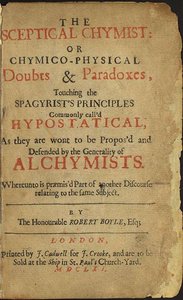
Robert Boyle and the Definition of Elements
In 1661, Robert Boyle defined elements as substances that cannot be decomposed into simpler substances. This definition marked a shift from mystical alchemy to scientific chemistry, laying the groundwork for modern atomic theory.

Dalton's Atomic Theory
Between 1803 and 1807, John Dalton developed the first meaningful atomic theory, which provided a scientific explanation for the nature of matter:
All matter is composed of extremely small, indivisible particles called atoms.
All atoms of a given element have identical properties; atoms of different elements have different properties.
Atoms are not changed into different types of atoms by chemical reactions; atoms are neither created nor destroyed.
Compounds are formed when atoms of more than one element combine in fixed ratios.
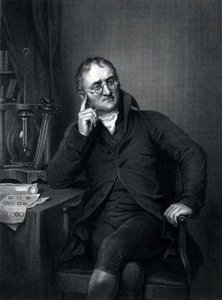
Dalton's Atomic Model and Laws
Dalton's model explained the law of conservation of mass and predicted the law of multiple proportions. When two elements form more than one compound, the masses of one element in these compounds for a fixed mass of the other element are in small, whole-number ratios.
Visualizing Atoms
Modern Techniques
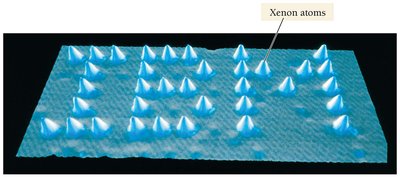
Scientists use advanced instruments to visualize atoms. The scanning tunneling microscope (STM) allows manipulation of individual atoms, such as arranging xenon atoms to spell 'IBM'. Atoms are generally spherical in shape.
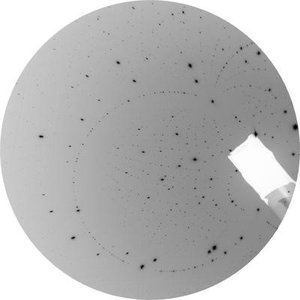
X-ray crystallography is used to determine the three-dimensional arrangement of atoms in crystals, such as yttrium aluminum oxide.
Discovery of Atomic Structure
Cathode Rays and the Electron
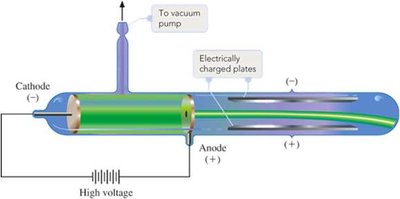
J.J. Thomson's experiments with cathode rays revealed that these rays are composed of negatively charged particles called electrons. Cathode rays travel in straight lines, are deflected by electric and magnetic fields, and are independent of the cathode material. This discovery showed that atoms are not indivisible.

Thomson's Plum Pudding Model
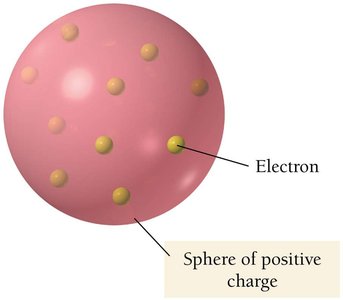
Thomson proposed the plum pudding model, where electrons are embedded in a sphere of positive charge.
Rutherford's Gold Foil Experiment
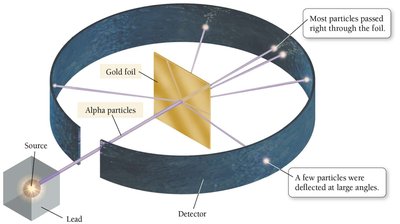
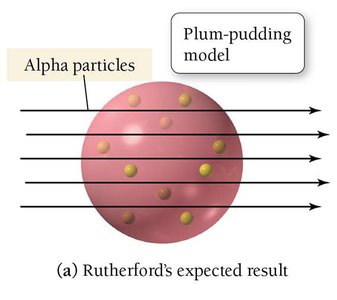
Ernest Rutherford's gold foil experiment involved bombarding thin gold foil with alpha particles. Most particles passed through, but some were deflected at sharp angles, indicating a dense, positively charged nucleus.
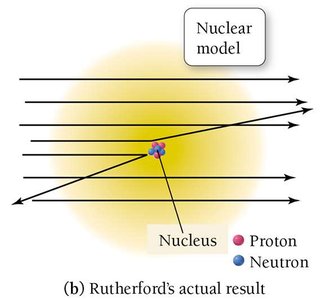
Nuclear Model of the Atom
Structure and Properties
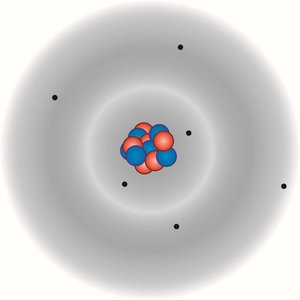
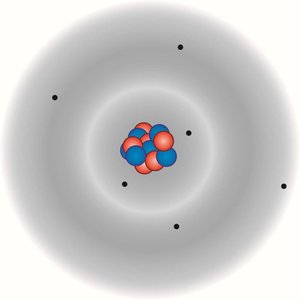
Atoms consist of a small, dense, positively charged nucleus containing protons and neutrons, surrounded by electrons in mostly empty space. The mass and charge of subatomic particles are:
Particle | Mass (amu) | Charge |
|---|---|---|
Proton | 1.0073 | +1 |
Neutron | 1.0087 | 0 |
Electron | 0.0005 | -1 |
Electric Charge and Atomic Neutrality
Fundamental Properties
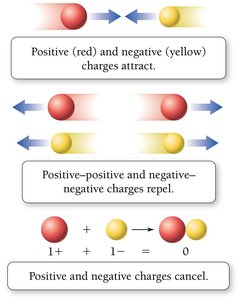
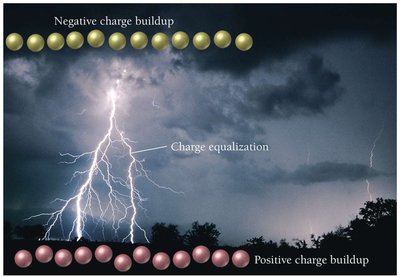
Protons and electrons possess fundamental electrical charges. Opposite charges attract, like charges repel, and positive and negative charges cancel each other, resulting in charge-neutral atoms.
Charge Neutrality in Matter
Most matter is charge-neutral, with equal numbers of positive and negative charges. Disturbances in charge balance, such as during electrical storms, result in dramatic phenomena like lightning.
Atomic Number and Element Identity
Atomic Number (Z)
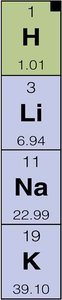
The atomic number (Z) is the number of protons in an atom and determines the element's identity. In a neutral atom, the number of electrons equals the number of protons.

The Periodic Table and Element Classification
Mendeleev's Periodic Law
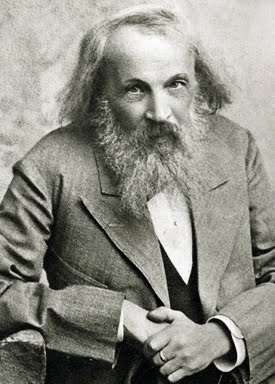
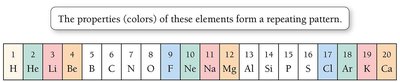
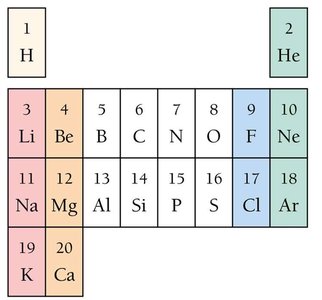
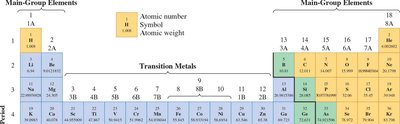
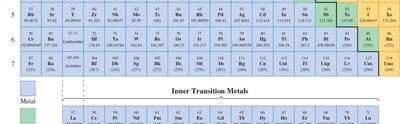
Dmitri Mendeleev observed that when elements are arranged by increasing mass, their properties recur periodically. This led to the development of the periodic table, which organizes elements by atomic number.

Classification of Elements
Elements are classified as metals, nonmetals, and metalloids based on their properties:
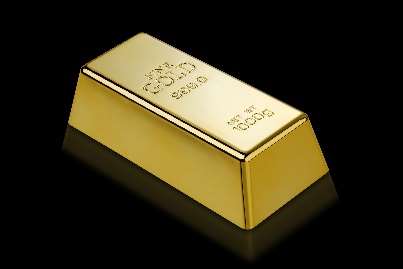
Metals: Shiny, good conductors, malleable, ductile, solid at room temperature (except mercury).
Nonmetals: Dull, poor conductors, brittle, mostly solids and gases at room temperature.
Metalloids: Exhibit properties intermediate between metals and nonmetals.




Periods and Groups
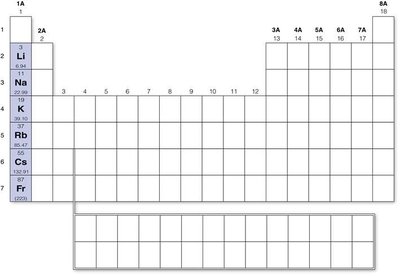
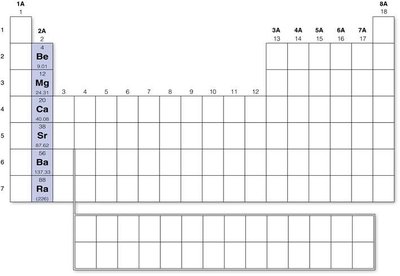
A period is a horizontal row of elements, while a group is a vertical column. Groups are numbered using the IUPAC system (1-18) or the older system (1-8 with A and B).
Main Groups and Special Element Families
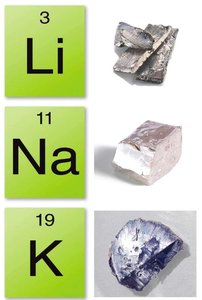
Group 1A: Alkali Metals – Soft, highly reactive metals that react violently with water.
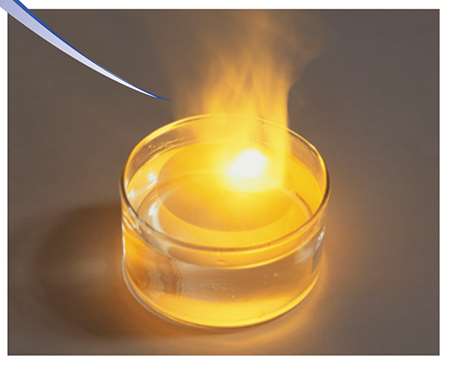
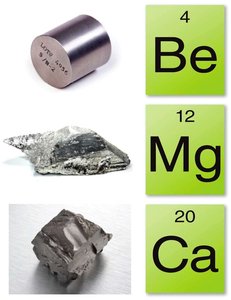
Group 2A: Alkaline Earth Metals – Harder, less reactive metals.
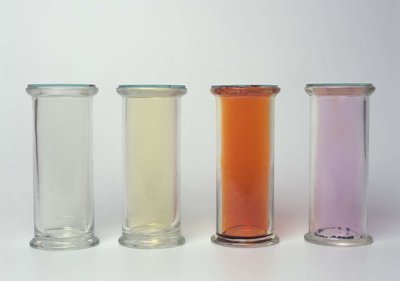
Group 7A: Halogens – Reactive nonmetals, diatomic molecules in elemental form.
Group 8A: Noble Gases – Inert gases, generally do not form compounds.
Formation of Ions
Atoms Lose or Gain Electrons
Atoms can lose or gain electrons during chemical reactions, forming charged particles called ions. Positive ions are cations, negative ions are anions. The charge is indicated in the upper right corner of the symbol (e.g., Mg2+, O2−).
Calculating Ion Charge
The charge of an ion is determined by the difference between the number of protons (p+) and electrons (e−):
Example: Li+ ion has 3 protons and 2 electrons, so the charge is .
Example: F− ion has 9 protons and 10 electrons, so the charge is .
Isotopes and Atomic Mass
Isotopes: Atomic Number and Mass Number
Isotopes are atoms of the same element (same atomic number, Z) with different numbers of neutrons, resulting in different mass numbers (A). The isotope symbol is written as:
Example: , ,
Counting Subatomic Particles in Isotopes
To determine the number of protons, neutrons, and electrons in an isotope:
Protons: Equal to atomic number (Z)
Neutrons: Mass number (A) minus atomic number (Z)
Electrons: Equal to protons in a neutral atom
Average Atomic Mass
The atomic mass listed in the periodic table is the weighted average of the masses of all naturally occurring isotopes of an element. The unit used is the atomic mass unit (amu), with carbon-12 defined as exactly 12 amu.
Example calculation for chlorine:
Sample Isotope Data Table
Isotope | Abundance | Mass (amu) |
|---|---|---|
24Mg | 78.99% | 23.985 |
25Mg | 10.00% | 24.986 |
26Mg | 11.01% | 25.983 |
Isotope | Abundance | Mass (amu) |
|---|---|---|
12C | 98.93% | 12 (exact) |
13C | 1.07% | 13.00335 |
Example: The average atomic mass of magnesium is calculated using the abundances and masses of its isotopes.
Additional info: Expanded explanations, definitions, and context have been added to ensure completeness and academic quality for GOB Chemistry students.
