 Back
Atoms and Elements: Structure, Periodic Table, and Periodic Trends
Study Guide - Smart Notes
 Tailored notes based on your materials, expanded with key definitions, examples, and context.
Chapter 4: Atoms and Elements
Introduction
This chapter introduces the fundamental concepts of atoms and elements, the structure and organization of the periodic table, and the periodic trends that govern the properties of elements. Mastery of these topics is essential for understanding chemical behavior and predicting the properties of substances.
Elements and Symbols
Definition of Elements
Element: A pure substance from which all matter is composed. Elements cannot be broken down into simpler substances by chemical means.
Element names are often derived from planets, mythological figures, minerals, colors, geographic locations, or famous people.
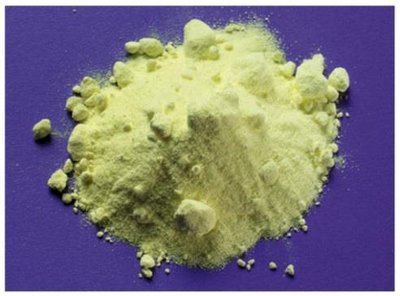
Examples: Sulfur (S), Carbon (C), Bromine (Br)
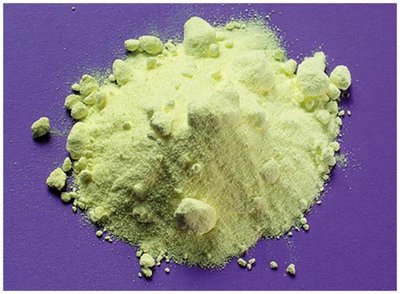
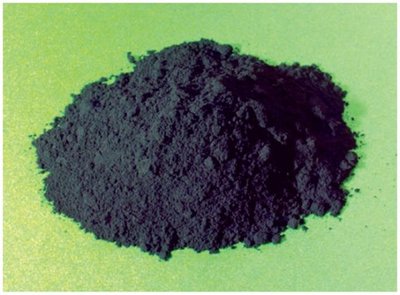

Element Symbols
Element symbols are one- or two-letter abbreviations for an element’s name. The first letter is always capitalized; the second letter, if present, is lowercase (e.g., Co for cobalt, CO for carbon and oxygen).
The Periodic Table
Development and Structure
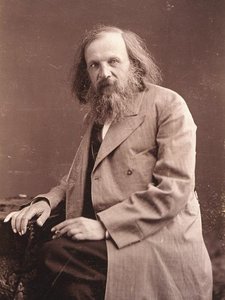
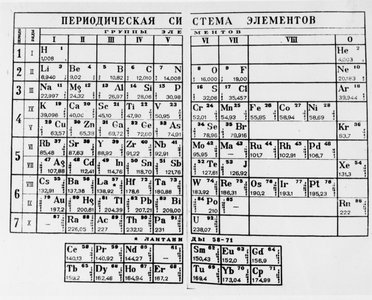
The periodic table was first organized by Dmitri Mendeleev in 1869, who arranged elements by increasing atomic mass and grouped elements with similar properties into columns.
The modern periodic table is organized by increasing atomic number (number of protons).
Periods and Groups
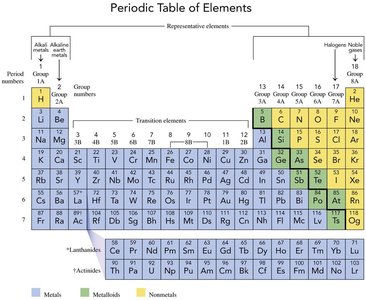
Periods: Horizontal rows numbered 1–7. Each period corresponds to the filling of a principal energy level with electrons.
Groups: Vertical columns numbered 1–18. Elements in the same group have similar chemical properties due to similar valence electron configurations.
Group Names
Group 1A (1): Alkali metals
Group 2A (2): Alkaline earth metals
Group 7A (17): Halogens
Group 8A (18): Noble gases
Classification of Elements
Metals: Located to the left of the zigzag line; shiny, ductile, malleable, good conductors, usually solid at room temperature (except mercury).
Nonmetals: Located to the right of the zigzag line; not shiny, not ductile or malleable, poor conductors, often gases or brittle solids.
Metalloids: Border the zigzag line; have properties intermediate between metals and nonmetals.
Examples of Metals, Nonmetals, and Metalloids
Metals: Copper (Cu), Gold (Au), Silver (Ag), Mercury (Hg)
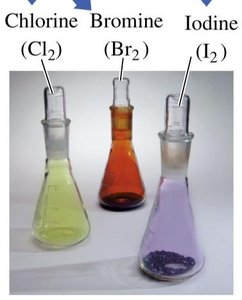
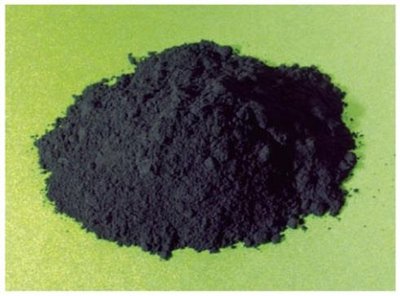
Nonmetals: Hydrogen (H), Carbon (C), Nitrogen (N), Oxygen (O), Chlorine (Cl), Sulfur (S)
Metalloids: Boron (B), Silicon (Si), Germanium (Ge), Arsenic (As), Antimony (Sb), Tellurium (Te)



The Atom
Dalton’s Atomic Theory
All matter is made up of tiny particles called atoms.
All atoms of a given element are identical and different from atoms of other elements.
Atoms of two or more elements combine to form compounds in fixed ratios.
Chemical reactions involve rearrangement, separation, or combination of atoms; atoms are not created or destroyed in chemical reactions.
Subatomic Particles
Protons (p+): Positively charged, located in the nucleus.
Neutrons (n0): Neutral, located in the nucleus.
Electrons (e-): Negatively charged, move in regions around the nucleus.
Atomic Number and Mass Number
Atomic Number (Z): Number of protons in the nucleus; unique for each element.
Mass Number (A): Sum of protons and neutrons in the nucleus; applies to a specific isotope.
Formulas:
Number of neutrons = Mass number – Atomic number
Number of electrons (neutral atom) = Atomic number
Isotopes and Atomic Mass
Isotopes
Atoms of the same element with different numbers of neutrons (and thus different mass numbers).
Isotopes are represented as: where A = mass number, Z = atomic number, X = element symbol.
Atomic Mass
The atomic mass of an element is the weighted average of the masses of all naturally occurring isotopes, measured in atomic mass units (amu).
Atomic mass is listed below the symbol of each element on the periodic table.
Formula for average atomic mass:
Electron Energy Levels and Arrangements
Energy Levels (Quantum Levels)
Electrons occupy specific energy levels (n = 1, 2, 3, ...), with lower levels closer to the nucleus.
Each energy level can hold a maximum number of electrons:
Energy Level (n) | Maximum Electrons |
|---|---|
1 | 2 |
2 | 8 |
3 | 18 |
4 | 32 |
Electron Arrangements
Electrons fill the lowest available energy levels first (Aufbau principle).
Electron arrangements for the first 20 elements are important for understanding chemical properties.
Valence Electrons and Lewis Symbols
Valence electrons: Electrons in the outermost energy level; determine chemical reactivity.
The group number for representative elements (1A–8A) equals the number of valence electrons.
Lewis symbols: Dots around the element symbol represent valence electrons.
Periodic Trends
Atomic Size
Atomic size increases down a group and decreases across a period (left to right).
Measured in picometers (pm) or angstroms (Å).
Ionization Energy
Energy required to remove an outermost electron from a neutral atom.
Ionization energy decreases down a group and increases across a period.
Metallic Character
Metallic character increases down a group and decreases across a period.
Elements with high metallic character lose valence electrons easily.
Summary Table: Periodic Trends
Property | Down a Group | Across a Period (Left to Right) |
|---|---|---|
Atomic Size | Increases | Decreases |
Ionization Energy | Decreases | Increases |
Metallic Character | Increases | Decreases |
Additional info: Mastery of these periodic trends is essential for predicting and explaining the chemical behavior of elements and their compounds.
