 Back
Atoms and Elements: Structure, Properties, and the Periodic Table
Study Guide - Smart Notes
 Tailored notes based on your materials, expanded with key definitions, examples, and context.
Elements and Chemical Symbols
Definition and Properties of Elements
Elements are pure substances from which all other substances are built. They cannot be broken down into simpler substances by chemical means. Each element is represented by a unique chemical symbol, which consists of one or two letters, always starting with a capital letter.
One-letter symbols: Examples include C (carbon), N (nitrogen), F (fluorine), O (oxygen).
Two-letter symbols: Examples include Co (cobalt), Ca (calcium), Al (aluminum), Mg (magnesium).
Latin names: Some elements have symbols derived from Latin names, such as Ag (silver, argentum) and Au (gold, aurum).
Examples of Elements
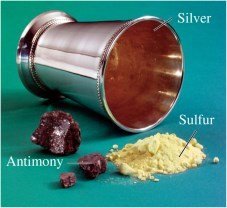
Elements can exist in various physical forms, such as metals, powders, or solid objects.
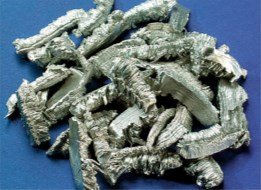
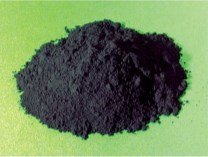
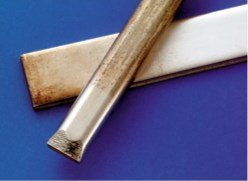
The Periodic Table
Organization and Structure
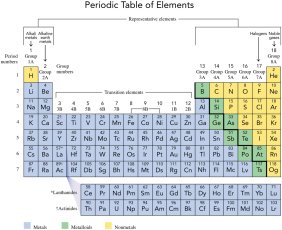
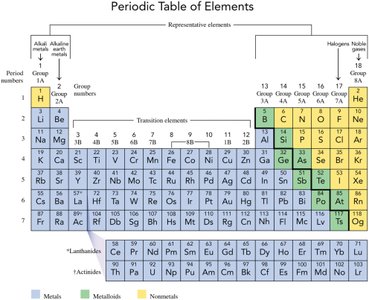
The periodic table organizes the 118 known elements into groups with similar properties and arranges them in order of increasing atomic mass. Vertical columns are called groups, and horizontal rows are called periods. Group numbers may be written as 1A–8A for representative elements and 3B–12B for transition elements, or as numbers 1–18 across the table.
Group Names and Classifications
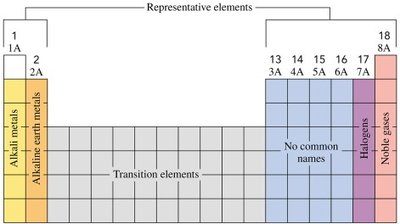
Groups have common names, such as alkali metals (Group 1A), alkaline earth metals (Group 2A), halogens (Group 7A), and noble gases (Group 8A).
Metals, Nonmetals, and Metalloids
Classification on the Periodic Table
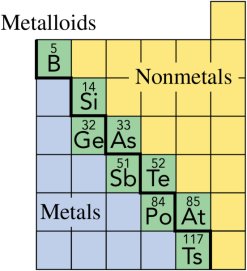
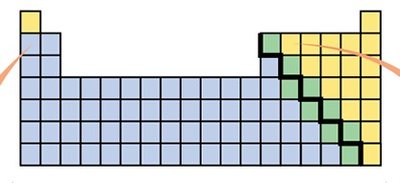
The periodic table is divided by a heavy zigzag line that separates metals (left), nonmetals (right), and metalloids (along the line). Each category has distinct physical and chemical properties.
Characteristics of Metals, Nonmetals, and Metalloids
Metals: Shiny, ductile, good conductors of heat and electricity, mostly solid at room temperature (except mercury).
Nonmetals: Dull, brittle, poor conductors, often good insulators, low densities and melting points.
Metalloids: Exhibit properties of both metals and nonmetals, used as semiconductors and insulators.
Metalloids on the Periodic Table
Elements Essential to Health
Major, Macrominerals, and Microminerals
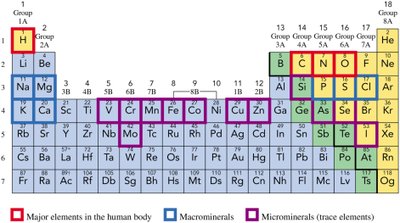
Elements play vital roles in biological systems. Major elements in the human body include H, C, N, and O. Macrominerals (Na, Mg, K, Ca, P, S, Cl) are required in larger amounts, while microminerals (Si, V, Cr, Mn, Fe, Co, Cu, Zn, As, Se, Mo, I) are needed in trace amounts.
The Atom
Definition and Structure
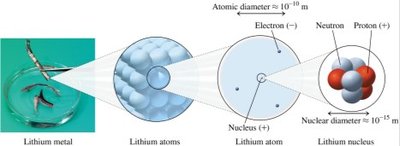
An atom is the smallest particle of an element that retains its chemical properties. Atoms consist of a nucleus (containing protons and neutrons) and electrons that occupy the space around the nucleus.
Dalton’s Atomic Theory
Atoms are tiny particles of matter.
Atoms of the same element are similar; those of different elements are different.
Atoms combine to form compounds.
Atoms are rearranged in chemical reactions but are never created or destroyed.
Subatomic Particles
Types and Properties
Atoms contain three main subatomic particles:
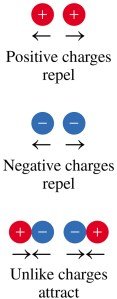
Protons: Positive charge (+), located in the nucleus.
Neutrons: No charge (neutral), located in the nucleus.
Electrons: Negative charge (−), located outside the nucleus.
Models of the Atom
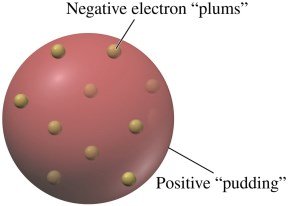
J. J. Thomson’s "plum pudding" model described atoms as having protons and electrons scattered throughout.
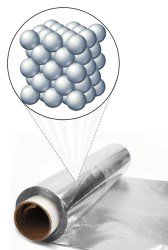
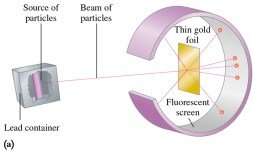
Rutherford’s gold foil experiment demonstrated that atoms have a dense nucleus.
Structure and Mass of the Atom
The nucleus contains most of the atom’s mass, while electrons occupy a large volume around it. The mass of subatomic particles is measured in atomic mass units (amu), where 1 amu is defined as 1/12 the mass of a carbon-12 atom.
Subatomic Particle Table
Properties of Subatomic Particles
The following table summarizes the properties of protons, neutrons, and electrons:
Particle | Symbol | Charge | Mass (amu) | Location in Atom |
|---|---|---|---|---|
Proton | p or p+ | +1 | 1.007 | Nucleus |
Neutron | n or n0 | 0 | 1.008 | Nucleus |
Electron | e− | −1 | 0.00055 | Outside nucleus |
Atomic Number and Mass Number
Atomic Number
The atomic number is a whole number specific to each element and equals the number of protons in the atom. It appears above the element symbol in the periodic table.
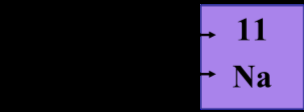
For neutral atoms, the number of protons equals the number of electrons, resulting in a net charge of zero.
Mass Number
The mass number represents the total number of protons and neutrons in the nucleus. It is always a whole number and is specific to each isotope of an element.
Number of protons = atomic number
Number of neutrons = mass number − atomic number
Number of protons + neutrons = mass number
Composition of Atoms Table
Element | Symbol | Atomic Number | Mass Number | Number of Protons | Number of Neutrons | Number of Electrons |
|---|---|---|---|---|---|---|
Hydrogen | H | 1 | 1 | 1 | 0 | 1 |
Nitrogen | N | 7 | 14 | 7 | 7 | 7 |
Oxygen | O | 8 | 16 | 8 | 8 | 8 |
Chlorine | Cl | 17 | 37 | 17 | 20 | 17 |
Iron | Fe | 26 | 58 | 26 | 32 | 26 |
Gold | Au | 79 | 197 | 79 | 118 | 79 |
Isotopes and Atomic Mass
Definition and Properties of Isotopes
Isotopes are atoms of the same element with different mass numbers. They have the same number of protons but different numbers of neutrons. Isotopes are distinguished by their atomic symbols, which show the mass number and atomic number.
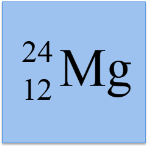
Atomic Symbols and Subatomic Particles
Given an atomic symbol, you can determine the number of protons, neutrons, and electrons:
Number of protons = atomic number
Number of neutrons = mass number − atomic number
Number of electrons = number of protons (for neutral atoms)
Isotope | Atomic Number | Mass Number | Number of Protons | Number of Neutrons |
|---|---|---|---|---|
O, 16O | 8 | 16 | 8 | 8 |
P, 31P | 15 | 31 | 15 | 16 |
Zn, 65Zn | 30 | 65 | 30 | 35 |
Key Equations
Atomic number:
Mass number:
Number of neutrons:
Summary Table: Metals, Nonmetals, Metalloids
Category | Location | Properties |
|---|---|---|
Metals | Left of zigzag line | Shiny, ductile, good conductors, mostly solid |
Nonmetals | Right of zigzag line | Dull, brittle, poor conductors, low density |
Metalloids | Along zigzag line | Properties of both, semiconductors |
Additional info: Academic context was added to clarify definitions, properties, and relationships between atomic structure and periodic table organization.
