Back
Carboxylic Acids and Esters: Structure, Properties, and Reactions
Study Guide - Smart Notes
 Tailored notes based on your materials, expanded with key definitions, examples, and context.
Carboxylic Acids: Structure and Properties
Carboxyl Group and Nomenclature
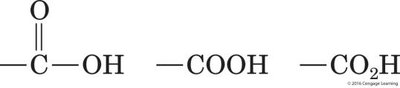
Carboxylic acids are organic compounds containing the carboxyl group (–COOH), which can be represented in several ways. The carboxyl group consists of a carbonyl (C=O) and a hydroxyl (–OH) group attached to the same carbon atom. Common notations include –COOH and –CO2H.
General formula: R–COOH, where R is a hydrocarbon group.
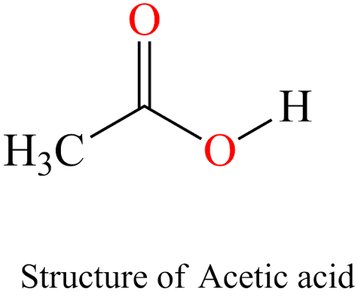
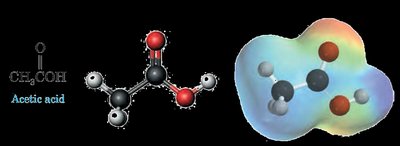
Naming: The simplest carboxylic acid is acetic acid (ethanoic acid), CH3COOH.
Acidity of Carboxylic Acids
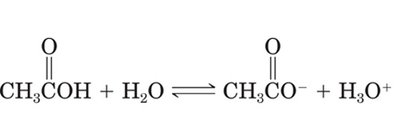
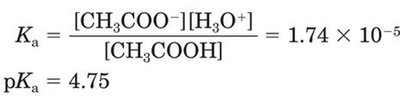
Carboxylic acids are classified as weak acids because they only partially dissociate in water. Their acidity is measured by the acid dissociation constant (Ka) and its logarithmic form, pKa:
Typical pKa values: 4–5 for unsubstituted carboxylic acids.
Acid dissociation equation:
pKa calculation:
Example: For acetic acid, ,
Substituent Effects on Acidity
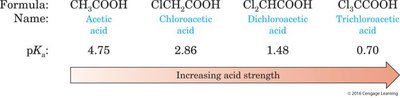
The presence of electronegative groups (such as –Cl) near the carboxyl group increases acidity by stabilizing the conjugate base. This is reflected in lower pKa values:
Formula | Name | pKa |
|---|---|---|
CH3COOH | Acetic acid | 4.75 |
ClCH2COOH | Chloroacetic acid | 2.86 |
Cl2CHCOOH | Dichloroacetic acid | 1.48 |
Cl3CCOOH | Trichloroacetic acid | 0.70 |
Reactions of Carboxylic Acids
Reaction with Bases
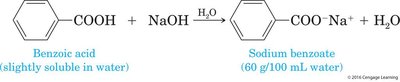
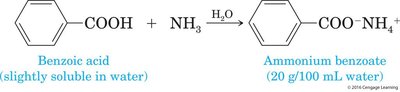
Carboxylic acids react with strong bases (e.g., NaOH, KOH) to form water-soluble salts. They also react with ammonia and amines to form ammonium salts.
Example with NaOH: Benzoic acid reacts with sodium hydroxide to form sodium benzoate.
Example with NH3: Benzoic acid reacts with ammonia to form ammonium benzoate.
Decarboxylation
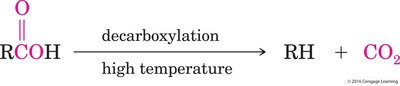
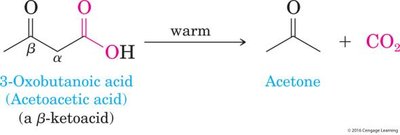
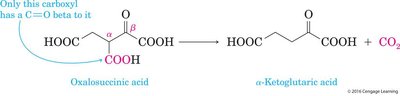
Decarboxylation is the loss of CO2 from a carboxyl group, typically requiring high temperature. However, β-ketoacids can decarboxylate under milder conditions due to the stabilization of the transition state.
General reaction: RCOOH → RH + CO2
Biochemical relevance: Decarboxylation is important in metabolism, especially in the TCA cycle.
Physical Properties of Carboxylic Acids
Polarity and Hydrogen Bonding
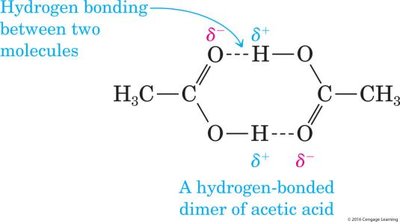
Carboxylic acids are highly polar due to the presence of three polar covalent bonds (C=O, C–O, and O–H). This leads to strong intermolecular hydrogen bonding, often resulting in the formation of dimers.
Boiling points: Carboxylic acids have higher boiling points than alcohols, aldehydes, or alkanes of similar molecular weight due to dimerization.
Hydrogen-bonded dimer: Two carboxylic acid molecules can form a stable dimer via hydrogen bonds.
Carboxylic Acid Derivatives
Types and Formation
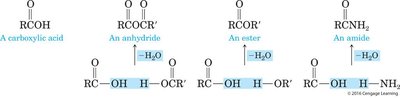
Carboxylic acids can form several important derivatives through dehydration reactions:
Anhydrides: Formed by joining two carboxylic acids.
Esters: Formed by reaction with alcohols.
Amides: Formed by reaction with amines.
Anhydrides
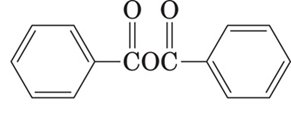
Anhydrides are formed by the condensation of two carboxylic acids. They can be symmetrical or asymmetrical, depending on the acyl groups involved.
Esters: Preparation and Properties
Fischer Esterification
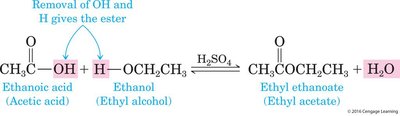
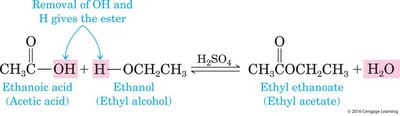
Fischer esterification is a common method for preparing esters. A carboxylic acid reacts with an alcohol in the presence of an acid catalyst (usually H2SO4), producing an ester and water. The reaction is reversible and can be driven to completion by removing water.
General reaction: RCOOH + R'OH → RCOOR' + H2O
Mechanism: Acid catalysis activates the carbonyl group for nucleophilic attack by the alcohol.
Preparation of Esters from Anhydrides
Esters can also be synthesized by reacting anhydrides with alcohols, which does not require acid catalysis.

Cyclic Esters (Lactones)
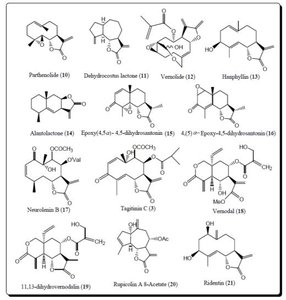
Cyclic esters, known as lactones, are formed when a hydroxy acid undergoes intramolecular esterification. Many naturally occurring lactones have pleasant aromas and biological activity.
Example: Wine lactone is found in fruits and wines.
Other Naturally Occurring Lactones
Many natural product lactones and their derivatives are studied for potential medicinal properties, including anti-cancer activity.
Hydrolysis of Carboxylic Acid Derivatives
Hydrolysis Reactions
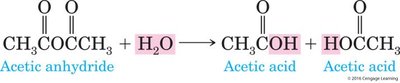
Hydrolysis is the cleavage of a chemical bond by the addition of water. Anhydrides hydrolyze easily, while esters require strong acid or base for hydrolysis.
Hydrolysis of anhydrides: Produces two carboxylic acids.
Hydrolysis of esters: Produces a carboxylic acid and an alcohol.