 Back
Chapter 1: Chemistry Basics – Matter and Measurement (GOB Chemistry Study Guide)
Study Guide - Smart Notes
 Tailored notes based on your materials, expanded with key definitions, examples, and context.
Chapter 1: Chemistry Basics – Matter and Measurement
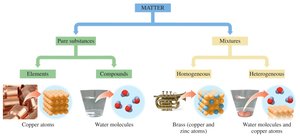
1.1 Classifying Matter: Pure Substance or Mixture
Understanding the classification of matter is fundamental in chemistry. Matter can be categorized as pure substances or mixtures, and further classified based on composition and properties.
Pure Substance: Matter made up of only one type of substance, represented by a single chemical formula or symbol. Includes elements (simplest form, one type of atom) and compounds (two or more elements chemically combined).
Mixture: Combination of two or more substances that can be separated physically. Mixtures are classified as homogeneous (uniform composition) or heterogeneous (non-uniform composition).
Example: Helium gas is a pure substance (element), cake batter is a mixture.
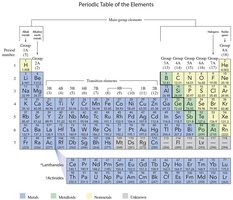
1.2 Elements, Compounds, and the Periodic Table
The periodic table organizes elements based on their properties. Understanding its structure is essential for identifying elements, compounds, and their behavior.
Groups: Vertical columns; elements in a group share similar chemical properties.
Periods: Horizontal rows; indicate the number of electron energy levels.
Metals vs. Nonmetals: Metals are typically on the left and center, nonmetals on the right.
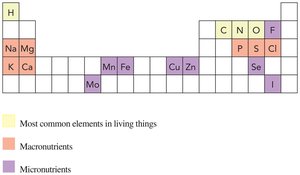
Chemical Formula: Indicates the elements and the number of atoms in a compound (e.g., H2O: 2 hydrogen, 1 oxygen).
Example: C2H4O2 (acetic acid): 2 carbon, 4 hydrogen, 2 oxygen atoms.
1.3 How Matter Changes
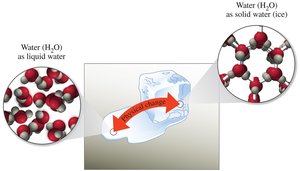
Matter can undergo physical changes or chemical reactions. Distinguishing between these is crucial for understanding chemical processes.
Physical Change: Alters the state or appearance of matter without changing its identity (e.g., melting ice).
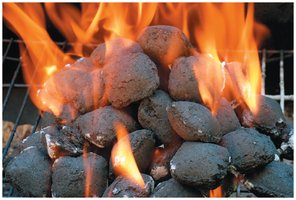
Chemical Change: Results in a new substance with different chemical properties (e.g., burning charcoal).
Chemical Equation: Represents the reactants and products in a chemical reaction. Must be balanced to obey the law of conservation of mass.
Balancing Equations: Adjust coefficients to ensure equal numbers of each atom on both sides. Example:
1.4 Math Counts
Mathematical skills are essential for chemistry, including unit conversions, significant figures, scientific notation, and percent calculations.
SI Units: Standardized measurement system; prefixes modify units by powers of 10.
Conversion Factors: Used to convert between units (dimensional analysis).
Significant Figures: Digits in a measurement that are known with certainty plus one estimated digit. Rules determine which digits are significant.
Scientific Notation: Expresses numbers as , where is the coefficient and is the exponent.
Percent: Represents a part per hundred; calculated as .
1.5 Matter: The “Stuff” of Chemistry
Chemistry studies the properties and behavior of matter, including mass, volume, density, energy, and states of matter.
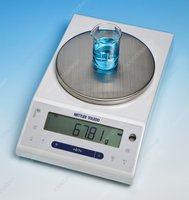
Mass: Amount of material; measured in grams (g).
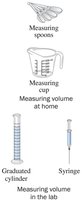
Volume: Space occupied; measured in milliliters (mL) or cubic centimeters (cm3).
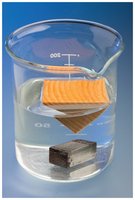
Density: Ratio of mass to volume:
Specific Gravity: Ratio of sample density to water density; unitless.
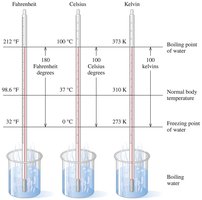
Temperature: Measured in Fahrenheit (°F), Celsius (°C), Kelvin (K).
Energy: Capacity to do work; measured in joules (J) or calories (cal).
Specific Heat: Amount of heat required to raise 1 g of a substance by 1°C.
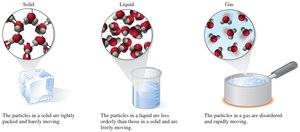
States of Matter: Solid, liquid, gas; differ in particle arrangement and movement.
1.6 Measuring Matter
Accurate and precise measurement is vital in chemistry. Understanding units, conversion, and application in health contexts is emphasized.
Accuracy: Closeness to the true value.
Precision: Consistency of repeated measurements.
Unit Conversion: Use conversion factors to switch between metric, SI, and U.S. units.
Application: Dosage calculations, IV drip rates, and percent active ingredient in health settings.
Table: Comparison of Pure Substances and Mixtures
Type | Definition | Example |
|---|---|---|
Element | One type of atom | Copper (Cu) |
Compound | Two or more elements chemically combined | Water (H2O) |
Homogeneous Mixture | Uniform composition | Brass (copper and zinc) |
Heterogeneous Mixture | Non-uniform composition | Rocky road ice cream |
Table: Temperature Scale Conversion
Scale | Freezing Point | Boiling Point |
|---|---|---|
Fahrenheit (°F) | 32°F | 212°F |
Celsius (°C) | 0°C | 100°C |
Kelvin (K) | 273 K | 373 K |
Additional info: This study guide covers all major learning objectives for Chapter 1 of GOB Chemistry, including definitions, examples, formulas, and applications relevant to health sciences.
