 Back
Chapter 1: Chemistry Basics – Matter, Measurement, and the Periodic Table
Study Guide - Smart Notes
 Tailored notes based on your materials, expanded with key definitions, examples, and context.
Chemistry Basics
Matter and Its Classification
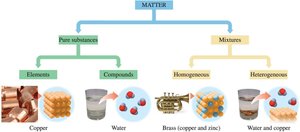
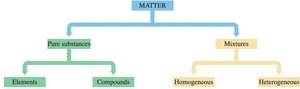
Chemistry is the study of matter, its properties, and the changes it undergoes. Matter is anything that has mass and occupies space. It can be classified into pure substances and mixtures, each with distinct characteristics.
Pure Substances: These consist of only one type of substance and cannot be separated by physical means. They are further divided into elements and compounds.
Mixtures: Combinations of two or more substances that can be separated by physical methods. Mixtures are classified as homogeneous (uniform composition) or heterogeneous (variable composition).
Elements: Simplest form of matter, made of one kind of atom (e.g., copper).
Compounds: Composed of two or more atoms chemically combined in a fixed proportion (e.g., water).
Homogeneous Mixtures: Uniform throughout (e.g., brass).
Heterogeneous Mixtures: Composition varies (e.g., water and copper).
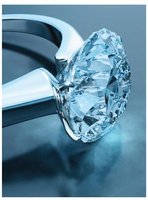
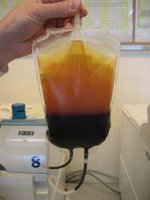
Example: Diamond is a pure substance (element), while blood is a mixture.


Elements and Compounds
Elements and compounds are both pure substances, but they differ in their composition and properties.
Element: A substance that cannot be broken down into simpler substances by chemical means. Each element is made of identical atoms.
Compound: A substance formed when two or more elements are chemically bonded in a fixed ratio. Compounds have properties different from their constituent elements.
Example: Table salt (NaCl), water (H2O), and glucose (C6H12O6) are compounds.
The Periodic Table
Structure and Organization
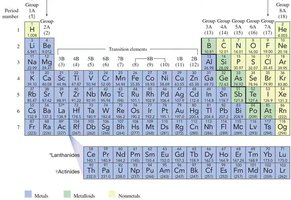
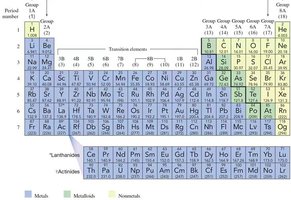
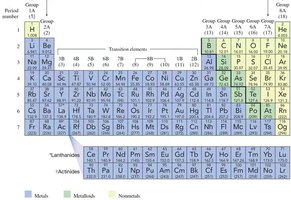
The periodic table is a systematic arrangement of elements based on their atomic number, properties, and electron configuration. It is divided into periods (rows) and groups (columns).
Periods: Horizontal rows; elements in the same period have the same number of electron shells.
Groups: Vertical columns; elements in the same group have similar chemical properties.
Transition Elements: Located in the center of the table; often have variable oxidation states.
Noble Gases: Group 18; inert and stable due to full electron shells.
Alkali Metals: Group 1; highly reactive.
Alkaline Earth Metals: Group 2; reactive but less so than alkali metals.
Halogens: Group 17; very reactive nonmetals.
Metals, Metalloids, Nonmetals: The periodic table distinguishes these by their physical and chemical properties.
Biologically Important Elements
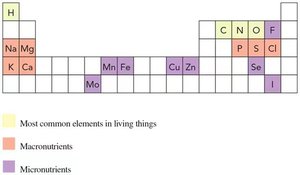
Some elements are essential for life and are classified as macronutrients or micronutrients based on the required daily intake.
Macronutrients: Required in amounts greater than 100 mg per day (e.g., Na, K, Ca).
Micronutrients: Required in amounts less than 100 mg per day (e.g., Fe, Zn, Cu).
Most Common Elements in Living Things: H, C, N, O, P, S.
States of Matter
Solid, Liquid, and Gas
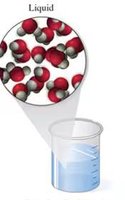
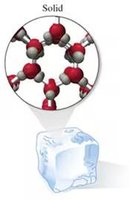
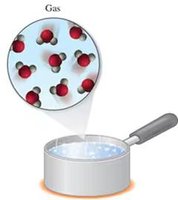
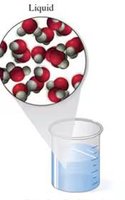
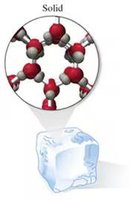
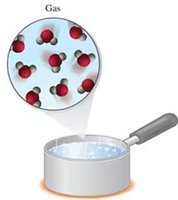
Matter exists in three primary states: solid, liquid, and gas. Each state has unique properties based on the arrangement and movement of particles.
Solid: Definite shape and volume; particles are closely packed and move slowly in fixed positions.
Liquid: Definite volume but takes the shape of its container; particles move slowly in random directions.
Gas: No definite shape or volume; fills the entire container; particles are far apart and move quickly.
Physical and Chemical Changes
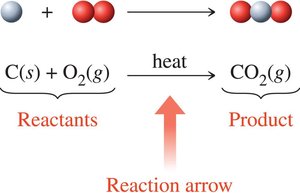
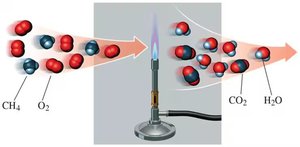
Matter can undergo physical or chemical changes. Physical changes affect the form or state of matter without altering its chemical identity, while chemical changes result in the formation of new substances.
Physical Property: Observable characteristics (e.g., shape, state, color, melting point).
Physical Change: Change in state or appearance; chemical composition remains the same (e.g., melting, freezing, boiling).
Chemical Property: Describes the ability of a substance to change into a different substance.
Chemical Change: Substance is converted into a completely different substance (e.g., iron rusting, burning).
Measurement and Units
Metric System and Conversion Factors
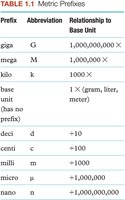
Chemistry measurements are made using the metric system, which is based on units such as grams, liters, and meters. Prefixes indicate multiples or fractions of base units.
Common Prefixes: kilo (1000×), centi (0.01×), milli (0.001×), micro (0.000001×), nano (0.000000001×).
Conversion Factors: Used to convert between units (e.g., 1 g = 1000 mg).
Example: To convert 25 mL to liters, use the conversion factor 1 L = 1000 mL.
Prefix | Abbreviation | Relationship to Base Unit |
|---|---|---|
giga | G | 1,000,000,000× |
mega | M | 1,000,000× |
kilo | k | 1000× |
base unit | - | 1× |
deci | d | 0.1× |
centi | c | 0.01× |
milli | m | 0.001× |
micro | μ | 0.000001× |
nano | n | 0.000000001× |
SI and U.S. Customary Units
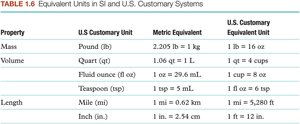
Some chemistry problems require conversion between metric and U.S. customary units. Knowing key equivalencies is essential for accurate calculations.
Property | U.S. Customary Unit | Metric Equivalent | U.S. Customary Equivalent Unit |
|---|---|---|---|
Mass | Pound (lb) | 1 kg = 2.205 lb | 1 lb = 16 oz |
Volume | Quart (qt) | 1.06 qt = 1 L | 1 cup = 8 oz |
Fluid ounce (fl oz) | 1 oz = 29.6 mL | 1 cup = 8 oz | |
Teaspoon (tsp) | 1 tsp = 5 mL | 1 fl oz = 30 mL | |
Length | Mile (mi) | 1 mi = 0.62 km | 1 mi = 5280 ft |
Inch (in) | 1 in = 2.54 cm | 1 ft = 12 in |
Density and Temperature Conversions
Density is a physical property unique to each substance and is defined as mass per unit volume. Temperature conversions are important for scientific measurements.
Density Formula:
Temperature Conversions:
Celsius to Fahrenheit:
Celsius to Kelvin:
Significant Figures and Scientific Notation
Significant Figures
Significant figures are the digits in a measured number that include all certain digits plus one estimated digit. They are important for expressing the precision of measurements and calculations.
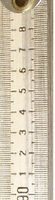
Measured Number: Obtained using a measuring tool (e.g., ruler, balance).
Exact Number: Obtained by counting or definition (e.g., 100 cm = 1 m).
Rules for Significant Figures:
All nonzero digits are significant.
Zeros between nonzero digits are significant.
Zeros at the end of a decimal number are significant.
Zeros at the beginning of a decimal number are not significant.
Zeros used as placeholders in large numbers without a decimal point are not significant.
Rule | Measured Number | Number of Significant Figures |
|---|---|---|
Not a zero | 4.5 g | 2 |
One or more zeros between nonzero digits | 205 m | 3 |
One or more zeros at the end of a decimal number | 50.008 kg | 5 |
In the coefficient of a number written in scientific notation | 4.8 x 10³ m | 2 |
Zero at the beginning of a decimal number | 0.0004 s | 1 |
Zero used as a placeholder in a large number without a decimal point | 850 000 cm | 2 |
Scientific Notation
Scientific notation is a method for expressing very large or very small numbers using powers of ten. It consists of a coefficient, a power of ten, and a unit of measurement.
Example: 0.0000006 m = m
Example: 714000000 km3 = km3
Significant Figures in Calculations
When performing calculations, the number of significant figures in the result depends on the operation:
Multiplication and Division: The result has the same number of significant figures as the measurement with the fewest significant figures.
Addition and Subtraction: The result has the same number of decimal places as the measurement with the fewest decimal places.
Example: 15.7 m x 2.3 m = 36 m2 (2 significant figures)
Example: 24.253 mg + 13.2 mg = 37.5 mg (1 decimal place)
Summary Table: Classification of Matter
Type | Description | Example |
|---|---|---|
Element | Made of one kind of atom | Copper |
Compound | Two or more atoms chemically combined | Water |
Homogeneous Mixture | Uniform composition | Brass |
Heterogeneous Mixture | Variable composition | Blood |
Additional info: Some context and examples were inferred and expanded for clarity and completeness.
